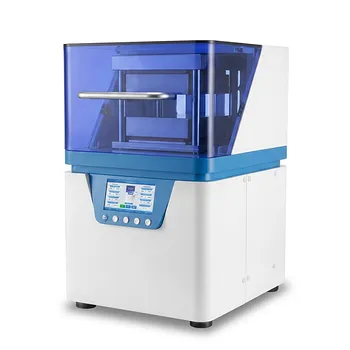
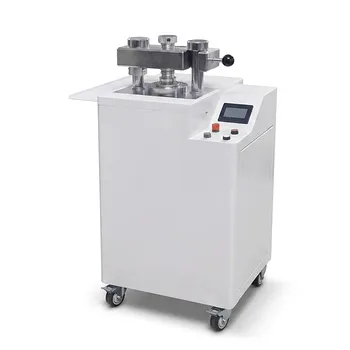
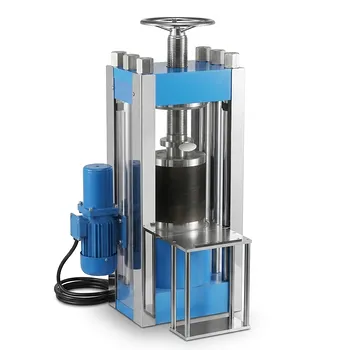
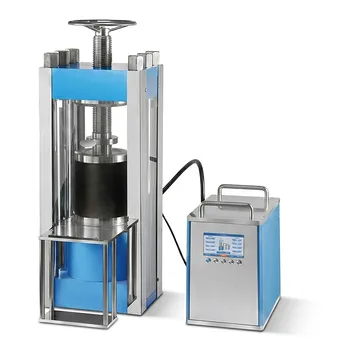
Presses are generally categorized by their physical footprint as either floor-standing or benchtop devices. While both categories offer a range of specifications, the distinction between a standard press and a tailored solution lies in the specific demands of the application regarding force magnitude and movement precision.
While standard presses provide sufficient adaptability for the majority of manufacturing applications, tailored solutions are engineered specifically for demanding use cases that require extreme force capabilities or highly precise movement increments.
Primary Categories by Form Factor
Benchtop Devices
These units are designed for placement on a workbench or table. They are typically utilized in environments where space is a consideration or where the workpiece is of a manageable size for waist-high operation.
Floor Standing Devices
These presses are larger, standalone units that rest directly on the facility floor. They are generally employed when the physical scale of the press or the operation requires a larger footprint than a benchtop model can provide.
Distinguishing Standard from Tailored Solutions
The Versatility of Standard Presses
Standard presses are designed to be adaptable workhorses. According to industry standards, these off-the-shelf solutions are capable of handling the majority of manufacturing applications effectively.
The Necessity of Tailored Solutions
Tailored solutions are not defined by the form factor (benchtop vs. floor), but by their performance capabilities. These are required when an application presents demanding use cases that fall outside standard operating parameters.
Specific Performance Metrics
The two primary drivers for choosing a tailored solution are force and precision. Custom engineering is required when a process demands extremely high forces or movement in highly precise increments that standard models cannot reliably achieve.
Understanding the Trade-offs
Assessing Application Requirements
Choosing between a standard and tailored press is a trade-off between general adaptability and specific performance. Standard presses offer broad utility but may lack the specialized control needed for niche applications.
The Cost of Precision
While standard presses cover most needs, pushing for higher precision or force requires a move to tailored solutions. This shift moves the equipment from a general manufacturing tool to a specialized instrument designed for a singular, high-performance purpose.
Making the Right Choice for Your Goal
To determine whether a standard or tailored press is appropriate for your facility, evaluate your specific output requirements:
- If your primary focus is general manufacturing: Utilize a standard press, as these are adaptable and sufficient for the majority of common production applications.
- If your primary focus is extreme performance: Invest in a tailored solution, specifically if your operation requires extremely high force application or movement in microscopic, precise increments.
Select the press that aligns with your most critical performance constraint, whether that is flexibility or absolute precision.
Summary Table:
| Feature | Benchtop Devices | Floor Standing Devices |
|---|---|---|
| Physical Footprint | Compact, sits on workbench | Large, standalone unit |
| Primary Use | Space-saving, smaller workpieces | Large-scale, heavy-duty operations |
| Standard Solution | High adaptability for most uses | Reliable for general manufacturing |
| Tailored Solution | Required for micro-precision | Required for extreme force capabilities |
Elevate Your Material Research with KINTEK
Don't settle for a one-size-fits-all approach when precision is non-negotiable. KINTEK specializes in comprehensive laboratory pressing solutions, offering everything from manual and automatic models to heated, multifunctional, and glovebox-compatible systems. Whether you need the portability of a benchtop press for battery research or the extreme force of a cold/warm isostatic press, our engineers are ready to help you transition from standard tools to high-performance instruments.
Ready to optimize your lab’s output? Contact us today to discuss your specific force and precision requirements!
Related Products
- Automatic Hydraulic Heat Press Machine with Multi Stage Programmable Control and Integrated Water Cooling Plate Size 180x180mm
- Laboratory Hydraulic Pellet Press for XRF KBR FTIR Lab Press
- Automatic Hydraulic Hot Press with Large Plate and Precision Temperature Control for Advanced Material Sample Preparation and Industrial Research
- Automatic Heated Hydraulic Lab Press 120x120mm Plate Fully Automated Material Research Press
- Heated Hydraulic Press Machine with Heated Plates for Vacuum Box Laboratory Hot Press
People Also Ask
- How does a laboratory hydraulic heat press facilitate the molding of cellulose composite specimens? Precision Molding
- How is a hydraulic heat press used for sample preparation? Achieve Uniform, Void-Free Samples for Lab Analysis
- What is the role of a hydraulic heat press in material testing? Unlock Superior Data for Research & QC
- What is a hydraulic heat press? Discover Precision Material Bonding and Sample Preparation
- What are the industrial applications of a hydraulic heat press? Powering Lamination, Bonding, and R&D Efficiency