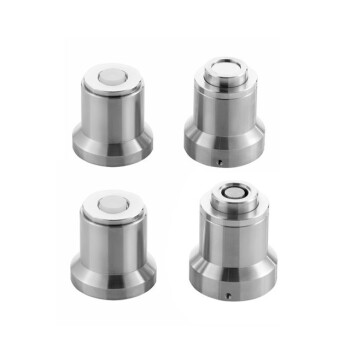
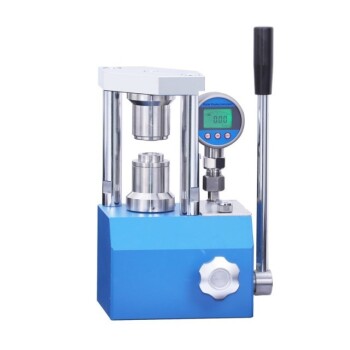
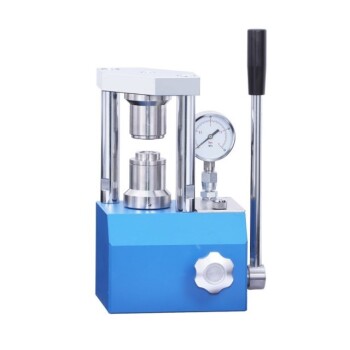
High-precision lab presses and coin cell crimpers are the defining variables for the mechanical integrity of a lithium-metal battery assembly. They directly influence performance by ensuring a hermetic seal and establishing tight, uniform physical contact between internal components, which is essential for accurate electrochemical data.
The application of constant, precise radial pressure eliminates internal gaps, minimizes contact resistance, and prevents environmental contamination. This mechanical consistency is the prerequisite for obtaining reliable results during long-term cycle life tests and high-current density evaluations.
The Critical Role of Physical Contact
The primary function of these instruments is to convert loose components into a unified electrochemical system through precise pressure.
Minimizing Interfacial Resistance
A high-precision press applies force to create a stable solid-to-solid interface between the lithium metal anode, the separator (or solid electrolyte), and the cathode. This tight contact significantly reduces interfacial impedance. Lower resistance is critical for maintaining voltage stability, especially during high-current density testing.
Ensuring Conformal Contact
In solid-state batteries, the press ensures the electrolyte film maintains tight physical contact with the electrode materials. This eliminates microscopic voids that can act as insulation points. Without this conformal contact, the internal resistance increases, leading to poor performance and unreliable test data.
Sealing and Environmental Integrity
Beyond internal contact, the crimper secures the external case, gaskets, and spacers.
Preventing Contamination and Leakage
Proper mechanical sealing prevents the ingress of air and moisture, which are detrimental to lithium metal. Simultaneously, it prevents the evaporation or leakage of liquid electrolytes. This isolation is vital for safety and for preventing side reactions that degrade battery capacity over time.
Maintaining Data Repeatability
Inconsistent sealing pressure leads to variable results between identical test cells. By automating the pressure application, high-precision crimpers ensure that every cell is sealed with the exact same force. This establishes a baseline of high repeatability for electrochemical test data.
Impact on Cycle Life and Stability
The mechanical pressure applied during assembly dictates how the battery ages during charge and discharge cycles.
Suppressing Dendrite Growth
Uniform pressure distribution helps prevent the uneven accumulation of current (hot spots) on the lithium surface. In stack-type or solid-state cells, this uniform compression inhibits the vertical growth of lithium dendrites. By suppressing dendrites, the risk of short circuits decreases, significantly extending the battery's cycle life.
Preventing Delamination
Battery materials expand and contract during cycling. A proper initial seal and compression ensure that interfaces do not physically separate or "peel" during these volume changes. This mechanical stability prevents the sudden loss of capacity often seen when electrodes detach from the electrolyte.
Understanding the Trade-offs
While pressure is essential, it must be calibrated correctly to avoid damaging the cell's internal architecture.
The Risk of Excessive Force
Applying too much pressure can mechanically destroy the microporous structure of separators (such as N@Co separators) or crush fragile solid electrolytes. This damage disrupts ion transport pathways, leading to cell failure or artificially low performance metrics.
The Risk of Insufficient Pressure
Conversely, inadequate pressure fails to bridge the gaps between components, resulting in high interfacial impedance. This often manifests as poor rate capability and instability, rendering the collected data useless for characterizing the material's true potential.
Making the Right Choice for Your Goal
The specific impact of the press or crimper depends on the primary objective of your battery testing.
- If your primary focus is High-Rate Performance: The priority is maximizing contact pressure (without damage) to minimize ohmic internal resistance and ensure efficient electron transfer.
- If your primary focus is Long-Term Cycle Life: The priority is achieving uniform pressure distribution and a perfect hermetic seal to suppress dendrite growth and prevent electrolyte dry-out.
Precise control over mechanical assembly pressure is not merely a manufacturing step; it is a fundamental parameter that determines the validity of your electrochemical research.
Summary Table:
| Key Feature | Impact on Battery Performance | Primary Benefit |
|---|---|---|
| Interfacial Contact | Reduces ohmic and contact resistance | Stable voltage & high-rate capability |
| Hermetic Sealing | Prevents moisture ingress & electrolyte leakage | Safety & capacity retention |
| Pressure Uniformity | Suppresses lithium dendrite growth | Extended cycle life & short-circuit prevention |
| Repeatability | Minimizes mechanical variance between cells | Consistent, publishable research data |
Elevate Your Battery Research with KINTEK Precision
At KINTEK, we understand that the integrity of your electrochemical data depends on the precision of your assembly. We specialize in comprehensive laboratory pressing solutions tailored for cutting-edge energy storage research.
Our range includes:
- Manual & Automatic Presses: For versatile sample preparation.
- Heated & Multifunctional Models: To simulate real-world thermal conditions.
- Glovebox-Compatible Systems: Essential for sensitive lithium-metal and solid-state chemistry.
- Isostatic Presses (CIP/WIP): Ensuring perfectly uniform density in battery pellets.
Don't let mechanical inconsistency compromise your results. Contact our technical experts today to find the ideal press or crimper that ensures your batteries perform to their true potential.
References
- Ju‐Myung Kim, Wu Xu. Salt‐Optimized Protection Layers for Stabilizing Lithium Metal Anodes Toward Enhanced Battery Performance. DOI: 10.1002/aenm.202501801
This article is also based on technical information from Kintek Solution Knowledge Base .
Related Products
- Lab Button Battery Disassembly and Sealing Mold
- Button Battery Sealing Machine for Button Batteries
- Manual Button Battery Sealing Machine for Battery Sealing
- Button Battery Sealing Press Machine for Lab
- Lab Button Battery Tablet Press Sealing Mold
People Also Ask
- How does a sealed battery mold facilitate the assembly and testing of asymmetric supercapacitors using VO2?
- What is the function of specialized battery molds and sealing consumables? Optimize Your In-situ XRD Testing Today
- How does the geometry of laboratory molds influence mycelium-based composites? Optimize Density and Strength
- Why are specialized battery test molds used? Ensure Peak Performance for All-Solid-State Sodium Batteries (ASSIBs)
- What role do battery testing molds play in electrolyte performance? Exploring Pressure vs. Viscoelasticity