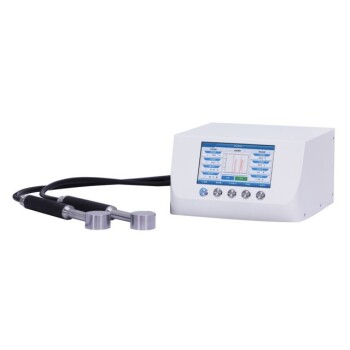
An integrated heating system is the catalyst for accurate high-temperature electrical characterization because it provides the precise thermal energy required to activate charge carriers within phosphate samples. By maintaining a controlled environment typically ranging from 60°C to 700°C, the system enables the simultaneous recording of electrical performance as it evolves under thermal stress.
By triggering the thermal activation of charge carriers, an integrated heating system transforms static electrical readings into dynamic data. This reveals critical material behaviors, such as the Positive Temperature Coefficient (PTC), that are invisible at room temperature.
The Mechanism of Thermal Activation
Activating Charge Carriers
The primary function of the heating system is to overcome the energy barrier of the phosphate material. At room temperature, the electrical properties of these minerals are often latent.
The system applies controlled heat, typically between 60°C and 700°C, to trigger the thermal activation of charge carriers. This energy input mobilizes the carriers, allowing the material to conduct or resist electricity in measurable ways.
Simultaneous Performance Recording
Characterization is not about taking a single measurement at a high temperature; it is about observing the change.
The integrated system allows for the simultaneous recording of electrical performance while the temperature varies. This creates a direct correlation between thermal energy input and electrical output, providing a complete profile of the material's behavior.
Critical Hardware Requirements
The Necessity of Stable Electrodes
Applying heat to the sample introduces a new variable that can disrupt standard measurement tools.
To ensure accuracy, the heating system must be paired with high-temperature stable, non-polarizing electrodes. Standard electrodes may degrade or polarize under high heat, introducing errors that obscure the true properties of the phosphate sample.
Revealing the Positive Temperature Coefficient (PTC)
One of the specific characteristics this setup is designed to detect is the Positive Temperature Coefficient (PTC).
Through the controlled ramp of temperature and precise electrode measurement, researchers can identify if the phosphate mineral's resistance increases with temperature. This specific PTC behavior is a defining characteristic for many applications of phosphate minerals.
Understanding the Constraints
Material and Equipment Limitations
While the system can reach 700°C, the accuracy of the data is entirely dependent on the stability of the interface.
If the non-polarizing electrodes cannot withstand the upper limits of the heating range, the data becomes unreliable. Success relies not just on the heating element, but on the thermal compatibility of every component in the measurement circuit.
Making the Right Choice for Your Goal
To maximize the utility of an integrated heating system for phosphate characterization, consider your specific analytical needs:
- If your primary focus is fundamental research: Prioritize a system with precise thermal ramping to pinpoint the exact temperature where charge carrier activation begins.
- If your primary focus is component engineering: Ensure your setup includes high-quality non-polarizing electrodes to accurately characterize the Positive Temperature Coefficient (PTC) without signal drift.
High-quality characterization relies on the precise synchronization of thermal induction and electrical recording.
Summary Table:
| Feature | Role in Phosphate Characterization | Key Benefit |
|---|---|---|
| Temperature Range | 60°C to 700°C | Enables thermal activation of latent charge carriers |
| Simultaneous Recording | Synchronized thermal/electrical tracking | Correlates thermal stress with dynamic material behavior |
| Stable Electrodes | High-temp non-polarizing interface | Prevents signal drift and ensures data accuracy |
| PTC Detection | Monitoring resistance changes | Identifies critical Positive Temperature Coefficient behaviors |
Elevate Your Material Research with KINTEK
Precision is paramount when characterizing the thermal and electrical performance of advanced materials. KINTEK specializes in comprehensive laboratory pressing and thermal solutions—including manual, automatic, and heated models—designed to meet the rigorous demands of battery research and mineralogy.
Whether you need to stabilize electrodes for PTC detection or require uniform heating for phosphate analysis, our equipment provides the stability your data depends on. Contact us today to discover how KINTEK’s high-performance solutions can streamline your laboratory workflow and deliver the accuracy your research deserves.
References
- Mohamed M. Gomaa. Temperature and AC electrical properties effects on phosphate natural mixture, Abu Tartur plateau, Western Desert, Egypt. DOI: 10.1038/s41598-025-09313-3
This article is also based on technical information from Kintek Solution Knowledge Base .
Related Products
- Infrared Heating Quantitative Flat Plate Mold for Precise Temperature Control
- Automatic High Temperature Heated Hydraulic Press Machine with Heated Plates for Lab
- Lab Double Plate Heating Mold for Laboratory Use
- Cylindrical Lab Electric Heating Press Mold for Laboratory Use
People Also Ask
- How do precision temperature-controlled heating plates function in electrolyte thermal stability storage experiments?
- What is the importance of a precision temperature-controlled heating module? Ensure Aluminum-Cadmium Thermal Stability
- What accessories and field services can be used to optimize the capabilities of presses? Maximize Your Lab Performance
- How are thin polymer films produced for spectroscopic analysis? Expert Guide to Heat and Low-Pressure Methods
- What role does a constant temperature chamber play in shielding interference during battery cycle aging? | KINTEK