The choice between pressed pellets and fused beads represents a classic trade-off between operational efficiency and ultimate analytical precision. Pressed pellets offer a convenient, cost-effective solution that serves as the industry standard for reliability, whereas fused beads provide the highest quality results by mitigating specific analytical interferences, but at a significantly higher operational cost.
Key Takeaway: While pressed pellets provide a reliable and economical baseline for most industrial applications, fused beads are necessary when the elimination of analytical effects is prioritized over cost and maintenance requirements.
The Pressed Pellet Technique
Cost-Effectiveness and Convenience
The pressed pellet method is widely regarded as the industry standard for a reason. It offers a balance of quality and economy that is difficult to beat for routine analysis.
This technique is notably cost-effective, requiring less expensive consumables and lower overhead compared to fusion methods. It is also highly convenient, allowing for a streamlined workflow in busy laboratories.
Reliability and Consistency
Despite being less intensive than fusion, pressed pellets deliver greater consistency and significantly better results than loose powder or "no preparation" methods.
For the majority of applications, the reliability provided by a pressed pellet is sufficient to meet rigorous quality control standards.
The Fused Bead Technique
Achieving the "Best" Results
If your application demands the absolute highest level of accuracy, fused beads are the superior choice.
The primary advantage of fusion is its ability to provide the best possible results for XRF analysis. It achieves this by physically altering the sample matrix to create a perfect glass disc.
Eliminating Analytical Effects
The fusion process dissolves the sample, which effectively eliminates certain analytical effects (such as particle size and mineralogical effects) that can linger in pressed pellets.
This makes fused beads ideal for complex samples where homogeneity is critical for accurate quantification.
Understanding the Trade-offs
Operational Expenses
The superior data from fused beads comes at a price. This method incurs higher running costs due to the consumption of gas or electricity required for the fusion furnaces.
Maintenance and Upkeep
Beyond energy consumption, fusion equipment typically demands more maintenance than a hydraulic press.
Laboratories must factor in these ongoing costs and potential downtime when deciding between the two methods.
Making the Right Choice for Your Goal
To select the correct preparation method, you must evaluate your specific requirements for accuracy versus your budget for operation.
- If your primary focus is routine efficiency: Choose pressed pellets for a reliable, cost-effective solution that meets industry standards without high overhead.
- If your primary focus is ultimate accuracy: Choose fused beads to eliminate analytical effects and achieve the best possible results, provided you can support the higher running costs.
Select the method that delivers the precision you need without incurring unnecessary operational expense.
Summary Table:
| Feature | Pressed Pellets | Fused Beads |
|---|---|---|
| Analytical Precision | Reliable baseline / Industry standard | Highest possible accuracy |
| Operational Cost | Low (Cost-effective consumables) | High (Energy & flux consumption) |
| Complexity | Simple, fast workflow | Complex (Requires fusion furnace) |
| Sample Impact | Minimal matrix interference | Eliminates particle size/mineral effects |
| Maintenance | Low (Durable hydraulic press) | High (Regular furnace upkeep) |
Elevate Your XRF Analysis with KINTEK Precision
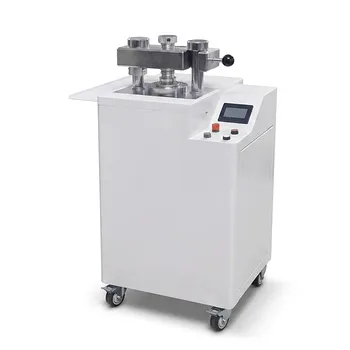
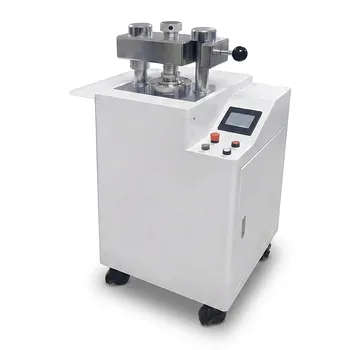
Whether you require the speed of a manual hydraulic press or the precision of automated sample preparation, KINTEK specializes in comprehensive laboratory pressing solutions tailored to your research. From heated and multifunctional models to glovebox-compatible and isostatic presses for advanced battery research, we provide the tools necessary to eliminate analytical interference and optimize your workflow.
Ready to achieve superior sample consistency? Contact KINTEK today to find the perfect pressing solution for your laboratory's specific accuracy and budget requirements.
Related Products
- Laboratory Hydraulic Split Electric Lab Pellet Press
- Manual Laboratory Hydraulic Pellet Press Lab Hydraulic Press
- Laboratory Hydraulic Pellet Press for XRF KBR FTIR Lab Press
- Automatic XRF Pellet Press for Laboratory Spectrometry Sample Preparation
- Automatic Laboratory Hydraulic Press Lab Pellet Press Machine
People Also Ask
- What are the emerging trends in the design and materials of lab pellet presses? Modernize Your Lab Efficiency
- What are common lab pellet press issues? Expert Troubleshooting Guide for Reliable Material Research
- How do lab pellet presses support customization and flexibility? Optimize Your Sample Prep for Any Material
- What are the common operational types of lab pellet presses? Choosing the Right Manual, Automatic, or Hydraulic System
- Why use a laboratory pellet press for solid-state battery evaluation? Ensure Accuracy in Interface Stability Testing