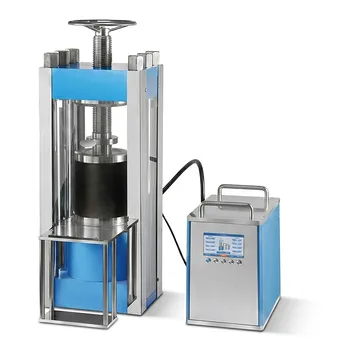
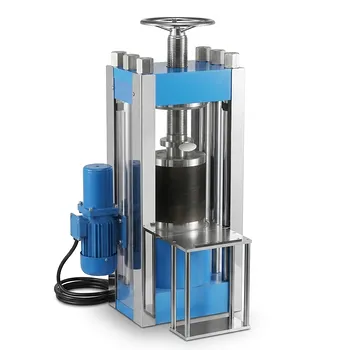
Heated lab presses utilize advanced pressure control systems to regulate force with extreme precision rather than relying on static mechanical settings. These systems allow operators to fine-tune applied pressure and implement multi-stage adjustments, ensuring that the specific requirements of different materials and processes are met without variation.
Consistent results in heated lab presses rely on the synergy between precision-engineered hydraulic systems and programmable multi-stage pressure controls. This combination allows researchers to optimize compaction and bonding by tailoring the pressure profile to the specific material being processed.
The Mechanics of Precision Control
Fine-Tuning Pressure Application
Modern heated presses are designed to move beyond simple "on/off" force application. They enable researchers to fine-tune pressure settings, allowing for minute adjustments to dial in the exact force required for a specific application.
The Role of Hydraulic Systems
At the core of this consistency is a precision-engineered hydraulic system. These systems are particularly valued for their ability to generate high-pressure outputs while maintaining the stability required for uniform pellet formation.
Achieving Uniformity
Reliable pressure generation ensures that force is distributed evenly across the sample surface. This mechanical consistency is critical for achieving the desired level of compaction and bonding, which directly translates to reproducible experimental data.
Optimizing the Process Flow
Multi-Stage Adjustments
A key feature of advanced control systems is the ability to adjust pressure in multiple stages. This allows the operator to vary the pressure load at different points in the process to accommodate how a material changes as it is heated.
Customizing for Material Properties
Different materials react differently to heat and force; a "one-size-fits-all" approach often fails. By utilizing multi-stage controls, researchers can optimize pressure settings to match the unique physical transitions of the material, ensuring consistent structural integrity.
Understanding the Trade-offs
Complexity of Optimization
While multi-stage pressure control offers superior results, it introduces variables that must be managed carefully. Achieving the perfect level of compaction requires the operator to actively optimize settings; incorrect staging can lead to suboptimal bonding despite the machine's capabilities.
Dependence on System Calibration
The ability to achieve consistent high-pressure outputs relies heavily on the condition of the hydraulic system. Because the system is precision-engineered for uniformity, any drift in calibration or mechanical wear can directly impact the consistency of the resulting pellets or samples.
Making the Right Choice for Your Goal
To ensure you get the most out of your heated lab press, align your control strategy with your specific research objectives:
- If your primary focus is complex material research: Utilize the multi-stage adjustment features to create dynamic pressure profiles that adapt to your material's changing properties during heating.
- If your primary focus is routine sample preparation: Rely on the high-pressure capabilities of the hydraulic system to ensure the uniform formation of pellets across repeated cycles.
By leveraging advanced control systems to fine-tune force application, you transform pressure from a variable into a precise tool for scientific discovery.
Summary Table:
| Feature | Mechanism | Benefit for Research |
|---|---|---|
| Hydraulic Precision | Engineered fluid dynamics | Stable, high-pressure output for uniform pellets |
| Multi-Stage Control | Programmable force cycles | Adapts to material changes during heating phases |
| Fine-Tuning | Micro-adjustment interfaces | Exact force application for sensitive materials |
| Uniform Distribution | Precision-aligned platens | Consistent bonding and structural integrity |
Elevate Your Material Research with KINTEK Precision
Don't let pressure variability compromise your experimental outcomes. KINTEK specializes in comprehensive laboratory pressing solutions designed for the most demanding battery research and material science applications. Whether you require manual, automatic, heated, or multifunctional models, our equipment delivers the stability and precision your data depends on.
Our range includes:
- Advanced Heated Presses with programmable multi-stage profiles.
- Glovebox-Compatible & Isostatic Presses (Cold and Warm) for specialized environments.
- Precision Hydraulic Systems engineered for uniform pellet formation.
Ready to optimize your compaction and bonding process? Contact KINTEK today to consult with our experts and find the perfect press for your lab.
Related Products
- 24T 30T 60T Heated Hydraulic Lab Press Machine with Hot Plates for Laboratory
- Automatic Heated Hydraulic Lab Press 120x120mm Plate Fully Automated Material Research Press
- Automatic Heated Hydraulic Lab Press with Programmable Touch Screen Controls and Precision Temperature Regulation
- Automatic Heated Hydraulic Lab Press Machine 200x200 Plate Size for Battery Research and Materials Science
- Manual Heated Hydraulic Lab Press with Integrated Hot Plates Hydraulic Press Machine
People Also Ask
- Function of a Laboratory Hydraulic Press with Heated Platens in SSE? Enhance Battery Density & Conductivity
- Why is a laboratory hydraulic press with heating plates required for PLA/TEC films? Achieve Precise Sample Integrity
- What role does a laboratory heated hydraulic press play in LTCC? Essential for High-Density Ceramic Lamination
- What is the primary function of a laboratory heated hydraulic press? Mastering Thermoplastic Carbon Fiber Composites
- What is the critical role of a laboratory heated hydraulic press? Mastering PVC Sample Prep for Testing