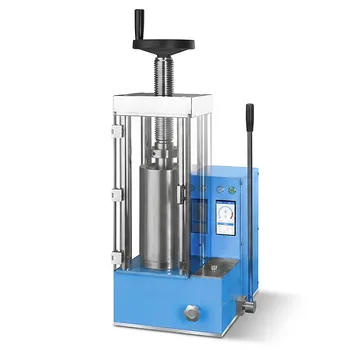
To properly operate the power supply system of a rubber laboratory press, you must follow a strict sequence that coordinates hydraulic preparation with electrical engagement. First, ensure the press is adjusted to a vertical position for stability, then manually close the oil return port using the operating handles. Finally, press the motor start button to activate the oil pump, which drives fluid into the cylinder and causes the plunger to rise.
Effective operation is not just about flipping a switch; it requires preparing the hydraulic system to receive pressure. You must mechanically seal the oil return port before engaging the motor to ensure the pump effectively drives the plunger.
Essential Pre-Operation Checks
Before engaging the main power supply, you must ensure the physical components of the machine are ready to handle the operational load.
Verify Fluid Levels
The hydraulic system relies on adequate oil volume to generate pressure. Check that the hydraulic oil level is at least 2/3 of the height of the lower frame.
If the level is low, top it up immediately. Operating with insufficient oil can damage the pump and result in inconsistent pressure.
Inspect Lubrication Points
Smooth mechanical movement is critical for the longevity of the press. Inspect the lubrication between the column shaft and the guide frame.
Apply lubricant if these areas appear dry. This reduces friction and prevents wear during the high-pressure cycles.
The Activation Sequence
Once the machine is inspected and the main power is on, follow this specific order to initiate the pressing cycle.
Establish Vertical Stability
First, adjust the press to a vertical position. This alignment is critical for maintaining stability during operation.
Operating the press while it is misaligned can lead to uneven pressure distribution or mechanical instability.
Engage the Hydraulic Seal
Before the motor is started, you must prepare the hydraulic circuit. Use the operating handles to close the oil return port.
Closing this port seals the system. If this port is left open, the pump will circulate oil back into the reservoir rather than building the necessary pressure in the cylinder.
Activate the Motor
With the system sealed, press the motor start button. This engages the electrical power to drive the oil pump.
The pump will immediately begin sending oil to the oil cylinder. This hydraulic force causes the plunger to rise, generating the pressure required for your laboratory tasks.
Common Pitfalls to Avoid
Understanding where the operation can go wrong is as important as knowing the correct steps.
Improper Sequencing
A common mistake is starting the motor before closing the oil return port.
While the motor will run, the machine will fail to generate lift or pressure. This wastes energy and causes unnecessary wear on the pump components without achieving the desired result.
Neglecting Hydraulic Balance
The system is designed to handle significant force, often around 25 tons.
Relying solely on the motor without ensuring the hydraulic balance device is functioning can lead to erratic movements. This device is essential for stable and rapid machine operation.
Making the Right Choice for Your Goal
To get the most out of your equipment, align your operation habits with your specific objectives.
- If your primary focus is Equipment Longevity: Prioritize the pre-check phase, specifically keeping the oil level at 2/3 height and the column shafts lubricated to reduce mechanical stress.
- If your primary focus is Operational Efficiency: Master the startup sequence—ensure the oil return port is closed before hitting the start button to prevent idle pumping and delay.
Consistency in this startup procedure ensures safety and precise pressure generation every time.
Summary Table:
| Step | Action | Key Requirement |
|---|---|---|
| Pre-Check | Verify Fluid Levels | Oil level must be ≥ 2/3 of lower frame height |
| Lubrication | Inspect Column & Guide | Ensure column shaft is lubricated to reduce friction |
| Alignment | Vertical Positioning | Adjust press to vertical for mechanical stability |
| Sealing | Close Oil Return Port | Must be closed manually before starting the motor |
| Activation | Press Motor Start | Engages pump to drive fluid and raise the plunger |
Optimize Your Lab’s Performance with KINTEK
Precision in operation starts with the right equipment. KINTEK specializes in comprehensive laboratory pressing solutions, offering a versatile range of manual, automatic, heated, multifunctional, and glovebox-compatible models, alongside advanced cold and warm isostatic presses essential for cutting-edge battery research.
Whether you are aiming to extend equipment longevity or maximize operational efficiency, our experts are here to support your research goals with high-performance hydraulic systems.
Ready to elevate your laboratory capabilities? Contact us today to find your perfect pressing solution!
Related Products
- Assemble Square Lab Press Mold for Laboratory Use
- Lab Round Bidirectional Press Mold
- Special Shape Lab Press Mold for Laboratory Applications
- Lab Infrared Press Mold for Laboratory Applications
- Lab Heat Press Special Mold
People Also Ask
- What is the purpose of incorporating cartridge heaters into a lab press mold for MLCC block compression? Optimize Results
- Why is a high-performance laboratory molding press critical for in-situ electrolyte formation? Unlock Battery Success
- How does the geometry of laboratory molds influence mycelium-based composites? Optimize Density and Strength
- What challenges are associated with recycling textiles, and how do laboratory presses help? Overcome Recycling Hurdles with Precision Tools
- What are the common applications for laboratory presses? Expert Guide to Sample Prep, R&D, and Quality Control