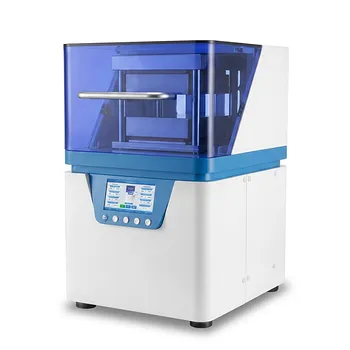
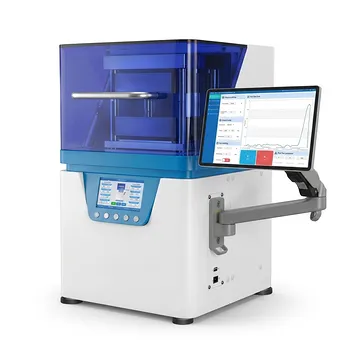
Hydraulic presses are versatile tools primarily utilized in laboratory analysis, industrial manufacturing, and material testing. Their applications range from the delicate preparation of samples for spectroscopic examination to heavy-duty metal forming and waste compaction.
Core Takeaway The versatility of hydraulic presses lies in their ability to scale force application, making them equally effective for precise scientific analysis in laboratories and high-tonnage fabrication in heavy industry.
Precision in Laboratory and Analytical Settings
The primary reference highlights the critical role these machines play in scientific environments where precision is paramount.
Sample Preparation and Analysis
Hydraulic presses are standard equipment for preparing samples for spectroscopic examination. They are used to create uniform pellets or discs required for accurate chemical reading.
Additionally, they are essential for creating powder mixtures used in compositional analysis. This ensures that the material being tested is compacted homogeneously for consistent results.
Testing Material Properties
Laboratories utilize these presses for tension testing to determine how materials react under stress. By applying controlled force, researchers can measure durability and breaking points with high accuracy.
Handling Temperature-Sensitive Materials
A specific variant, the hydraulic hot press, allows for the simultaneous application of heat and pressure. This is particularly valuable for processing temperature-sensitive materials that require specific thermal conditions to bond or form correctly without degrading.
Heavy Industrial and Manufacturing Utility
Beyond the laboratory, supplementary data confirms that hydraulic presses are foundational to heavy manufacturing due to their ability to generate immense pressure (often exceeding 10,000 psi).
Metal Forming and Fabrication
In sectors like automotive and aerospace, these presses are used for forging, stamping, and bending. They shape car body panels and complex aerospace components like turbine blades.
They are also used for straightening metal beams and cutting or shearing metal sheets to precise dimensions.
Compression Molding
Hydraulic presses are vital for molding materials such as plastics, rubber, and composites. The machine compresses the raw material into a specific mold shape, holding it under pressure until it sets.
Assembly Operations
Manufacturing lines often use hydraulic systems for press-fitting. This involves forcing components, such as bearings or fittings, into place with high force to create a permanent mechanical bond without fasteners.
Specialized High-Force Applications
The adaptability of hydraulic power allows for unique applications in diverse fields, ranging from food production to waste management.
Recycling and Waste Management
In the recycling industry, hydraulic presses are used for scrap baling. They compress loose waste materials into manageable bales for transport.
On a larger scale, they are capable of crushing automobiles, compressing vehicles into compact forms for efficient steel recycling.
Niche Production Processes
Surprisingly, these presses serve the food industry, specifically in producing fat-free cocoa powder by extracting fat from cocoa beans under extreme pressure.
They are also employed in traditional craftsmanship, such as sword-making, to flatten and forge blades with a level of control that manual hammering cannot achieve.
Understanding the Trade-offs
While hydraulic presses are versatile, they are not the universal solution for every force-application problem.
Speed vs. Force
Hydraulic presses generally operate slower than mechanical presses. If your application requires high-speed, repetitive stamping for mass production, a hydraulic system may be a bottleneck.
Maintenance Requirements
Hydraulic systems rely on fluid dynamics, which introduces the risk of leaks. They require regular maintenance of seals, hoses, and fluids to maintain pressure consistency and cleanliness, especially in laboratory settings.
Making the Right Choice for Your Goal
To determine if a hydraulic press fits your specific application, consider your primary objective:
- If your primary focus is Laboratory Analysis: Prioritize a press with precise force control and heated platens for sample preparation and spectroscopy.
- If your primary focus is Metal Fabrication: Look for high-tonnage capacity capable of deep drawing, forging, or stamping heavy gauge metals.
- If your primary focus is Assembly: Ensure the press offers controlled, consistent pressure for press-fitting components without damaging them.
Select the machine that balances your need for force magnitude with your requirement for operational speed and precision.
Summary Table:
| Application Category | Key Use Cases | Primary Benefit |
|---|---|---|
| Laboratory Analysis | FTIR/XRF Sample Pellets, Material Tension Testing | Precision and homogeneous compaction |
| Manufacturing | Metal Forging, Stamping, Compression Molding | High-tonnage force for shaping |
| Assembly | Press-fitting bearings and mechanical components | Permanent mechanical bonds without fasteners |
| Specialized Industry | Waste Baling, Cocoa Butter Extraction | High-pressure volume reduction and extraction |
| Advanced Research | Battery Research, Isostatic Pressing | Uniform pressure for temperature-sensitive materials |
Elevate Your Pressing Precision with KINTEK
Are you looking to optimize your laboratory analysis or material research? KINTEK specializes in comprehensive laboratory pressing solutions tailored to your specific needs.
Our extensive range includes:
- Manual & Automatic Presses for reliable sample preparation.
- Heated & Multifunctional Models for complex material bonding.
- Glovebox-Compatible & Isostatic Presses (Cold/Warm) ideal for advanced battery research and sensitive environments.
Whether you are preparing spectroscopic pellets or testing material durability, our high-precision equipment ensures consistent, repeatable results. Contact our technical experts today to find the perfect press for your lab and experience the KINTEK advantage in scientific excellence.
Related Products
- Automatic Hydraulic Hot Press with Large Plate and Precision Temperature Control for Advanced Material Sample Preparation and Industrial Research
- Automatic Hydraulic Heat Press Machine with Multi Stage Programmable Control and Integrated Water Cooling Plate Size 180x180mm
- Automatic High Temperature Heated Hydraulic Press Machine with Heated Plates for Lab
- Automatic Heated Hydraulic Lab Press with Programmable Touch Screen Controls and Precision Temperature Regulation
- Manual Heated Hydraulic Lab Press with Integrated Hot Plates Hydraulic Press Machine
People Also Ask
- What are the specific features and applications of hydraulic hot press machines? Precision Solutions for Modern Labs
- How does an automatic hydraulic press operate? Achieve Precision and Consistency in Lab Pelleting
- What are the advantages and common applications of an automatic hydraulic press? Elevate Your Lab's Precision
- What is the technical significance of setting a precise dwell time? Achieve Peak Material Density and Stability
- When is an automatic hydraulic press more suitable than a manual press? Scale Your Lab with Precision & Speed