You should use a wax binder specifically when handling samples that lack the natural cohesion to remain intact after being pressed. If your sample crumbles, exhibits surface cracking, or fails to bind even when supported by a dedicated sample cup, the addition of a wax agent is necessary to create a durable, analyzable pellet.
Core Takeaway While pure samples are ideal for analytical sensitivity, structural integrity is a prerequisite for XRF analysis. Use a wax binder only when a sample physically fails to hold its shape, and strictly adhere to the minimum quantity required to avoid diluting your analytical results.
Diagnosing the Need for Binders
Lack of Natural Cohesion
Certain materials do not possess the physical properties required to bind together under pressure.
If you are working with powders that remain loose or granular after a test press, the material requires an additive matrix to hold it together.
Failure Despite Support
Many laboratories use supporting cups (such as aluminum or plastic) to hold a pellet.
However, if the sample breaks apart or delaminates even when supported in a cup, a binder becomes mandatory. This prevents the pellet from disintegrating during handling or inside the spectrometer.
Application Best Practices
Integration During Milling
To ensure the pellet is homogeneous, the binder should not be added immediately before pressing.
Instead, add the binder—whether in powder or tablet form—during the milling or grinding stage. This ensures the wax is evenly distributed throughout the sample before compression begins.
The Principle of Minimum Use
You must use the absolute minimum amount of binder necessary to achieve a secure bond.
Excessive binder usage introduces more "non-sample" material into the pellet. This dilutes the concentration of the elements you are trying to measure, potentially lowering signal intensity.
Understanding the Trade-offs
Sample Dilution
The most significant downside to using a wax binder is dilution.
Because wax contains carbon and hydrogen (which are generally not the analytes of interest), adding it reduces the relative weight fraction of the elements you are analyzing. This can negatively impact the detection limits for trace elements.
Contamination Risks
While binders increase stability, every additive introduces a variable.
Ensure your binder is of high purity. Using low-quality binders can introduce trace contaminants that may skew your spectral data.
Making the Right Choice for Your Goal
- If your primary focus is Structural Integrity: Prioritize adding a binder during the milling stage to prevent machine contamination from crumbling pellets.
- If your primary focus is Analytical Sensitivity: Attempt to press the sample without a binder first, or use a support cup, to maximize the signal intensity of trace elements.
Ultimately, view the wax binder as a necessary tool for stability, but one that should be used sparingly to maintain analytical precision.
Summary Table:
| Factor | Recommendation | Impact on Analysis |
|---|---|---|
| Sample Cohesion | Use binder if sample crumbles or cracks | Ensures structural integrity for handling |
| Application Method | Add during milling/grinding stage | Ensures homogeneity of the pellet |
| Quantity | Use the absolute minimum required | Minimizes sample dilution and signal loss |
| Support Choice | Use cups first; add binder if failure persists | Balances sensitivity with physical stability |
| Binder Purity | Use high-purity laboratory-grade wax | Prevents trace element contamination |
Optimize Your Sample Prep with KINTEK Precision Solutions
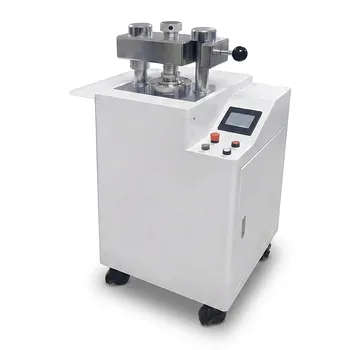
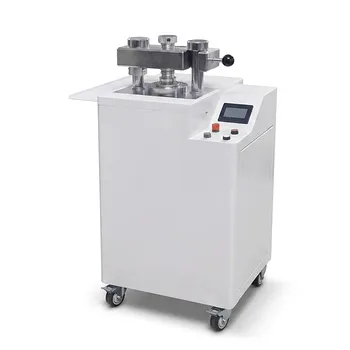
Don't let crumbling samples compromise your XRF accuracy. KINTEK specializes in comprehensive laboratory pressing solutions, offering manual, automatic, heated, and multifunctional models designed for maximum reliability. Whether you are conducting battery research or mineral analysis, our equipment—including glovebox-compatible and isostatic presses—ensures your pellets meet the highest standards of structural integrity and analytical sensitivity.
Ready to upgrade your lab's performance? Contact KINTEK today to find the perfect press for your specific research needs!
Related Products
- XRF KBR Plastic Ring Lab Powder Pellet Pressing Mold for FTIR
- Lab XRF Boric Acid Powder Pellet Pressing Mold for Laboratory Use
- Automatic Fluorescence Sample Preparation Press 40 Ton Lab Pellet Press for XRF Analysis
- XRF KBR Steel Ring Lab Powder Pellet Pressing Mold for FTIR
- Automatic XRF Pellet Press for Laboratory Spectrometry Sample Preparation
People Also Ask
- What is the purpose of making KBr pellets for FTIR? Achieve Precise Molecular Analysis with Solid Samples
- What factors should be considered when choosing a lab press for XRF pellet preparation? Ensure Accurate and Consistent Results
- Why are pellets used in XRF analysis, and what is their limitation? Boost Accuracy and Speed in Your Lab
- How are pellets prepared for XRF analysis and what is a potential drawback? Master XRF Sample Prep and Accuracy
- What are the different types of XRF pellet preparation methods available? Manual, Hydraulic, and Automated Presses Explained