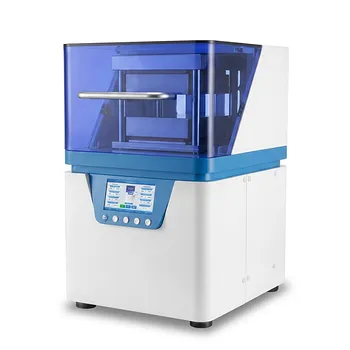
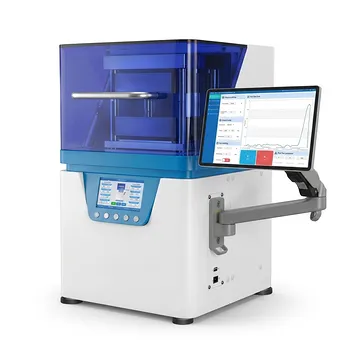
From microscopic laboratory analysis to massive industrial forging, hydraulic presses demonstrate their versatility by adapting to an immense range of force requirements. They are utilized to create precise sample discs for FTIR spectroscopy, mold complex composites, form automotive parts, and even process unique food products like fat-free cocoa powder.
The Core Insight The versatility of hydraulic presses lies in their ability to scale force and integrate variables like temperature. While often associated with crushing power, their true value is the precision control that allows them to span from delicate chemical sampling to heavy aerospace manufacturing.
The Spectrum of Industrial Applications
Metal Forming and Fabrication
In heavy industry, hydraulic presses are the backbone of metalworking. They are used for forging, stamping, and bending metal sheets into specific geometries.
Automotive and aerospace manufacturers rely on them to form car body panels and complex components like turbine blades. The construction industry utilizes them to straighten and bend massive metal beams.
Molding and Assembly
Beyond metal, these presses are essential for compression molding. This involves compressing materials like plastics, rubber, or composites into molds to create finished products.
They are also critical for assembly operations. Manufacturers use them for press-fitting bearings, crimping connections, and joining components where high force is required to ensure a permanent bond.
Waste Management and Recycling
The immense pressure capabilities of hydraulic systems allow for efficient waste processing.
Specifically, they are used for crushing cars and compacting waste materials. This reduces the volume of scrap, making transport and recycling significantly more efficient.
Laboratory and Precision Uses
Scientific Sample Preparation
On a much smaller scale, hydraulic presses are vital in scientific laboratories. A primary application is creating sample discs for FTIR spectroscopy.
In this context, the press creates pellets or discs to prepare materials for chemical analysis. This requires distinct precision rather than brute force.
Material Testing
Laboratories use these presses to test the limits of new materials. By applying controlled force, researchers can investigate durability and strength.
They allow scientists to observe the effects of high pressure on various substances in a controlled, safe environment.
The "Hot Press" Advantage
Temperature as a Variable
The primary reference highlights that versatility is significantly enhanced by hydraulic hot press machines.
These units allow operators to select and control temperature during compression. This is critical for ensuring product quality in applications where heat affects the material's chemical structure or flow.
Specialized Niche Applications
The combination of pressure and temperature control opens the door to unique industries.
For example, in the food industry, presses are used to extract fat from cocoa beans to produce fat-free cocoa powder. In traditional craftsmanship, they assist in sword-making to shape blades with consistency.
Understanding the Trade-offs
Hydraulic vs. Pneumatic Systems
It is important to choose the right tool for the pressure required. Hydraulic systems can efficiently apply pressures in the range of 10,000 psi.
In contrast, pneumatic systems typically operate around 100 psi. If your application requires lower force, a hydraulic system may be over-engineered and inefficient for the task.
Complexity of Control
While adding temperature control (hot presses) increases versatility, it also adds operational variables.
Precise control over both pressure and heat is required to prevent damaging sensitive materials, such as FTIR samples or composite molds.
Making the Right Choice for Your Goal
To select the right hydraulic press application, you must define the scale and environmental needs of your project.
- If your primary focus is Laboratory Analysis: Prioritize precision and the ability to create consistent pellets or discs for spectroscopy.
- If your primary focus is Manufacturing: Look for machines capable of high-tonnage tasks like deep drawing, stamping, or press-fitting components.
- If your primary focus is Material Processing: Ensure the machine offers integrated temperature control to manage the flow and quality of plastics or food products.
The hydraulic press is not just a tool for crushing; it is a precision instrument for shaping the material world at every scale.
Summary Table:
| Application Category | Specific Use Cases | Key Feature/Benefit |
|---|---|---|
| Laboratory Analysis | FTIR sample discs, pelletizing, material testing | Precision pressure control |
| Manufacturing | Forging, stamping, automotive body panels | High-tonnage force |
| Material Processing | Compression molding, composite forming | Integrated temperature control |
| Assembly & Maintenance | Press-fitting bearings, crimping, straightening | Permanent component bonding |
| Waste Management | Car crushing, scrap metal compacting | Volume reduction efficiency |
Maximize Your Lab’s Versatility with KINTEK Pressing Solutions
At KINTEK, we understand that whether you are conducting cutting-edge battery research or precise material analysis, the right pressure makes all the difference. We specialize in providing a comprehensive range of laboratory pressing solutions tailored to your specific needs, including:
- Manual & Automatic Presses for consistent sample preparation.
- Heated & Multifunctional Models for complex material processing.
- Cold & Warm Isostatic Presses ideal for advanced battery and ceramic research.
- Glovebox-Compatible Designs for sensitive environment applications.
Ready to elevate your research precision? Contact KINTEK today to discover how our expert-engineered hydraulic solutions can transform your laboratory workflow.
Related Products
- Automatic Hydraulic Hot Press with Large Plate and Precision Temperature Control for Advanced Material Sample Preparation and Industrial Research
- Automatic Hydraulic Heat Press Machine with Multi Stage Programmable Control and Integrated Water Cooling Plate Size 180x180mm
- Automatic High Temperature Heated Hydraulic Press Machine with Heated Plates for Lab
- Automatic Heated Hydraulic Lab Press with Programmable Touch Screen Controls and Precision Temperature Regulation
- Manual Heated Hydraulic Lab Press with Integrated Hot Plates Hydraulic Press Machine
People Also Ask
- What are the specific features and applications of hydraulic hot press machines? Precision Solutions for Modern Labs
- How does an automatic hydraulic press operate? Achieve Precision and Consistency in Lab Pelleting
- What are the advantages and common applications of an automatic hydraulic press? Elevate Your Lab's Precision
- What is the technical significance of setting a precise dwell time? Achieve Peak Material Density and Stability
- When is an automatic hydraulic press more suitable than a manual press? Scale Your Lab with Precision & Speed