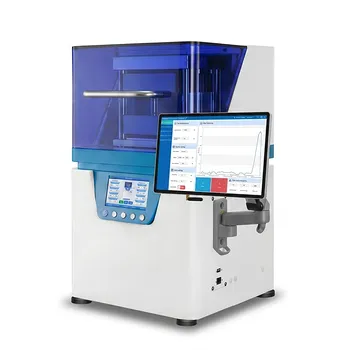
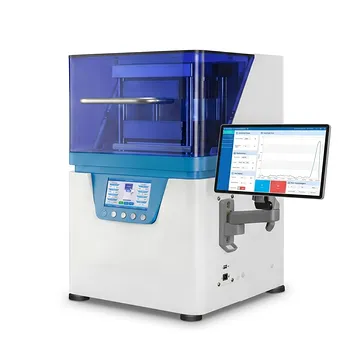
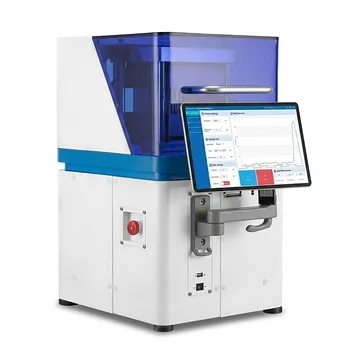
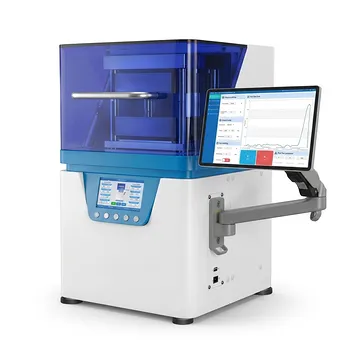
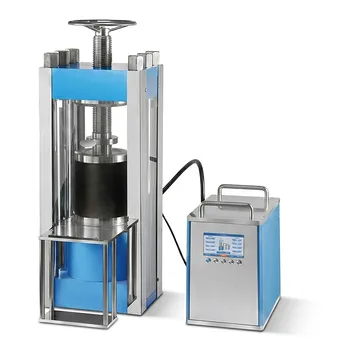
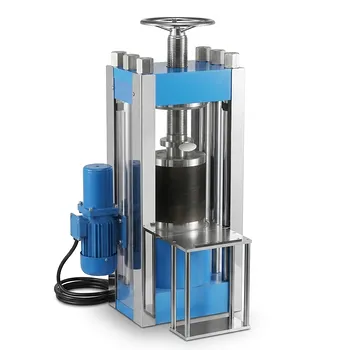
Heated lab presses extend far beyond basic material testing to serve critical roles in manufacturing and scientific innovation. Their primary applications outside of major industrial processing include laminating composite layers, molding rubber and plastic into functional parts, conducting Research and Development (R&D) to optimize material properties, and executing short production runs for rapid prototyping.
The true value of a heated lab press lies in its versatility: it allows operators to replicate large-scale manufacturing conditions (heat and pressure) in a controlled environment, making it essential for both creating finished specialized components and validating experimental materials.
Advanced Material Fabrication
The heated lab press is a fundamental tool for manipulating the physical state of raw materials. By applying precise heat and pressure, it transforms loose substrates into cohesive products.
Composite Lamination
One of the most common applications is laminating multiple layers of materials.
This process is used to create robust composite structures where distinct layers are bonded together. The press ensures that the bond is uniform and strong, resulting in high-performance materials suitable for demanding environments.
Rubber and Plastic Molding
Heated presses are frequently used for rubber and plastic molding.
This application allows for the shaping of raw materials into specific finished products, ranging from complex automotive parts to everyday household items. The heat ensures the material flows correctly into the mold, while the pressure dictates the final density and shape.
Research and Low-Volume Manufacturing
Beyond creating physical objects, these presses act as a bridge between a theoretical concept and a mass-producable product.
Research and Development (R&D)
R&D departments rely heavily on these presses to investigate material properties and optimize manufacturing processes.
Scientists use them to test how materials react under specific thermal and barometric conditions. This data is crucial for refining formulations before moving to expensive large-scale trials.
Short Runs and Prototyping
For projects requiring limited production or rapid prototyping, a lab press is often more efficient than a full factory line.
It enables the manufacturing of specialized components in small batches. This allows engineers to produce functional prototypes for testing without the high costs associated with mass production tooling.
Specialized Scientific Preparations
While the primary reference focuses on fabrication, it is important to note the press's role in analytical science and pharmaceutical applications.
Analytical Sample Preparation
Heated presses are indispensable for preparing samples for analysis, such as Infrared (IR) and XRF spectroscopy.
They are also used to create uniform polymer films and compress powders into pellets (such as ceramics). This ensures that the samples used for testing have reproducible characteristics, which is vital for accurate scientific data.
Pharmaceutical Applications
In the medical field, these presses are utilized for pill making.
The ability to control pressure ensures that pills are compacted to the correct hardness and density. This guarantees consistent dosage and dissolution rates in pharmaceutical products.
Understanding the Trade-offs
While heated lab presses are versatile, they are not a universal solution for all manufacturing needs.
Volume Limitations
These presses are designed for batch processing, not continuous high-volume throughput.
If your goal is mass production of thousands of units per hour, a lab press will become a bottleneck. They are optimized for precision and flexibility rather than raw speed.
Size Constraints
The platen size of a lab press limits the physical dimensions of the workpiece.
While excellent for components and samples, they cannot accommodate large-scale structural parts that might fit in an industrial floor press. You must ensure the press dimensions match your largest intended prototype.
Making the Right Choice for Your Goal
To determine if a heated lab press fits your specific application, consider your immediate output requirements.
- If your primary focus is R&D: Prioritize a press with precise temperature control to accurately investigate material properties and optimize new processes.
- If your primary focus is Prototyping: Look for a system that allows for quick mold changes to facilitate rapid iterations and short production runs.
- If your primary focus is Material Synthesis: Ensure the press can deliver the high pressure required for laminating composites or molding rubber and plastic parts.
A heated lab press is an investment in reproducibility, allowing you to validate materials and processes on a small scale before committing to full production.
Summary Table:
| Application Category | Primary Uses & Benefits |
|---|---|
| Material Fabrication | Laminating composite layers and molding rubber/plastic into functional parts. |
| Research & Development | Investigating material properties and optimizing thermal/pressure processes. |
| Prototyping | Executing short production runs and creating functional prototypes quickly. |
| Analytical Science | Preparing IR/XRF spectroscopy samples, polymer films, and ceramic pellets. |
| Pharmaceuticals | Precise compaction of pills to ensure consistent dosage and dissolution. |
Elevate Your Material Research with KINTEK Precision
From advanced battery research to specialized composite lamination, KINTEK provides the comprehensive laboratory pressing solutions your facility needs. Our range includes manual, automatic, heated, multifunctional, and glovebox-compatible models, as well as high-performance cold and warm isostatic presses.
Whether you are conducting critical R&D, rapid prototyping, or precise sample preparation, our systems deliver the reproducibility and control required for scientific success. Contact KINTEK today to find the perfect press for your application and see how our expertise can streamline your workflow.
Related Products
- 24T 30T 60T Heated Hydraulic Lab Press Machine with Hot Plates for Laboratory
- Automatic Heated Hydraulic Lab Press 120x120mm Plate Fully Automated Material Research Press
- Automatic Heated Hydraulic Lab Press with Programmable Touch Screen Controls and Precision Temperature Regulation
- Automatic Heated Hydraulic Lab Press Machine 200x200 Plate Size for Battery Research and Materials Science
- Manual Heated Hydraulic Lab Press with Integrated Hot Plates Hydraulic Press Machine
People Also Ask
- Function of a Laboratory Hydraulic Press with Heated Platens in SSE? Enhance Battery Density & Conductivity
- Why is a laboratory hydraulic press with heating plates required for PLA/TEC films? Achieve Precise Sample Integrity
- What role does a laboratory heated hydraulic press play in LTCC? Essential for High-Density Ceramic Lamination
- What is the primary function of a laboratory heated hydraulic press? Mastering Thermoplastic Carbon Fiber Composites
- What is the critical role of a laboratory heated hydraulic press? Mastering PVC Sample Prep for Testing