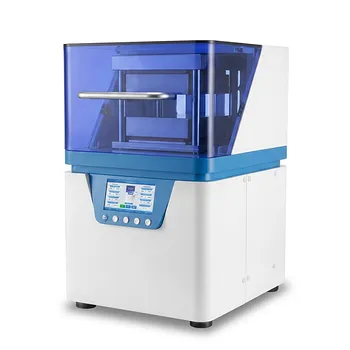
Hydraulic presses are utilized for highly specialized tasks that extend far beyond standard manufacturing, ranging from massive industrial recycling to delicate food processing. Uniquely, they are employed to crush cars into compact forms for recycling, extract fat from cocoa beans to produce fat-free cocoa powder, and apply precise force in the traditional craft of sword-making.
The defining characteristic of the hydraulic press is its ability to scale force application—delivering brute power for scrap baling while retaining the control necessary for culinary extraction and artisanal forging.
Specialized Industrial and Artisanal Applications
Automotive Recycling and Scrap Baling
In the realm of heavy industry, hydraulic presses serve a critical role in waste management. They are specifically used to crush cars and other large metal objects.
By applying immense pressure, the press compresses the vehicle into a dense, compact form. This process significantly reduces the volume of the scrap metal, making it far easier to transport and store for future recycling.
Food Industry Processing
A less obvious but highly specialized application occurs in food production. Hydraulic presses are instrumental in the creation of fat-free cocoa powder.
The machine subjects cocoa beans to high pressure. This intense force successfully extracts the fat content from the beans, leaving behind the dry cocoa solids required for powder production.
Precision in Traditional Crafts
While often associated with mass production, hydraulic presses also support artisanal craftsmanship. They are used in the intricate process of sword-making.
In this context, the press aids in shaping and forging blades. It allows the smith to flatten and mold the steel with a level of consistency and power that manual hammering cannot easily replicate, ensuring precision in the final blade geometry.
Scientific and Material Testing Applications
Laboratory Sample Preparation
Beyond manufacturing, hydraulic presses are staples in scientific laboratories. They are frequently used to prepare samples for spectroscopic examination, such as creating sample discs for FTIR spectroscopy.
The press compacts powder mixtures into solid forms suitable for analysis. This ensures that chemical compositions can be analyzed without the interference of loose particles or air gaps.
Construction and Ceramics
In the construction sector, hydraulic presses are used for concrete compression testing. This verifies the tensile strength of the material to ensure it meets safety standards.
Additionally, in ceramics manufacturing, these presses compact powders to produce items like tiles and bricks at room temperature, relying on force rather than immediate heat to bind the materials.
Key Considerations for Specialized Use
Temperature Sensitivity vs. Pure Force
Not all hydraulic applications rely solely on pressure. A critical distinction exists between standard presses and hydraulic hot press machines.
Standard presses generate force, which is sufficient for cold forming or crushing cars. However, for temperature-sensitive materials, a hot press is required.
The hot press variant controls both pressure and temperature simultaneously. This capability is essential for ensuring product quality in specific industrial and laboratory processes where heat affects the material's structural integrity.
Making the Right Choice for Your Goal
The versatility of a hydraulic press depends heavily on matching the machine's specific capabilities—such as thermal control or maximum tonnage—to the material at hand.
- If your primary focus is Waste Management: Prioritize a press designed for scrap baling that can deliver the immense tonnage required to compress car bodies and heavy metals.
- If your primary focus is Food or Chemical Processing: Ensure the equipment is capable of high-pressure extraction to separate liquids (fats) from solids efficiently.
- If your primary focus is Material Science: Select a press capable of precise sample preparation, potentially utilizing a hot press variant if your materials are temperature-sensitive.
Hydraulic presses transform raw power into a diverse toolset, capable of crushing steel, refining food, and validating the strength of our infrastructure.
Summary Table:
| Application Category | Specific Use Case | Key Benefit |
|---|---|---|
| Heavy Industry | Automotive Recycling & Scrap Baling | Reduces waste volume for efficient transport |
| Food Processing | Cocoa Fat Extraction | Produces fat-free cocoa powder via high-pressure separation |
| Artisanal Craft | Sword-making & Forging | Ensures consistent blade geometry and material density |
| Scientific Research | FTIR Sample Preparation | Creates uniform pellets for accurate spectroscopic analysis |
| Construction | Concrete Compression Testing | Validates material tensile strength for safety standards |
| Material Science | Hot Pressing | Simultaneous control of heat and pressure for sensitive materials |
Elevate Your Research with KINTEK’s Precision Pressing Solutions
Whether you are conducting advanced battery research or preparing delicate spectroscopic samples, KINTEK specializes in comprehensive laboratory pressing solutions tailored to your specific needs.
Our extensive range includes:
- Manual & Automatic Models: For versatile lab-scale operations.
- Heated & Multifunctional Presses: Perfect for temperature-sensitive material science.
- Specialized Systems: Including glovebox-compatible models and Cold/Warm Isostatic Presses (CIP/WIP).
Ready to achieve superior consistency and precision in your results? Contact KINTEK today to find the perfect press for your application!
Related Products
- Automatic Hydraulic Hot Press with Large Plate and Precision Temperature Control for Advanced Material Sample Preparation and Industrial Research
- Automatic Hydraulic Heat Press Machine with Multi Stage Programmable Control and Integrated Water Cooling Plate Size 180x180mm
- Automatic Heated Hydraulic Lab Press with Programmable Touch Screen Controls and Precision Temperature Regulation
- Manual Heated Hydraulic Lab Press with Integrated Hot Plates Hydraulic Press Machine
- Automatic High Temperature Heated Hydraulic Press Machine with Heated Plates for Lab
People Also Ask
- What are the specific features and applications of hydraulic hot press machines? Precision Solutions for Modern Labs
- How does an automatic hydraulic press operate? Achieve Precision and Consistency in Lab Pelleting
- What are the advantages and common applications of an automatic hydraulic press? Elevate Your Lab's Precision
- What is the technical significance of setting a precise dwell time? Achieve Peak Material Density and Stability
- When is an automatic hydraulic press more suitable than a manual press? Scale Your Lab with Precision & Speed