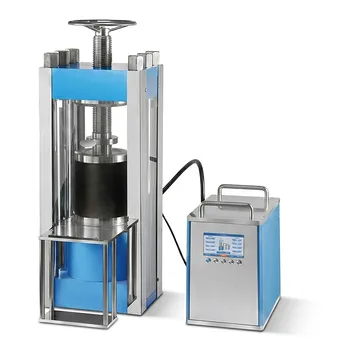
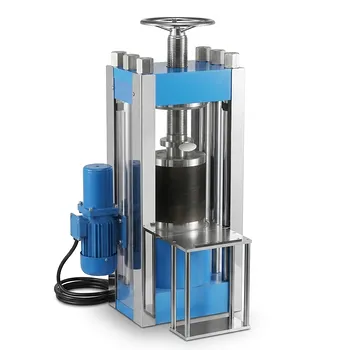
In the pharmaceutical industry, heated lab presses serve as essential precision instruments for consolidating powders and synthesizing compounds under strictly controlled conditions. Their primary applications include the manufacturing of tablets, the encapsulation of drugs for enhanced delivery, and the synthesis of new drug compounds, all of which require exact temperature and pressure regulation to ensure product safety and efficacy.
The core value of a heated lab press lies in reproducibility; by mechanically ensuring uniform pressure and temperature, these devices eliminate variability in drug formulation, guaranteeing that test data regarding bioavailability and stability is accurate enough for regulatory submission.
Core Applications in Drug Formulation
Tablet Manufacturing and Consistency
The most prominent application of heated lab presses is the compression of powders or granules into solid tablets.
By applying heat alongside pressure, manufacturers can ensure uniform active ingredient distribution within the tablet matrix. This precise control results in tablets with consistent weight, dimensions, and dosage, which is non-negotiable for patient safety.
Enhancing Bioavailability via Encapsulation
Heated presses facilitate the encapsulation of drugs into specific carriers.
This process is critical for modifying how a drug interacts with the body, often enhancing drug delivery and bioavailability. By manipulating the thermal conditions during compression, researchers can optimize how the drug is released once ingested.
Chemical Drug Synthesis
Beyond shaping materials, these presses are used in the actual synthesis of pharmaceutical compounds.
The application of heat and pressure can drive specific chemical reactions or fuse materials that are otherwise difficult to combine. This allows for the creation of novel drug formulations with specific therapeutic properties.
Quality Control and Analytical Testing
Preparation of Test Pellets
In quality control (QC) workflows, lab presses are used to create uniform pellets from powdered drugs.
These pellets are the standard subject for critical assessments, including dissolution testing, stability studies, and bioavailability assessments. The mechanical consistency provided by the press ensures that any variance in results is due to the chemical properties of the drug, not the manufacturing method.
Sample Prep for Spectroscopy
Heated presses are indispensable for preparing samples for analytical techniques like infrared (IR) and XRF spectroscopy.
Creating a perfectly flat, dense sample is required to obtain clear spectral data. This data is used to verify the purity and chemical structure of pharmaceutical ingredients before they move to mass production.
Understanding the Trade-offs
Thermal Sensitivity and Degradation
While heat aids in binding and forming tablets, it presents a risk to thermally sensitive active ingredients.
If the temperature control of the press is not uniform or is set too high, the drug compound can degrade before it is even formed into a tablet. Operators must balance the need for binding heat against the chemical stability of the drug.
Pressure Distribution Variability
Applying pressure is not enough; the distribution of that pressure must be perfectly even across the platen.
If pressure is uneven, the resulting tablets may have inconsistent densities. A tablet that is too dense may not dissolve correctly in the body, while one that is too porous may crumble during packaging, leading to failed regulatory inspections.
Making the Right Choice for Your Goal
- If your primary focus is Drug Formulation: Prioritize a press with advanced programmable heating cycles to optimize bio-availability and ensure uniform active ingredient distribution.
- If your primary focus is Quality Control: Focus on a press known for extreme mechanical precision to ensure the reproducibility of pellets for dissolution and stability testing.
Success in pharmaceutical pressing relies not just on force, but on the precise thermal management of your material's properties.
Summary Table:
| Application | Key Benefit | Critical Requirement |
|---|---|---|
| Tablet Manufacturing | Uniform active ingredient distribution | Precise temperature & pressure control |
| Drug Encapsulation | Enhanced bioavailability & delivery | Advanced thermal management |
| Chemical Synthesis | Creation of novel drug compounds | Reproducible heating cycles |
| Analytical Testing | Accurate IR/XRF spectroscopy | Extreme mechanical precision |
| Quality Control | Consistent pellet dissolution data | Uniform pressure distribution |
Optimize Your Pharmaceutical Research with KINTEK
Precise drug formulation and regulatory compliance demand the highest level of reproducibility. KINTEK specializes in comprehensive laboratory pressing solutions designed for the rigorous needs of pharmaceutical R&D and quality control.
Whether you are performing battery research or developing life-saving medications, our diverse range—including manual, automatic, heated, multifunctional, and glovebox-compatible models, as well as cold and warm isostatic presses—ensures your materials achieve perfect density and stability.
Ready to enhance your lab's efficiency and data accuracy? Contact KINTEK today for a customized solution
Related Products
- 24T 30T 60T Heated Hydraulic Lab Press Machine with Hot Plates for Laboratory
- Automatic Heated Hydraulic Lab Press 120x120mm Plate Fully Automated Material Research Press
- Automatic Heated Hydraulic Lab Press with Programmable Touch Screen Controls and Precision Temperature Regulation
- Automatic Heated Hydraulic Lab Press Machine 200x200 Plate Size for Battery Research and Materials Science
- Manual Heated Hydraulic Lab Press with Integrated Hot Plates Hydraulic Press Machine
People Also Ask
- Function of a Laboratory Hydraulic Press with Heated Platens in SSE? Enhance Battery Density & Conductivity
- Why is a laboratory hydraulic press with heating plates required for PLA/TEC films? Achieve Precise Sample Integrity
- What role does a laboratory heated hydraulic press play in LTCC? Essential for High-Density Ceramic Lamination
- Why reduce load when applying composite strengthening tabs? Protect Specimen Integrity and Data Accuracy
- Why is a laboratory heated hydraulic press utilized during the lamination stage of NASICON green tapes?