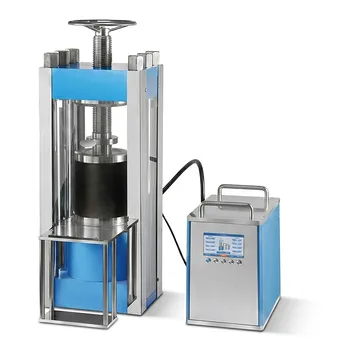
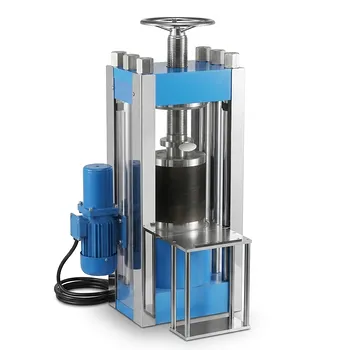
Heated lab presses are versatile instruments used primarily for preparing solid samples, molding polymers, and creating composite materials through the precise application of force and thermal energy. Their core function spans industries from pharmaceuticals to advanced material science, facilitating tasks such as pill making, polymer film creation, laminating, and sample preparation for spectroscopy.
The Core Value of the Heated Lab Press These devices do more than just flatten material; they provide a controlled environment where precise temperature (up to 500 °C) and uniform pressure distribution allow for the creation of samples with high reproducibility and consistent structural integrity.
Primary Applications in Research and Analysis
Spectroscopy Sample Preparation
One of the most frequent uses of a heated lab press is in the preparation of samples for analytical testing.
Specifically, they are essential for Infrared (IR) spectroscopy and XRF (X-ray fluorescence) spectroscopy. By applying heat and pressure, the press transforms loose powders or raw materials into solid, uniform pellets or films required for accurate chemical analysis.
Polymer Film Preparation
Material scientists rely heavily on these presses to create thin polymer films.
The heated platens melt the polymer granules while the pressure ensures the resulting film has a consistent thickness. This is critical for testing the physical and optical properties of new plastic formulations.
Research and Development (R&D)
In R&D environments, these presses are used to investigate material properties and optimize manufacturing processes.
They allow researchers to conduct short runs or create prototypes, enabling rapid testing of material behaviors under stress and heat before committing to full-scale production.
Industrial and Manufacturing Applications
Laminating and Composites
Heated lab presses are widely used to bond multiple layers of distinct materials.
This process, known as laminating, is used to create strong composite structures. The combination of heat and pressure fuses layers together, a technique vital for developing advanced materials in aerospace and automotive sectors.
Rubber and Plastic Molding
Beyond flat films, these presses are utilized for molding rubber and plastic into specific shapes.
This application is common for prototyping products like automotive parts and household items. The press ensures the material flows into the mold correctly and cures at the right temperature.
Ceramic Processing
The presses are also capable of processing ceramic powders. They can compress these powders into solid pellets or shapes, often as a precursor to sintering or for direct material testing.
Pharmaceutical Applications
Pill and Tablet Making
In the pharmaceutical industry, precision is paramount. Heated lab presses are used to manufacture tablets with exact specifications.
The equipment allows for the precise control needed to ensure uniform active ingredient distribution and consistent tablet density.
Drug Synthesis and Encapsulation
Advanced applications include drug synthesis and encapsulation.
The press facilitates the encapsulation of drugs into specific carriers to enhance bioavailability. The controlled thermal environment assists in these delicate chemical processes without degrading the active compounds.
Understanding the Operational Advantages
Uniformity and Quality Control
The defining feature of a high-quality heated press is the use of flat heating elements.
These elements ensure uniform temperature distribution across the entire platen surface. This uniformity eliminates "cold spots," ensuring that every part of the workpiece receives the same thermal treatment, which results in consistent thickness and quality.
Safety and Efficiency
Modern heated presses are designed to minimize heat generation in the surrounding environment, reducing energy consumption.
Many models feature closed molding areas and safety doors with locks. These features are critical when processing materials that may release hazardous fumes or emissions during heating, ensuring operator safety and adherence to hygiene standards.
Making the Right Choice for Your Goal
Heated lab presses are not one-size-fits-all; your specific application should dictate the configuration you choose.
- If your primary focus is Spectroscopy: Prioritize a press known for extreme pressure precision to ensure perfectly compacted pellets for accurate readings.
- If your primary focus is Polymer R&D: Look for a press with exceptional thermal uniformity and cooling capabilities to control crystallization in films.
- If your primary focus is Pharmaceuticals: Ensure the equipment meets strict hygiene standards and offers enclosed molding areas to contain active compounds.
Ultimately, the effectiveness of a heated lab press lies in its ability to deliver repeatable, uniform conditions, turning raw variables into consistent, high-quality results.
Summary Table:
| Application Category | Primary Function | Key Benefit |
|---|---|---|
| Spectroscopy | Sample pellet & film creation | Uniform density for accurate IR/XRF analysis |
| Polymer Science | Thin film molding & testing | Consistent thickness and thermal uniformity |
| R&D / Composites | Laminating & prototype runs | Rapid testing of material behaviors under stress |
| Pharmaceuticals | Tablet making & encapsulation | Precise control over active ingredient distribution |
| Industrial Molding | Rubber & ceramic processing | High reproducibility for prototyping and curing |
Optimize Your Lab Results with KINTEK Pressing Solutions
Take the guesswork out of material research and sample preparation. KINTEK specializes in comprehensive laboratory pressing solutions designed to meet the rigorous demands of modern science. Whether you are conducting cutting-edge battery research or developing new pharmaceutical formulations, our range of manual, automatic, heated, and multifunctional models ensures high reproducibility and consistent structural integrity.
Why choose KINTEK?
- Versatile Solutions: From glovebox-compatible models to cold and warm isostatic presses.
- Precision Control: Achieve uniform pressure and temperature distribution up to 500 °C.
- Safety First: Energy-efficient designs with enclosed molding areas for hazardous materials.
Ready to elevate your research efficiency? Contact our experts today to find the perfect press for your application!
Related Products
- 24T 30T 60T Heated Hydraulic Lab Press Machine with Hot Plates for Laboratory
- Automatic Heated Hydraulic Lab Press 120x120mm Plate Fully Automated Material Research Press
- Automatic Heated Hydraulic Lab Press with Programmable Touch Screen Controls and Precision Temperature Regulation
- Automatic Heated Hydraulic Lab Press Machine 200x200 Plate Size for Battery Research and Materials Science
- Manual Heated Hydraulic Lab Press with Integrated Hot Plates Hydraulic Press Machine
People Also Ask
- Function of a Laboratory Hydraulic Press with Heated Platens in SSE? Enhance Battery Density & Conductivity
- Why is a laboratory hydraulic press with heating plates required for PLA/TEC films? Achieve Precise Sample Integrity
- What role does a laboratory heated hydraulic press play in LTCC? Essential for High-Density Ceramic Lamination
- What is the primary function of a laboratory heated hydraulic press? Mastering Thermoplastic Carbon Fiber Composites
- What is the critical role of a laboratory heated hydraulic press? Mastering PVC Sample Prep for Testing