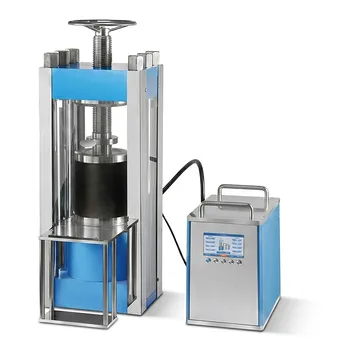
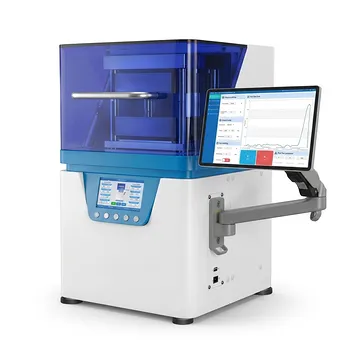
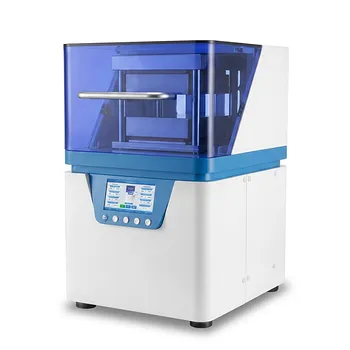
The heating system of a laboratory hot press is comprised of four distinct physical components designed to generate, transfer, and conserve thermal energy. Specifically, it includes heating platens to interface with the sample, heating elements to generate heat, temperature sensors for feedback, and insulation materials to maintain efficiency.
Core Takeaway: While the heating elements provide the raw energy, the system's performance is ultimately defined by the thermal conductivity of the platens and the placement of the sensors. These components determine whether your sample receives uniform heat or suffers from inconsistent thermal gradients.
Core Components of the Heating System
The heating assembly acts as the thermal engine of the press. To achieve reliable results, you must understand the specific role of each part within the thermal loop.
1. Heating Platens
The platens are the heavy, flat plates that press directly against your sample or mold. They act as the primary thermal mass and transfer medium.
Material Selection
Platens are typically manufactured from metals with high thermal conductivity. Common choices include tool steel or aluminum alloys, both of which facilitate the rapid and even spread of heat across the surface area.
Surface Hardening
Because these surfaces endure high pressure, they must be resistant to deformation and wear. Platen surfaces are frequently chrome-plated or nitrided to increase hardness and provide essential corrosion resistance.
2. Heating Elements
These are the active components responsible for converting electrical energy into thermal energy. They are embedded within or attached to the platens.
Types of Elements
The specific technology varies by model but generally includes resistance wires, robust heating cartridges, or induction heating coils. The choice of element dictates the maximum heating rate and the uniformity of heat distribution.
3. Temperature Sensors
To control the process, the system needs accurate, real-time feedback.
Thermocouples
Most laboratory presses utilize thermocouples embedded within the platens. These sensors measure the specific temperature of the metal and relay that data to the external control system (typically a PID controller) to regulate power output.
4. Insulation Materials
Thermal efficiency is critical for maintaining stable temperatures and protecting the surrounding machinery.
Reducing Heat Loss
Specialized insulation materials are installed to isolate the heated platens from the rest of the press frame. This ensures that energy is directed into the sample rather than being lost to the environment or heating up the hydraulic ram.
Understanding the Trade-offs
When evaluating a heating system, it is important to recognize that no single configuration is perfect for every application.
Conductivity vs. Durability
Aluminum alloy platens offer superior heat transfer, heating up and cooling down very quickly. However, they are softer than steel and more prone to damage under extreme pressures. Tool steel is incredibly durable but has lower thermal conductivity, resulting in slower thermal cycling.
Sensor Lag
Ideally, a sensor would measure the sample directly, but they are usually embedded in the platen. This creates a slight offset or "lag" where the platen temperature may differ slightly from the actual sample temperature until equilibrium is reached.
Making the Right Choice for Your Goal
The components of your heating system should be prioritized based on your specific experimental requirements.
- If your primary focus is Rapid Cycling: Prioritize aluminum alloy platens and high-wattage cartridge heaters to minimize ramp-up and cool-down times.
- If your primary focus is Durability: Select hardened tool steel platens with chrome plating to resist wear from abrasive molds or high-pressure applications.
- If your primary focus is Precision: Ensure the thermocouples are high-quality and integrated with a PID controller to minimize temperature overshoot.
By selecting the right combination of platens, elements, and sensors, you ensure consistent material properties across every sample you process.
Summary Table:
| Component | Primary Function | Material/Technology Common Examples |
|---|---|---|
| Heating Platens | Thermal transfer & sample interface | Tool Steel, Aluminum Alloy (Chrome-plated) |
| Heating Elements | Electrical-to-thermal energy conversion | Resistance wires, Cartridge heaters, Induction coils |
| Temp Sensors | Real-time feedback & regulation | Thermocouples (integrated with PID controllers) |
| Insulation | Thermal efficiency & frame protection | Specialized heat-resistant composite boards |
Maximize Your Material Research Precision with KINTEK
Are thermal gradients affecting your sample consistency? KINTEK specializes in comprehensive laboratory pressing solutions designed to eliminate technical bottlenecks. Whether you require manual, automatic, heated, multifunctional, or glovebox-compatible models, our equipment ensures uniform heat distribution and superior pressure control.
From advanced battery research to specialized cold and warm isostatic presses, KINTEK provides the durability of hardened steel and the precision of high-end PID regulation.
Ready to elevate your lab's capabilities?
Related Products
- Automatic Heated Hydraulic Press Machine with Hot Plates for Laboratory
- 24T 30T 60T Heated Hydraulic Lab Press Machine with Hot Plates for Laboratory
- Heated Hydraulic Press Machine with Heated Plates for Vacuum Box Laboratory Hot Press
- Split Hot Isostatic Pressing Machine 150 Ton Laboratory Heated Isostatic Press
- Heated Hydraulic Press Machine With Heated Plates For Vacuum Box Laboratory Hot Press
People Also Ask
- Function of a Laboratory Hydraulic Press with Heated Platens in SSE? Enhance Battery Density & Conductivity
- Why is a laboratory hydraulic press with heating plates required for PLA/TEC films? Achieve Precise Sample Integrity
- What are the requirements for electrode pressing with high-viscosity ionic liquids like EMIM TFSI? Optimize Performance
- How does a laboratory heated hydraulic press facilitate PBN sample prep for WAXS? Achieve Precise X-Ray Scattering
- What are the industrial applications of heated hydraulic presses? Master Heat & Force for Precision Manufacturing