Laboratory hydraulic presses are primarily classified by their mode of operation: manual or powered (electric). Within these two broad categories, the equipment is further divided into specific configurations, ranging from handheld manual units to advanced electric systems featuring programmable touchscreens and automated load controls.
The choice between classifications fundamentally shifts your workflow: manual presses offer a cost-effective solution for occasional use, while electric presses deliver the repeatability and automation necessary for high-volume quality control or complex R&D.
Primary Classifications: Manual vs. Powered
The fundamental distinction in laboratory presses lies in how force is generated.
Manual Hydraulic Presses
Manual presses rely on physical operator effort to generate pressure. They are generally simpler in design and are categorized into two sub-types:
1. Handheld Versions: These are compact, portable units designed for flexibility and smaller applications.
2. Full-Size (Benchtop) Versions: These are larger, stationary units. They typically feature a long handle to provide the necessary leverage for generating higher force without motorized assistance.
Powered (Electric) Hydraulic Presses
Electric presses utilize a motor to generate force, removing the physical strain from the operator. These are further differentiated by their level of control technology:
1. Standard Electric Models: These units provide motorized pressure generation but may lack advanced interface controls.
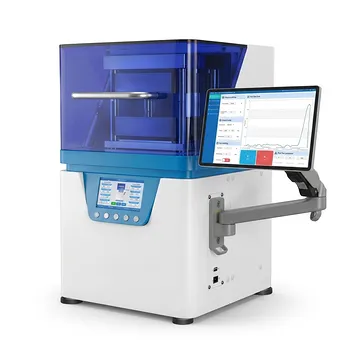
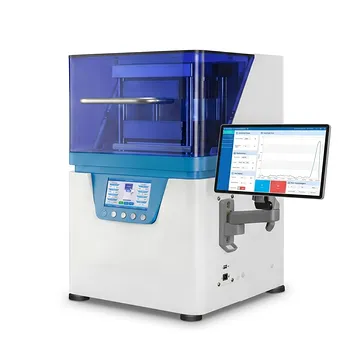
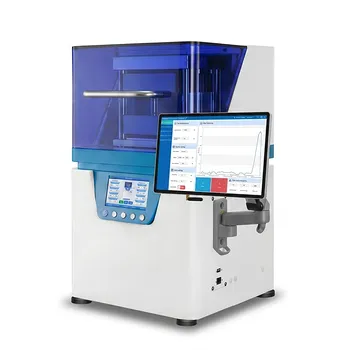
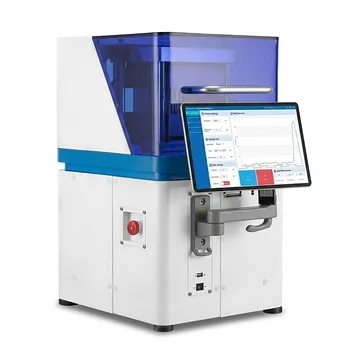
2. Advanced Programmable Models: These high-end units feature LED touchscreens and custom programmable load cycles. They allow for precise automation of the pressure application, ensuring consistency across repeated tests.
Key Technical Configurations
Beyond the basic operation method, presses are configured based on specific technical capabilities found in both manual and electric versions.
Pressure Capabilities
Presses are categorized by their maximum tonnage capacity. Common ranges include 0–24 tons, 0–30 tons, and 0–60 tons.
Piston and Platen Sizes
The physical dimensions of the pressing area vary to accommodate different sample sizes. Piston diameters often range from 95mm to 150mm, with hot platen sizes available in standard dimensions such as 100x100mm or 200x200mm.
Thermal Management Systems
For applications requiring heat, presses can be configured with heating molds capable of reaching temperatures between 300°C and 500°C. Conversely, units may include quick water cooling systems or specific insulation boards to manage rapid temperature changes.
Understanding the Trade-offs
When selecting a classification, you must balance cost against consistency and physical effort.
The Cost of Consistency
Manual presses are cost-effective and robust due to their hardened steel construction and lack of complex electronics. However, they introduce human error, as manually replicating the exact same rate of pressure application for every sample is difficult.
Throughput vs. Complexity
Electric presses significantly increase throughput and safety with features like Perspex safety guards and automated cycling. The trade-off is a higher initial investment and increased complexity, often requiring power supplies ranging from 600W to 1200W.
Making the Right Choice for Your Goal
Select your equipment classification based on the specific demands of your laboratory environment.
- If your primary focus is occasional sample preparation: Choose a manual full-size press, which offers a balance of high tonnage capability and lower capital cost.
- If your primary focus is field work or mobility: Choose a manual handheld press for portability and simplicity in non-laboratory settings.
- If your primary focus is high-precision R&D: Choose a programmable electric press with an LED touchscreen to ensure exact repeatability of pressure and dwell times.
- If your primary focus is material molding: Choose a press configured with heated platens and water cooling to manage the thermal cycle of your polymers or composites.
Ultimately, the correct classification is the one that aligns the machine's capabilities with your required volume and precision standards.
Summary Table:
| Classification | Operation Type | Key Features | Best For |
|---|---|---|---|
| Manual Handheld | Physical Lever | Ultra-portable, lightweight | Field work & small samples |
| Manual Benchtop | Physical Lever | Robust, cost-effective, high tonnage | Occasional lab use & KBr pellets |
| Standard Electric | Motorized | Consistent pressure, reduced labor | High-volume quality control |
| Programmable Electric | Motorized | Touchscreen, automated cycles, data logging | Precision R&D & advanced molding |
Elevate Your Lab Precision with KINTEK Press Solutions
Choosing the right hydraulic press is critical for achieving consistent results in material science and battery research. KINTEK specializes in a comprehensive range of laboratory pressing solutions tailored to your specific needs, including:
- Manual & Handheld Presses for cost-effective, mobile sample prep.
- Automatic & Programmable Models for high-throughput automation.
- Heated & Multifunctional Units for advanced polymer and composite molding.
- Glovebox-Compatible & Isostatic Presses for specialized battery and ceramic research.
Whether you need a compact 15-ton manual press or a 60-ton automated system with water cooling, our technical experts are here to help you select the ideal configuration.
Contact KINTEK Today to Find Your Perfect Press
Related Products
- Laboratory Hydraulic Press Lab Pellet Press Machine for Glove Box
- Laboratory Hydraulic Press 2T Lab Pellet Press for KBR FTIR
- 24T 30T 60T Heated Hydraulic Lab Press Machine with Hot Plates for Laboratory
- Laboratory Hydraulic Press Lab Pellet Press Button Battery Press
- Laboratory Hydraulic Pellet Press for XRF KBR FTIR Lab Press
People Also Ask
- How does a laboratory hydraulic press contribute to the preparation of Li3-3xScxSb samples? Optimize Ionic Conductivity
- What is the function of a laboratory hydraulic press in FT-IR of curcumin-coated MWCNTs? Achieve Optical Clarity.
- Why is a laboratory hydraulic press required for compression molding boron-siloxane? Solve High-Loading Density Challenges
- What role does a laboratory hydraulic press play in the preparation of piezoelectric ceramic discs for DC-PG? | KINTEK
- What role does a laboratory hydraulic press play in reaction pellets? Optimizing Lunar Soil and Metal Fuel Density