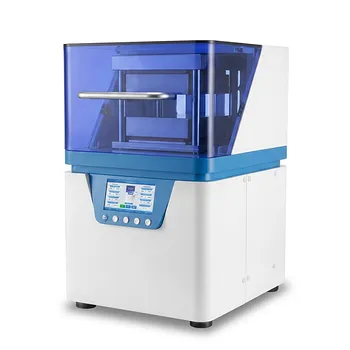
Hydraulic presses are predominantly utilized to apply immense compressive force to assemble, bend, crush, or fundamentally alter the physical shape of materials. Operating on the principles of fluid mechanics, these machines are integral to sectors ranging from heavy automotive manufacturing to precise laboratory analysis.
The core value of a hydraulic press lies in its ability to generate pressure up to 10,000 psi, far exceeding the capabilities of pneumatic systems. They are the definitive tool for applications requiring high-density compaction, deep metal forming, and rigorous material testing.
Core Manufacturing and Assembly
Metal Shaping and Fabrication
At the surface level, hydraulic presses are the standard for straightening, bending, and stamping metal workpieces. By utilizing specialized dies and heavy-duty tools, manufacturers can precisely alter the geometry of raw metal stock.
Heavy-Duty Forging
For more intensive operations, presses are used to shape metal billets into complex forms. This includes forging and deep drawing, processes essential for creating robust components in the aerospace and automotive industries.
Assembly and Clinching
Beyond shaping, these machines are used to join parts together. Clinching and blanking operations rely on the press's consistent force to secure multiple components into a single assembly without the need for heat or external fasteners.
Compaction and Density Modification
Recycling and Waste Management
In the recycling industry, hydraulic presses are deployed to crush and compact large objects into denser forms. This includes scrap baling operations, where bulky items like automobiles are crushed to facilitate easier transport and storage.
Powder Compacting
Hydraulic systems are capable of compressing powdered materials into solid, uniform shapes. This application is critical in ceramics manufacturing to produce tiles and bricks at room temperature, as well as in the food industry for specialized tasks like producing fat-free cocoa powder.
Specialized Processing and Testing
Laboratory Research and Quality Control
In scientific settings, hydraulic presses are vital for material science investigations. They are used to prepare pellets for sample analysis and to laminate materials for experimental use.
Concrete and Tensile Testing
Engineers use these presses to verify the structural integrity of construction materials. By performing compression testing on concrete, the press measures tensile strength and durability under extreme pressure.
Thermal Processing
Advanced hydraulic presses can integrate heat elements to function as heated presses. These are used for molding, bonding, and forming composite materials, allowing for simultaneous heat and pressure application.
Understanding the Trade-offs
Force vs. Speed
While hydraulic presses offer unmatched power—often reaching 10,000 psi—they generally operate slower than mechanical or pneumatic alternatives. If your application requires high-speed, low-force repetition (around 100 psi), a hydraulic system may be overkill and inefficient.
Maintenance Requirements
The fluid systems that provide such immense power require consistent maintenance to prevent leaks and pressure drops. Users must balance the need for high compressive force against the requirement for regular hydraulic system upkeep.
Making the Right Choice for Your Goal
To select the correct hydraulic application for your needs, evaluate the intensity and precision of your required force.
- If your primary focus is Metal Fabrication: Prioritize presses equipped with dies and molds designed for stamping, forging, or deep drawing to shape billets effectively.
- If your primary focus is Waste Management: Look for baling presses specifically designed with the crushing power necessary to compact large metal scrap like automobiles.
- If your primary focus is Material Research: Select a precision laboratory press capable of sample preparation (pelletizing) and destructive testing (concrete compression).
Hydraulic presses are not just force generators; they are precision tools that enable the transformation of raw potential into structural reality.
Summary Table:
| Application Category | Primary Functions | Key Industries |
|---|---|---|
| Metal Fabrication | Stamping, Forging, Bending, Deep Drawing | Automotive, Aerospace, Construction |
| Compaction | Powder Compacting, Scrap Baling, Crushing | Ceramics, Food Processing, Recycling |
| Material Testing | Concrete Strength, Tensile Testing, Pelletizing | R&D, Quality Control, Civil Engineering |
| Assembly | Clinching, Blanking, Joining | Electronics, Heavy Machinery |
| Specialized Processing | Laminating, Molding with Heat | Composites, Laboratory Research |
Elevate Your Pressing Precision with KINTEK
Whether you are conducting high-stakes battery research or precision material testing, KINTEK specializes in comprehensive laboratory pressing solutions tailored to your specific needs.
Our extensive range includes:
- Manual & Automatic Models for flexible lab workflows.
- Heated & Multifunctional Presses for advanced material synthesis.
- Glovebox-Compatible & Isostatic Presses (Cold/Warm) for specialized environments.
Don't settle for approximate force—achieve exact results. Contact our experts today to find the perfect hydraulic solution for your application!
Related Products
- Automatic Hydraulic Hot Press with Large Plate and Precision Temperature Control for Advanced Material Sample Preparation and Industrial Research
- Automatic Hydraulic Heat Press Machine with Multi Stage Programmable Control and Integrated Water Cooling Plate Size 180x180mm
- Automatic High Temperature Heated Hydraulic Press Machine with Heated Plates for Lab
- Automatic Heated Hydraulic Lab Press with Programmable Touch Screen Controls and Precision Temperature Regulation
- Manual Heated Hydraulic Lab Press with Integrated Hot Plates Hydraulic Press Machine
People Also Ask
- What are the specific features and applications of hydraulic hot press machines? Precision Solutions for Modern Labs
- How does an automatic hydraulic press operate? Achieve Precision and Consistency in Lab Pelleting
- What are the advantages and common applications of an automatic hydraulic press? Elevate Your Lab's Precision
- What is the technical significance of setting a precise dwell time? Achieve Peak Material Density and Stability
- When is an automatic hydraulic press more suitable than a manual press? Scale Your Lab with Precision & Speed