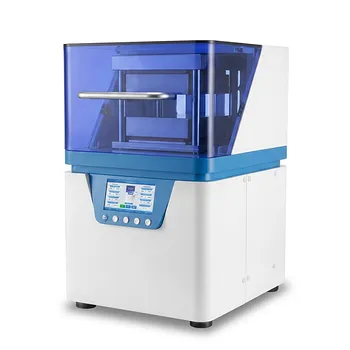
Hydraulic presses are fundamental industrial tools utilized to generate immense, controlled force for shaping, joining, and testing a wide range of materials. While they are most commonly associated with metalworking, plastics processing, and woodworking, their utility extends to precise operations such as forging, deep drawing, punching, blanking, assembly, and material testing.
Core Takeaway The hydraulic press is not merely a crushing tool; it is a versatile manufacturing instrument capable of applying constant force for complex operations. Its ability to integrate heat, handle awkward geometries, and deliver high tonnage makes it essential for everything from heavy metal forging to delicate laboratory testing.
Major Industrial Applications
The versatility of the hydraulic press stems from its ability to perform distinct mechanical operations. These applications generally fall into material forming, assembly, molding, and testing.
Metalworking and Fabrication
Forging and Forming Hydraulic presses are the standard for metal forming processes like forging and deep drawing. They apply slow, consistent pressure to shape metal billets or sheets into complex forms without fracturing the material.
Punching and Blanking Manufacturers use these machines to cut precise shapes out of metal sheets. "Punching" creates holes in the workpiece, while "blanking" cuts out the external shape of the part itself.
Bending and Straightening The press provides the high tonnage required to bend thick metal plates or straighten warped structural components. This is critical in the construction and automotive sectors for creating chassis parts and structural beams.
Processing Plastics and Composites
Compression Molding In plastics processing, hydraulic presses compress materials like plastic or rubber into molds to create specific shapes. This is widely used for manufacturing automotive interior parts and electrical housings.
Heated Laminating and Bonding Heated hydraulic presses apply both heat and pressure simultaneously. This dual action is vital for laminating layers of material, shaping composites, and bonding distinct components together reliably.
Assembly and Joining
Press-Fitting Components Assembly lines rely on hydraulic presses to force two parts together to create a tight interference fit. This eliminates the need for fasteners or welding in applications like inserting bushings, gears, or bearings onto shafts.
Specialized Configurations
Handling Long Workpieces While vertical presses are standard, horizontal hydraulic presses are employed when a part is too long or tall for a conventional upright machine. These apply pressure horizontally between a fixed and movable platen, ideal for rail straightening or long-shaft work.
Material Testing and Laboratory Use Beyond production, presses are used to test material limits. They apply controlled forces to measure tensile strength, durability, and crush resistance, ensuring materials meet safety standards before mass manufacturing.
Crushing and Compaction On the heavier side of industry, presses are used for waste management, such as crushing cars for recycling. Interestingly, they also serve niche food processing roles, such as compressing cocoa to produce fat-free powder.
Understanding the Trade-offs
While hydraulic presses are powerful, they are not the universal solution for every manufacturing challenge. Understanding their limitations is key to efficient deployment.
Speed vs. Control
Hydraulic presses generally operate slower than mechanical fly-wheel presses. If your goal is high-speed, high-volume production of simple parts, a hydraulic system may create a bottleneck.
Maintenance Intensity
Hydraulic systems operate under high fluid pressure. This requires vigilant maintenance to prevent oil leaks, monitor seals, and ensure the hydraulic fluid remains free of contaminants that could damage the pump.
Energy Consumption
Generating high tonnage requires significant energy input. While modern systems are more efficient, the energy cost per part can be higher compared to other pressing methods for lighter-duty tasks.
Making the Right Choice for Your Goal
Selecting the correct hydraulic application depends heavily on the material geometry and the specific physical process required.
- If your primary focus is deep metal forming: Prioritize a vertical press with high tonnage and slow, controlled ram speed to prevent material tearing.
- If your primary focus is working with long or tall parts: Utilize a horizontal hydraulic press to accommodate the workpiece length without compromising stability.
- If your primary focus is composite materials: Implement a heated hydraulic press to ensure proper curing and bonding during the compression phase.
- If your primary focus is assembly: Look for a press designed for precision press-fitting, often with lower tonnage but higher positional accuracy.
The hydraulic press is the backbone of heavy manufacturing, bridging the gap between raw material and finished structural components.
Summary Table:
| Application Category | Typical Processes | Key Benefits |
|---|---|---|
| Metalworking | Forging, Deep Drawing, Punching, Blanking | Controlled force for complex shapes without fracturing |
| Plastics & Composites | Compression Molding, Heated Laminating | Dual heat/pressure application for bonding & curing |
| Assembly & Joining | Press-fitting Bushings, Gears, Bearings | Creates tight interference fits without fasteners |
| Specialized Tasks | Horizontal Pressing, Material Testing | Accommodates long geometries and ensures safety standards |
Elevate Your Laboratory Precision with KINTEK
Unlock the full potential of your material research with KINTEK’s comprehensive laboratory pressing solutions. Whether you are advancing battery research or testing material limits, our diverse range of equipment provides the reliability and precision your lab demands.
Our value to you:
- Versatile Models: Choose from manual, automatic, heated, multifunctional, and glovebox-compatible models.
- Advanced Engineering: Specialized cold and warm isostatic presses designed for high-performance battery and material science applications.
- Tailored Solutions: Equipment designed to handle everything from delicate sample preparation to high-tonnage durability testing.
Ready to enhance your research capabilities? Contact KINTEK today to find the perfect pressing solution for your specific laboratory needs!
Related Products
- Automatic Hydraulic Hot Press with Large Plate and Precision Temperature Control for Advanced Material Sample Preparation and Industrial Research
- Automatic Hydraulic Heat Press Machine with Multi Stage Programmable Control and Integrated Water Cooling Plate Size 180x180mm
- Automatic High Temperature Heated Hydraulic Press Machine with Heated Plates for Lab
- Automatic Heated Hydraulic Lab Press with Programmable Touch Screen Controls and Precision Temperature Regulation
- Manual Heated Hydraulic Lab Press with Integrated Hot Plates Hydraulic Press Machine
People Also Ask
- What are the specific features and applications of hydraulic hot press machines? Precision Solutions for Modern Labs
- How does an automatic hydraulic press operate? Achieve Precision and Consistency in Lab Pelleting
- What are the advantages and common applications of an automatic hydraulic press? Elevate Your Lab's Precision
- What is the technical significance of setting a precise dwell time? Achieve Peak Material Density and Stability
- When is an automatic hydraulic press more suitable than a manual press? Scale Your Lab with Precision & Speed