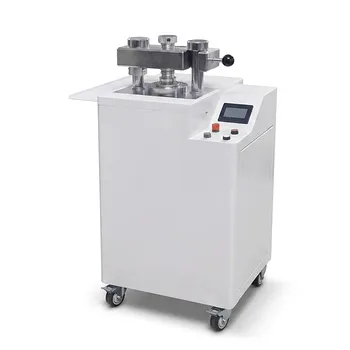
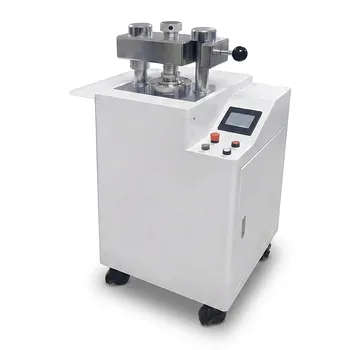
Choosing a manual hydraulic press requires balancing capital cost against physical labor and consistency. While these devices offer a cost-effective solution for laboratory environments, the primary consideration must be your intended workflow volume; they are purely mechanical systems that rely entirely on the operator's physical strength to generate force.
The utility of a manual hydraulic press is defined by the trade-off between economy and efficiency. They are excellent for infrequent, low-volume tasks but become a bottleneck in high-frequency workflows due to operator fatigue and inherent variability in pressure application.
Assessing Workflow and Ergonomics
Analyzing Frequency of Use
The most critical factor is how often you will use the equipment. According to the primary guidance, manual presses are labor-intensive.
If your workflow involves recurrent production of pressed samples, the manual pumping action will quickly become tedious. Manual units are best reserved for occasional use where speed is not a priority.
Physical Demands on the Operator
You must evaluate the physical strength required to operate the machine.
Unlike automated versions, a manual press uses a hand-operated lever to pump hydraulic oil and move the piston. The operator must physically generate the entire load, which requires sustained energy and effort.
Space and Infrastructure
Consider the available laboratory space. Manual presses are often more compact and simpler to install because they function without electronic components.
This lack of electronics makes them rugged and suitable for environments where power outlets may be scarce or where a simpler mechanical housing is preferred.
Performance and Precision
The Challenge of Repeatability
Achieving identical results across multiple samples is significantly harder with a manual press.
Because the load is applied by hand, the pressure can vary slightly with each operator. This human element introduces a variable that can affect the quality and consistency of sensitive samples.
Pressure Monitoring and Control
While these presses typically include an accurate pressure gauge, control is entirely manual.
You increase or decrease pressure by moving the lever and releasing it via a hand-operated valve. You must ensure you can visually monitor the gauge accurately enough to meet your specific clamping force requirements.
Application Specifics
Ensure the press meets the specific needs of your material, such as required dwelling time (how long pressure is held).
Maintaing a specific pressure for a long dwelling time manually can be difficult compared to an automated system that locks the pressure electronically.
Understanding the Trade-offs
Economy vs. Scalability
The main advantage of a manual press is the lower entry price due to its mechanical nature.
However, this cost saving vanishes if the labor required to operate it slows down your research or production.
Simplicity vs. Reproducibility
The mechanical simplicity means fewer electronic parts to break, leading to a robust, "tough" housing.
The downside is the loss of automated data logging or programmable cycles, making it difficult to prove that two different samples were processed under the exact same conditions.
Making the Right Choice for Your Goal
To select the correct equipment, match the press capabilities to your volume and precision needs.
- If your primary focus is Budget or Low Volume: Choose a manual press for a cost-effective solution that handles infrequent tasks or educational demonstrations well.
- If your primary focus is High Volume or Strict Repeatability: Avoid manual options; the physical labor and operator variability will compromise efficiency and data consistency.
Ultimately, a manual hydraulic press is a tool of value only when the operator's time and effort are less critical than the initial equipment cost.
Summary Table:
| Consideration Factor | Impact on Laboratory Operations | Suitability |
|---|---|---|
| Workflow Volume | High physical labor; risk of operator fatigue | Best for low-frequency/occasional use |
| Repeatability | Manual variability; human error in pressure application | Suitable for non-critical consistency tasks |
| Infrastructure | No electronics; compact mechanical design | Ideal for limited space/no power access |
| Cost Analysis | Low initial capital investment | High value for budget-conscious labs |
| Physical Demand | Requires operator strength to generate force | Best for tasks not requiring long dwell times |
Optimize Your Lab Research with KINTEK Pressing Solutions
Are you deciding between the cost-effectiveness of a manual press and the precision of automation? KINTEK specializes in comprehensive laboratory pressing solutions tailored to your specific research goals. From manual and automatic models to heated, multifunctional, and glovebox-compatible systems, we provide the tools necessary for advanced material and battery research.
Why choose KINTEK?
- Diverse Range: Explore our manual, automatic, and cold/warm isostatic presses.
- Technical Expertise: Benefit from equipment designed for high-repeatability and rugged durability.
- Custom Solutions: Find the perfect match for your workflow volume and physical laboratory constraints.
Don't let equipment limitations slow down your scientific breakthroughs. Contact KINTEK today to consult with our experts and find the ideal pressing solution for your lab!
Related Products
- Manual Heated Hydraulic Lab Press with Integrated Hot Plates Hydraulic Press Machine
- Laboratory Manual Heated Hydraulic Press Machine with Hot Plates
- Manual Laboratory Hydraulic Press Lab Pellet Press
- Manual Laboratory Hydraulic Pellet Press Lab Hydraulic Press
- Laboratory Split Manual Heated Hydraulic Press Machine with Hot Plates
People Also Ask
- Why is a laboratory hydraulic press with heating plates required for PLA/TEC films? Achieve Precise Sample Integrity
- Why is a manual hydraulic heated lab press essential for compleximer materials? Unlock Advanced Material Synthesis
- Function of a Laboratory Hydraulic Press with Heated Platens in SSE? Enhance Battery Density & Conductivity
- What role does a lab manual hydraulic press play in Li9B19S33 ionic conductivity? Optimize Pellet Characterization
- What are the main benefits of performing proper maintenance on a heated lab press? Ensure Accuracy & Safety