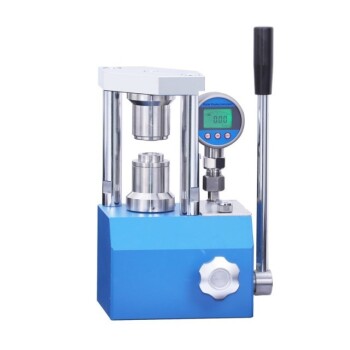
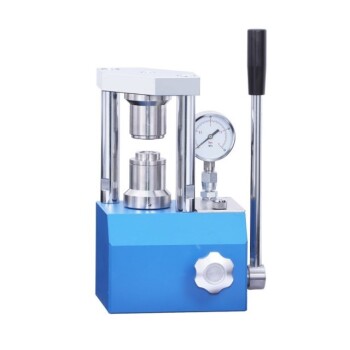
Manual vertical presses and screw presses function as the mechanical heart of smallholder palm oil processing, specifically tasked with physically squeezing crude palm oil from digested fruit mash. While these machines provide the necessary force to separate liquid oil from solid fiber, their design inherent limitations significantly impact total production volume.
While these presses offer a cost-effective solution for small-scale operations, their limited pressure output creates a distinct efficiency bottleneck. The inability to apply high force results in higher residual oil content left in the waste, making these machines a primary focus for process optimization.
The Core Function: Physical Extraction
Processing Digested Mash
The specific role of these presses is to handle fruit material that has already undergone digestion. They are not designed to crush raw fruit but rather to process mash that has been broken down to release oil pockets.
Mechanical Separation
The presses operate by applying direct physical pressure to the mash. This mechanical force squeezes the crude palm oil out of the fibrous material, separating the valuable liquid from the solid waste byproducts.
Technical Limitations and Efficiency Risks
Restricted Pressure Output
The defining limitation of manual vertical and simple screw presses is their inability to generate high levels of force. Unlike industrial-grade hydraulic systems, the pressure exerted by these units is physically limited.
Residual Oil Loss
Directly caused by the limited pressure, a significant portion of oil is often left behind. This "residual oil" remains trapped in the waste fiber rather than being extracted, leading to immediate yield losses.
The Optimization Necessity
Because the machinery cannot squeeze out every drop, the efficiency of the entire mill relies heavily on how well these presses are managed. They represent a critical control point where small adjustments can prevent substantial revenue loss.
Understanding the Trade-offs
Cost-Effectiveness vs. Yield
Smallholders often choose these presses because they are affordable and appropriately sized for smaller volumes. They lower the barrier to entry for processing, allowing operations to exist without massive capital investment.
Simplicity vs. Waste
The operational simplicity of manual and screw presses makes them easy to maintain and operate in remote areas. However, this simplicity comes at the cost of higher waste rates compared to more complex, high-pressure industrial extractors.
Making the Right Choice for Your Operation
Balancing the accessibility of equipment with the need for efficiency is the central challenge for smallholder processors.
- If your primary focus is low initial investment: These presses are the correct choice, offering a cost-effective method to begin processing without the need for complex power infrastructure.
- If your primary focus is maximizing production efficiency: You must recognize that the press is the limiting factor and focus on optimizing your upstream digestion process to make oil extraction as easy as possible for the machine.
Success with these presses ultimately depends on accepting their pressure limits while aggressively managing the process to minimize oil loss.
Summary Table:
| Feature | Manual Vertical Press | Simple Screw Press |
|---|---|---|
| Primary Function | Batch physical oil extraction | Continuous mechanical separation |
| Material Input | Digested fruit mash | Digested fruit mash |
| Pressure Source | Human/Mechanical lever | Threaded screw mechanism |
| Main Advantage | Low cost & simple maintenance | Higher throughput than manual |
| Key Limitation | Low pressure / high residual oil | Limited force compared to hydraulic |
Maximize Your Extraction Yield with KINTEK Precision
Are processing bottlenecks and residual oil loss limiting your laboratory or small-scale production? KINTEK specializes in comprehensive laboratory pressing solutions designed to overcome the efficiency gaps of basic manual machinery.
Whether you are conducting battery research or refining agricultural processing, our range of manual, automatic, heated, and multifunctional presses—including advanced cold and warm isostatic models—provides the consistent pressure control you need for superior results.
Don't let inefficient equipment drain your revenue. Contact KINTEK today to discover how our high-performance pressing solutions can optimize your research and production workflows.
References
- L.M. Ayompe, Benis N. Egoh. Transforming palm oil production: sustainable techniques and waste management strategies for Cameroon's smallholder farmers. DOI: 10.3389/fsufs.2025.1606323
This article is also based on technical information from Kintek Solution Knowledge Base .
Related Products
- Manual Laboratory Hydraulic Press Lab Pellet Press
- Laboratory Hydraulic Press Lab Pellet Press Machine for Glove Box
- Automatic Laboratory Hydraulic Press for XRF and KBR Pellet Pressing
- Manual Cold Isostatic Pressing CIP Machine Pellet Press
- Laboratory Hydraulic Split Electric Lab Pellet Press
People Also Ask
- How does a laboratory manual hydraulic press assist in powder canning? Maximize Density and Structural Integrity
- What is the primary objective of using a laboratory manual hydraulic press at 20 MPa? Achieve Perfect Green Body Shaping
- What is the primary purpose of manual lab hydraulic pellet presses? Achieve High-Precision Sample Preparation for Spectroscopy
- What is the primary purpose of a manual lab hydraulic pellet press? Ensure Accurate Sample Prep for XRF and FTIR
- What are common lab pellet press issues? Expert Troubleshooting Guide for Reliable Material Research