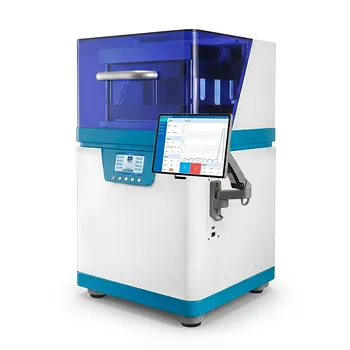
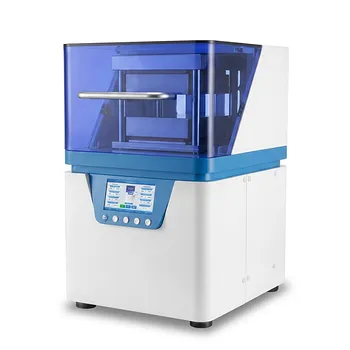
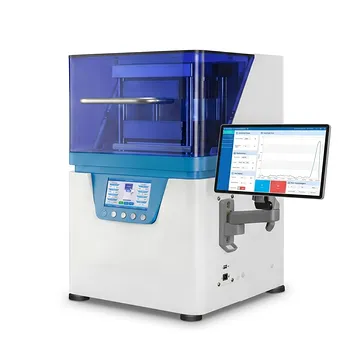
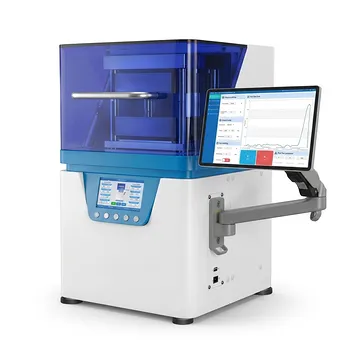
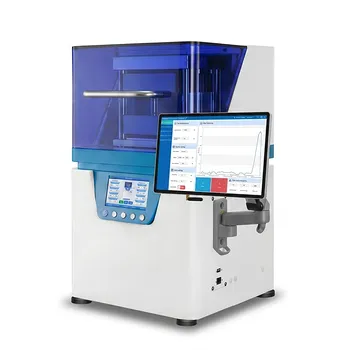
The primary function of a hydraulic press is to generate substantial compressive force to assemble, bend, crush, or otherwise alter the physical shape of rigid materials. These machines are critical in industrial settings for processing metals, plastics, and rubber, specifically for tasks that require straightening, stamping, or flattening billets into precise forms.
A hydraulic press leverages the principles of fluid mechanics to convert a small amount of liquid pressure into immense mechanical force. This capability allows it to perform tasks ranging from heavy-duty industrial forging to delicate laboratory sample preparation.
Industrial Manufacturing and Shaping
In large-scale operations, the hydraulic press is the standard tool for material deformation and assembly.
Metal Forming and Fabrication
The most common application involves altering the shape of metals. Presses are used to bend, straighten, and stamp metal billets. This allows manufacturers to turn raw materials into complex automotive parts or structural components.
Assembly and Compaction
Beyond simple shaping, presses are used to assemble parts through force-fitting components together. They are also employed to crush materials, utilized in applications as varied as compacting waste (such as crushing cars) to molding rubber and plastic products.
Specialized Production
The versatility of the hydraulic press extends to niche manufacturing processes. For example, they are used in food processing to produce fat-free cocoa powder by squeezing the cocoa butter out of the liquor, demonstrating the machine's ability to apply pure compressive force without heat.
Laboratory and Research Functions
While the primary reference highlights industrial use, hydraulic presses play a distinct and critical role in scientific environments.
Material Testing
In a laboratory, a press is often used to investigate material properties. Scientists use the machine to test the strength and durability of substances, observing how materials react under extreme high-pressure conditions.
Sample Preparation
Precision is key in research. Hydraulic presses are frequently used to create pellets for analysis. By compressing powders into solid, uniform discs, researchers create samples suitable for spectroscopic analysis and other chemical testing methods.
How the Function is Achieved
To understand the function, one must understand the mechanism of force magnification.
The Hydraulic Circuit
The system relies on a hydraulic pump powered by a motor. This pump forces hydraulic fluid (typically oil) into the system, creating the initial pressure required for operation.
Force Magnification
The core mechanism involves transferring fluid between cylinders. Fluid is driven from a small plunger cylinder into a larger ram cylinder. As the larger piston moves, the force is magnified significantly. This amplified force is then transmitted to the anvil or platen, which presses directly against the workpiece to perform the task.
Precision Control
Control valves regulate the flow and pressure of the fluid. This allows the operator to dictate the exact speed and force of the press, ensuring the material is shaped or tested without exceeding its structural limits unintentionally.
Operational Considerations and Trade-offs
While hydraulic presses are powerful, there are specific limitations and operational realities to consider.
Speed vs. Force
Hydraulic presses generally operate at slower speeds compared to mechanical presses. Because the system relies on the physical displacement of fluid to build pressure, they are not ideal for high-speed, high-volume production where rapid cycling is required.
Maintenance and Leakage
The system depends entirely on fluid integrity. Leaks in the hoses, seals, or valves result in an immediate loss of pressure and force. Regular maintenance is required to monitor the hydraulic fluid levels and the condition of the pump and cylinders.
Making the Right Choice for Your Goal
The utility of a hydraulic press is defined by the scale of force required and the material being processed.
- If your primary focus is Industrial Manufacturing: Prioritize a press with a large ram and sturdy frame capable of bending, stamping, and crushing heavy metals or plastics.
- If your primary focus is Scientific Research: Look for a press designed for precision control to handle material testing and pellet creation without destroying delicate samples.
By matching the press's tonnage and control capabilities to your specific material requirements, you ensure efficient and safe operation.
Summary Table:
| Application Category | Primary Function | Key Outcome |
|---|---|---|
| Metal Fabrication | Bending, Stamping, Straightening | Structural components and automotive parts |
| Industrial Assembly | Compacting and Force-fitting | Waste reduction (crushing) and component assembly |
| Material Testing | Strength and Durability Analysis | Understanding material properties under extreme pressure |
| Sample Preparation | Powder Compaction | High-quality pellets for spectroscopic analysis |
| Specialized Processing | Compression and Extraction | Fat-free cocoa production and rubber molding |
Elevate Your Pressing Precision with KINTEK
At KINTEK, we specialize in comprehensive laboratory pressing solutions designed to meet the rigorous demands of both industry and research. Whether you are conducting cutting-edge battery research or preparing delicate analytical samples, our range of manual, automatic, heated, and multifunctional models provides the exact control you need.
We also offer specialized glovebox-compatible models, as well as cold and warm isostatic presses for advanced material synthesis. Partner with us to bring unmatched reliability and force magnification to your facility.
Contact KINTEK Today to Find Your Perfect Press Solution
Related Products
- Automatic Hydraulic Hot Press with Large Plate and Precision Temperature Control for Advanced Material Sample Preparation and Industrial Research
- Automatic Hydraulic Heat Press Machine with Multi Stage Programmable Control and Integrated Water Cooling Plate Size 180x180mm
- Automatic Heated Hydraulic Lab Press with Programmable Touch Screen Controls and Precision Temperature Regulation
- Manual Heated Hydraulic Lab Press with Integrated Hot Plates Hydraulic Press Machine
- Automatic High Temperature Heated Hydraulic Press Machine with Heated Plates for Lab
People Also Ask
- What are the specific features and applications of hydraulic hot press machines? Precision Solutions for Modern Labs
- How does an automatic hydraulic press operate? Achieve Precision and Consistency in Lab Pelleting
- What are the advantages and common applications of an automatic hydraulic press? Elevate Your Lab's Precision
- What is the technical significance of setting a precise dwell time? Achieve Peak Material Density and Stability
- When is an automatic hydraulic press more suitable than a manual press? Scale Your Lab with Precision & Speed