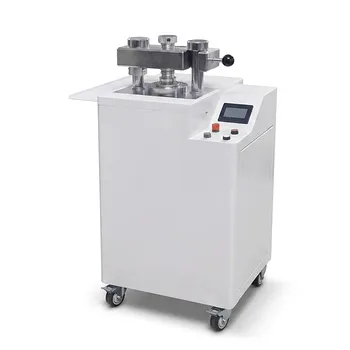
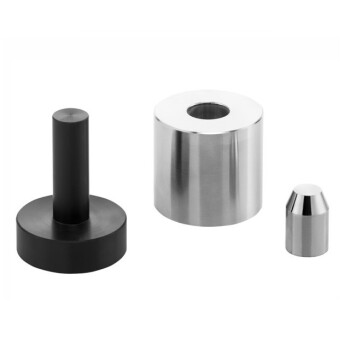
To create mini pellets using a 7 mm diameter die, the typical operational load is 2.0 tonnes. This specific load generates a pressure of approximately 500 MPa within the die, which is generally sufficient to form a stable, high-quality pellet for analysis.
Core Insight: Pressure is the result of force applied over a specific area, meaning smaller dies require significantly less load to achieve the same compression. Applying "standard" loads to a mini die will result in excessive pressure that can destroy the die or ruin the sample.
The Mechanics of Mini Pellet Creation
Specific Values for 7 mm Dies
According to standard protocols for mini pellets, you should utilize a 7 mm diameter die.
When using this size, the target load should be set to 2.0 tonnes. This inputs enough force to compress the powder without exceeding the mechanical limits of the smaller die surface.
Resulting Pressure
At a load of 2.0 tonnes, the material inside a 7 mm die experiences a pressure of 500 MPa.
This pressure level is the critical factor that causes the sample powder (often mixed with a binder like KBr) to fuse into a solid, transparent disc.
Comparing Mini vs. Standard Pellets
The Impact of Surface Area
It is vital to understand that the required load does not scale linearly with diameter, but rather with the surface area of the die face.
Because a 7 mm die has a much smaller surface area than a standard die, it concentrates the force much more intensely.
Values for Standard 13 mm Dies
For comparison, a standard 13 mm diameter die typically requires a load of 10 tonnes.
This higher load results in a pressure of 739 MPa. Note that while the load is 5 times higher (10 tonnes vs. 2 tonnes), the resulting pressure is relatively comparable because the 13 mm die distributes that force over a larger area.
Understanding the Trade-offs
The Danger of Over-Loading
A common mistake is applying the standard 10-tonne load to a 7 mm mini die.
Doing so would generate massive internal pressures far exceeding 500 MPa, likely causing the die to fracture or explode.
Sample Consistency
While 500 MPa (Mini) and 739 MPa (Standard) are different, both are generally sufficient for pellet formation.
However, if your specific application requires higher density, you may need to adjust the load slightly, provided you stay within the safe working limits of your specific 7 mm die.
Making the Right Choice for Your Goal
To ensure equipment longevity and sample quality, verify your die size before applying force.
- If your primary focus is creating 7 mm Mini Pellets: Set your press to a maximum of 2.0 tonnes to achieve the target 500 MPa pressure.
- If your primary focus is creating 13 mm Standard Pellets: You can safely increase the load to 10 tonnes to achieve approximately 739 MPa.
Always calculate the specific pressure rating for your die assembly to avoid catastrophic failure.
Summary Table:
| Die Diameter | Recommended Load | Resulting Pressure | Common Use Case |
|---|---|---|---|
| 7 mm (Mini) | 2.0 Tonnes | ~500 MPa | Mini pellets / KBr discs |
| 13 mm (Standard) | 10.0 Tonnes | ~739 MPa | Standard XRF/FTIR pellets |
Elevate Your Sample Preparation Precision with KINTEK
Don't risk equipment failure due to improper pressure calculations. KINTEK specializes in comprehensive laboratory pressing solutions tailored for precision research. Whether you need manual, automatic, heated, or glovebox-compatible models, our equipment is designed to handle the delicate force requirements of mini-pellets and the robust demands of cold/warm isostatic pressing.
Our value to you:
- Precision Control: Ideal for sensitive battery research and spectroscopic analysis.
- Versatile Range: From 7mm mini dies to heavy-duty industrial presses.
- Expert Support: We help you match the right load to your specific die surface area.
Contact KINTEK today for a customized pressing solution
Related Products
- XRF KBR Plastic Ring Lab Powder Pellet Pressing Mold for FTIR
- XRF KBR Steel Ring Lab Powder Pellet Pressing Mold for FTIR
- Lab Infrared Press Mold for No Demolding
- Lab XRF Boric Acid Powder Pellet Pressing Mold for Laboratory Use
- Lab Ring Press Mold for Sample Preparation
People Also Ask
- What is the purpose of making KBr pellets for FTIR? Achieve Precise Molecular Analysis with Solid Samples
- What factors should be considered when choosing a lab press for XRF pellet preparation? Ensure Accurate and Consistent Results
- Why are pellets used in XRF analysis, and what is their limitation? Boost Accuracy and Speed in Your Lab
- How are pellets prepared for XRF analysis and what is a potential drawback? Master XRF Sample Prep and Accuracy
- What are the different types of XRF pellet preparation methods available? Manual, Hydraulic, and Automated Presses Explained