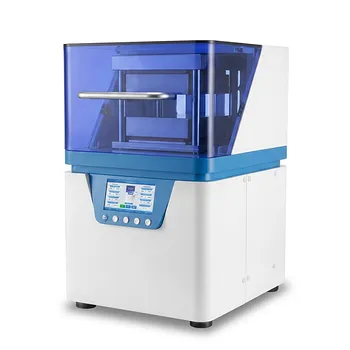
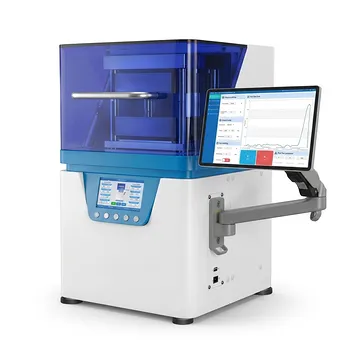
The versatility of hydraulic presses stems fundamentally from their ability to apply force that is both controlled and consistent. Rather than acting as a blunt instrument, these machines offer precise adaptability, allowing them to bridge the gap between delicate laboratory sample preparation and heavy-duty industrial metal forming.
Key Takeaway While often associated with raw power, the true utility of a hydraulic press lies in its modulation. By integrating programmable logic, heating elements, and precise pressure controls, a single platform can adapt to materials ranging from soft composites to hardened metals.
The Core Mechanism: Precision Force Control
The primary characteristic defining the hydraulic press is not just the amount of pressure it can exert, but how that pressure is regulated.
Scalability of Force
The hydraulic mechanism allows for a massive range of operating pressures. A press can be adjusted to apply the immense force needed for forging aerospace turbine blades or the delicate pressure required for creating thin films in a laboratory.
Material Adaptability
Because the force is consistent, hydraulic presses are compatible with diverse materials. They effectively process metals, plastics, rubber, and composites without the inconsistency that might damage brittle materials or under-form resilient ones.
Load Maintenance
Advanced hydraulic systems feature "auto top-up" capabilities. This ensures that the specific load is maintained constantly throughout the cycle, which is critical for applications requiring sustained compression over time.
Enhancing Utility Through Technology
Modern hydraulic presses extend their versatility through the integration of electronic components and thermal systems.
Programmable Automation
Electric hydraulic presses often utilize electric motors and LED touchscreens to automate workflows. Operators can use pre-stored programs or custom cycles, such as specific timer functions and step functions for gradual load increases.
Thermal Integration
The addition of heating elements transforms a standard press into a tool for hot embossing, lamination, and polymer research. The ability to control temperature alongside pressure allows for the precise manipulation of material properties, such as flow and curing rates.
Repeatability for High-Volume Production
Programmable loads remove operator variability. For industries producing large volumes of identical products—such as pellets or automotive parts—this ensures that every cycle replicates the exact parameters of the last.
Understanding the Trade-offs
While versatile, the complexity of modern hydraulic presses introduces specific operational considerations.
Maintenance of Electronic Components
As presses integrate more sophisticated electronics (touchscreens, programmable logic controllers), they require stable power sources and specialized maintenance. The reliability of the press becomes dependent on the durability of these electronic components, not just the hydraulic seals.
Complexity vs. Simplicity
A press loaded with features like "step functions" and thermal controls offers immense capability but requires a higher level of operator training. For simple, repetitive crushing tasks, these advanced features may represent unnecessary complexity and cost.
Making the Right Choice for Your Goal
Selecting the right hydraulic press requires mapping your specific output requirements to the machine's capabilities.
- If your primary focus is material research or composites: Prioritize a press with integrated heating and precise temperature control to manage material states effectively.
- If your primary focus is high-volume manufacturing: Look for electric hydraulic presses with programmable cycles and auto top-up features to ensure identical results across thousands of units.
- If your primary focus is heavy metal forming: Focus on the structural integrity and maximum tonnage capacity of the unit rather than advanced electronic interface features.
The most effective press is one where the level of control matches the sensitivity of your material.
Summary Table:
| Characteristic | Benefit | Ideal Application |
|---|---|---|
| Scalable Force | Handles both delicate and high-pressure tasks | Laboratory sample prep to heavy forging |
| Load Maintenance | Consistent pressure via 'auto top-up' logic | Sustained compression & material testing |
| Thermal Integration | Combined heat and pressure control | Hot embossing, lamination, and curing |
| Programmable Logic | Automated workflows and repeatability | High-volume production & polymer research |
Elevate Your Lab's Precision with KINTEK Pressing Solutions
Unlock the full potential of your material research with KINTEK’s industry-leading hydraulic press technology. Whether you are conducting cutting-edge battery research or complex metallurgical testing, our comprehensive range of manual, automatic, heated, and multifunctional models provides the exact modulation your work demands.
We specialize in glovebox-compatible systems and advanced cold/warm isostatic presses designed to deliver consistent, repeatable results for even the most sensitive materials. Don't settle for blunt force—choose a partner that understands the science of precision.
Ready to optimize your pressing workflow? Contact our laboratory experts today to find the perfect solution for your specific application.
Related Products
- Automatic Hydraulic Hot Press with Large Plate and Precision Temperature Control for Advanced Material Sample Preparation and Industrial Research
- Automatic Hydraulic Heat Press Machine with Multi Stage Programmable Control and Integrated Water Cooling Plate Size 180x180mm
- Automatic High Temperature Heated Hydraulic Press Machine with Heated Plates for Lab
- Automatic Heated Hydraulic Lab Press with Programmable Touch Screen Controls and Precision Temperature Regulation
- Manual Heated Hydraulic Lab Press with Integrated Hot Plates Hydraulic Press Machine
People Also Ask
- What are the specific features and applications of hydraulic hot press machines? Precision Solutions for Modern Labs
- How does an automatic hydraulic press operate? Achieve Precision and Consistency in Lab Pelleting
- What are the advantages and common applications of an automatic hydraulic press? Elevate Your Lab's Precision
- What is the technical significance of setting a precise dwell time? Achieve Peak Material Density and Stability
- When is an automatic hydraulic press more suitable than a manual press? Scale Your Lab with Precision & Speed