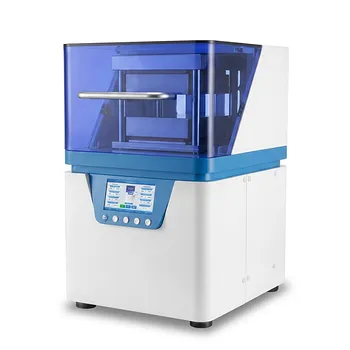
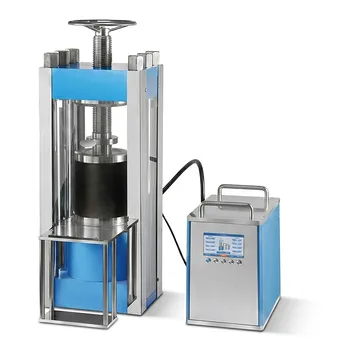
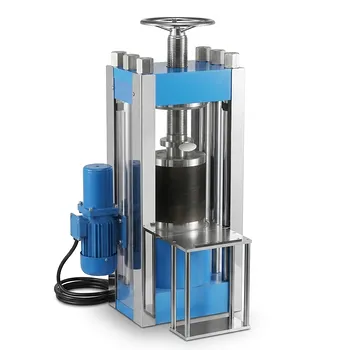
The primary role of large heated presses in manufacturing natural fiber composite panels is the simultaneous consolidation and curing of material mats. By applying high pressure and temperature (typically around 120°C and 20 MPa), these machines transform loose mixtures of fibers and polymers into dense, high-strength skins required for structural applications.
Large heated presses serve as the critical catalyst for physical and chemical integration, turning raw flax and polypropylene mixtures into functional engineering materials. This process ensures the density and interfacial bonding necessary for high flexural strength and stiffness.
The Mechanics of Material Consolidation
Density Increase and Thickness Reduction
The application of high pressure, often exceeding 20 MPa, is essential for compressing loose fiber mats into thin, manageable panels. This reduction in thickness directly correlates with an increase in material density, which is the foundation of the panel's mechanical integrity.
Elimination of Internal Voids
During the pressing process, high pressure forces the matrix resin to fill the gaps between natural fibers. This action expels trapped air bubbles and eliminates internal pockets that would otherwise create structural weak points or bonding gaps.
Achieving Geometric Stability
Large presses ensure that the resulting composite maintains a uniform thickness and stable geometric dimensions. This precision is vital when panels are used as skins for sandwich structures, where even slight variations can compromise the assembly's fit and performance.
Thermal Activation and Chemical Bonding
Melting and Softening the Matrix
Heated platens provide the energy required to bring thermoplastic matrices, such as polypropylene (PP), to a molten or softened state. This allows the polymer to flow freely around the reinforcement fibers, ensuring a thorough coating known as wetting.
Triggering Chemical Cross-linking
For composites using thermosetting adhesives like phenolic or starch resins, the heat triggers a rapid cross-linking reaction. This chemical curing process defines the final physical structure of the board and ensures the layers are permanently bonded into a unified structure.
Enhancing Interfacial Quality
The combination of heat and pressure facilitates chemical bonding and mechanical interlocking at the molecular level. This improves the interface quality between the natural fibers and the resin, which is the primary factor in how well the panel transfers loads under stress.
Understanding the Trade-offs
Temperature Sensitivity of Natural Fibers
While heat is necessary for curing, natural fibers like flax can degrade if exposed to excessive temperatures for too long. Manufacturers must balance the need for a rapid cure with the thermal limits of the organic reinforcement to avoid brittle or charred panels.
Pressure Distribution Challenges
In large-scale presses, maintaining uniform pressure across the entire surface area can be difficult. Any localized pressure drop can result in "dry spots" where the fibers are not fully encapsulated by the resin, leading to delamination or reduced flexural stiffness.
How to Optimize Pressing for Your Project
Making the Right Choice for Your Goal
To achieve the best results with natural fiber composites, your pressing parameters must align with your specific performance requirements.
- If your primary focus is maximum stiffness: Prioritize higher consolidation pressures to maximize fiber density and minimize the final thickness of the panel.
- If your primary focus is bond durability: Ensure precise temperature control to facilitate complete chemical cross-linking of the resin without damaging the natural fiber structure.
- If your primary focus is weight reduction: Optimize the press cycle to achieve the minimum required density that still meets the necessary flexural strength targets.
Mastering the balance of heat and pressure within the press is the definitive step in transforming raw natural fibers into high-performance structural components.
Summary Table:
| Process Phase | Primary Function | Key Technical Parameters |
|---|---|---|
| Material Consolidation | Increases density and eliminates internal air voids | Pressure ≥ 20 MPa |
| Thermal Activation | Melts thermoplastic matrices (e.g., PP) or triggers resin curing | Temperature ~120°C |
| Interfacial Bonding | Enhances chemical and mechanical bonding at the fiber-matrix interface | Uniform heat/pressure distribution |
| Geometric Shaping | Ensures uniform panel thickness and dimensional stability | Precision-ground platens |
Optimize Your Composite Research with KINTEK Precision
Unlock superior material performance with KINTEK’s comprehensive laboratory pressing solutions. Whether you are developing high-strength natural fiber panels or conducting cutting-edge battery research, our range of equipment ensures perfect consolidation every time.
Our laboratory solutions include:
- Heated & Multifunctional Presses: Perfect for simultaneous consolidation and curing.
- Manual & Automatic Models: Scalable options for diverse research workflows.
- Specialized Systems: Glovebox-compatible models and cold/warm isostatic presses (CIP/WIP).
Don't let inconsistent pressure or temperature compromise your results. Contact KINTEK today to discuss how our specialized pressing technology can bring precision and repeatability to your laboratory.
References
- Lyes Azzouz, Marzio Grasso. Mechanical properties of 3-D printed truss-like lattice biopolymer non-stochastic structures for sandwich panels with natural fibre composite skins. DOI: 10.1016/j.compstruct.2019.01.103
This article is also based on technical information from Kintek Solution Knowledge Base .
Related Products
- Automatic Large Format Laboratory Heated Hydraulic Press 400x400mm Plate Capacity
- Automatic Hydraulic Hot Press with Large Plate and Precision Temperature Control for Advanced Material Sample Preparation and Industrial Research
- Automatic Hydraulic Heat Press Machine with Multi Stage Programmable Control and Integrated Water Cooling Plate Size 180x180mm
- 24T 30T 60T Heated Hydraulic Lab Press Machine with Hot Plates for Laboratory
- Automatic Heated Hydraulic Lab Press 120x120mm Plate Fully Automated Material Research Press
People Also Ask
- Why is a laboratory heated hydraulic press required? Ensure Precise Vulcanization for NBR/EPDM Nanocomposites
- What role does a Laboratory Heated Hydraulic Press play in rubber vulcanization? Master Precision Specimen Molding
- How does a laboratory heated hydraulic press improve the performance of dried composite solid-state membranes? Guide
- What role does a laboratory heated hydraulic press play in PLA/MCC molding? Achieve superior composite density.
- Role of Laboratory Heated Hydraulic Presses in Solid Electrolyte Fabrication: Enhance Density & Ionic Conductivity