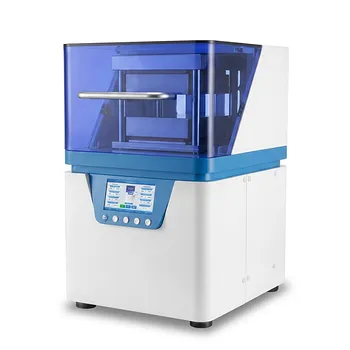
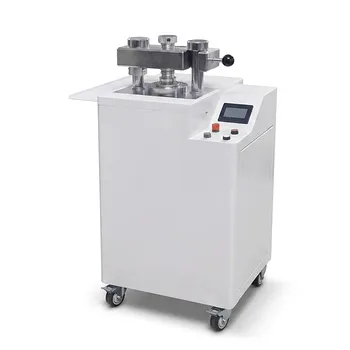
Electric hydraulic presses primarily come in two distinct configurations: fully programmable models equipped with LED touchscreens and standard automated models without digital interfaces. While both utilize electric motors to provide precise force and automated efficiency, the primary difference lies in the level of user control, data monitoring, and cycle customization available to the operator.
Core Takeaway While both configurations offer the automated power of an electric motor, the choice comes down to the complexity of your workflow. Standard models offer streamlined efficiency for simple tasks, whereas programmable touchscreen models are essential for applications requiring intricate pressure cycles, "auto top-up" load maintenance, and high repeatability.
Classifying by Control Interface
The most fundamental distinction between modern electric hydraulic presses is the user interface. This determines how you interact with the machine and the level of precision you can apply to the pressing cycle.
Programmable Touchscreen Models
These units are designed for advanced versatility and repeatability. They feature LED touchscreen interfaces that allow operators to program specific load cycles.
This configuration is ideal for complex workflows. Users can set timers and utilize step functions to increase load gradually, rather than applying full force all at once.
They often feature an auto top-up function. This ensures that if the material relaxes or shifts, the press automatically adjusts to maintain a consistent load throughout the cycle.
Standard Automated Models
These presses operate without a digital touchscreen interface but retain the core benefits of electric actuation.
They provide the efficiency and convenience of automated operation without the complexity of programming custom recipes.
These units deliver precise and consistent force, making them reliable workhorses for standard sample preparation or fabrication tasks where variable programming is not required.
Classifying by Application Purpose
Beyond the interface, electric hydraulic presses are often categorized by the specific industrial or laboratory function they are designed to perform.
Laboratory and Sample Preparation
In scientific settings, electric presses are crucial for creating consistency. They are frequently used for XRF (X-ray fluorescence) sample preparation, hot embossing, and creating thin films from polymers.
The precise control offered by electric motors is vital here to ensure that pellets or samples are uniform for testing.
Assembly and Fabrication
In manufacturing contexts, assembly presses utilize hydraulic force to join parts together. Common tasks include riveting, crimping, and pressing bearings or fittings into place.
These presses replace manual effort with automated consistency, ensuring components are joined with the exact same force every time.
Forming and Shaping
For heavy-duty material manipulation, bending and stamping presses are used. These change the shape of materials, such as forming car body panels or straightening metal beams.
Stamping presses create indentations or impressions, while compression molding presses are used for shaping plastics, rubber, and composites.
Understanding the Trade-offs
When selecting an electric hydraulic press, superior technology does not always equal the "better" choice for every scenario.
Complexity vs. Utility
Programmable touchscreen models offer maximum control but introduce higher complexity. If your application requires simple, repetitive flattening or crushing, the advanced features of a programmable unit may be unnecessary overhead.
Precision vs. Power
While electric hydraulic systems are excellent for precision (often operating in the 10,000 psi range), they differ from pneumatic systems (approx. 100 psi).
Electric hydraulic presses are superior for high-force applications like powder compacting or forging but may be overkill for light-duty tasks better suited to pneumatic or manual systems.
Making the Right Choice for Your Goal
To select the correct electric hydraulic press configuration, you must align the machine's capabilities with your specific output requirements.
- If your primary focus is precise laboratory analysis (e.g., XRF): Choose a programmable touchscreen model to utilize auto top-up and timer functions for identical sample consistency.
- If your primary focus is standard fabrication or simple crushing: Choose a standard automated model without the touchscreen to maximize efficiency and ease of use while reducing cost.
- If your primary focus is complex material shaping: Ensure the press is specifically rated for molding or stamping, as general-purpose assembly presses may not offer the specific tooling or force distribution required.
The ideal press is one that offers the exact level of automation you need—no less, and no more.
Summary Table:
| Press Type | Control Interface | Key Features | Best Use Case |
|---|---|---|---|
| Programmable | LED Touchscreen | Step functions, auto top-up, cycle memory | Complex R&D, XRF sample prep, high repeatability |
| Standard Automated | Manual/Digital Toggle | Electric motor efficiency, consistent force | Routine fabrication, simple crushing, standard samples |
| Application-Specific | Task-dependent | Customized tooling, specialized force distribution | Compression molding, stamping, battery research |
Optimize Your Lab Efficiency with KINTEK Pressing Solutions
At KINTEK, we specialize in providing a comprehensive range of laboratory pressing solutions tailored to meet the rigorous demands of modern research and production. Whether you require manual, automatic, heated, multifunctional, or glovebox-compatible models, our equipment is designed for precision and durability. We also offer advanced cold and warm isostatic presses widely applied in cutting-edge battery research.
Don't settle for a one-size-fits-all approach. Let our experts help you select the press that offers the exact level of automation and control your workflow requires.
Ready to elevate your material preparation? Contact us today to find your perfect solution!
Related Products
- Laboratory Hydraulic Split Electric Lab Pellet Press
- Automatic Hydraulic Heat Press Machine with Multi Stage Programmable Control and Integrated Water Cooling Plate Size 180x180mm
- Automatic Hydraulic Hot Press with Large Plate and Precision Temperature Control for Advanced Material Sample Preparation and Industrial Research
- Automatic Laboratory Hydraulic Press Lab Pellet Press Machine
- Automatic Heated Hydraulic Lab Press with Programmable Touch Screen Controls and Precision Temperature Regulation
People Also Ask
- What are the emerging trends in the design and materials of lab pellet presses? Modernize Your Lab Efficiency
- How do lab pellet presses support customization and flexibility? Optimize Your Sample Prep for Any Material
- What are common lab pellet press issues? Expert Troubleshooting Guide for Reliable Material Research
- What are the common operational types of lab pellet presses? Choosing the Right Manual, Automatic, or Hydraulic System
- Why use a laboratory pellet press for solid-state battery evaluation? Ensure Accuracy in Interface Stability Testing