
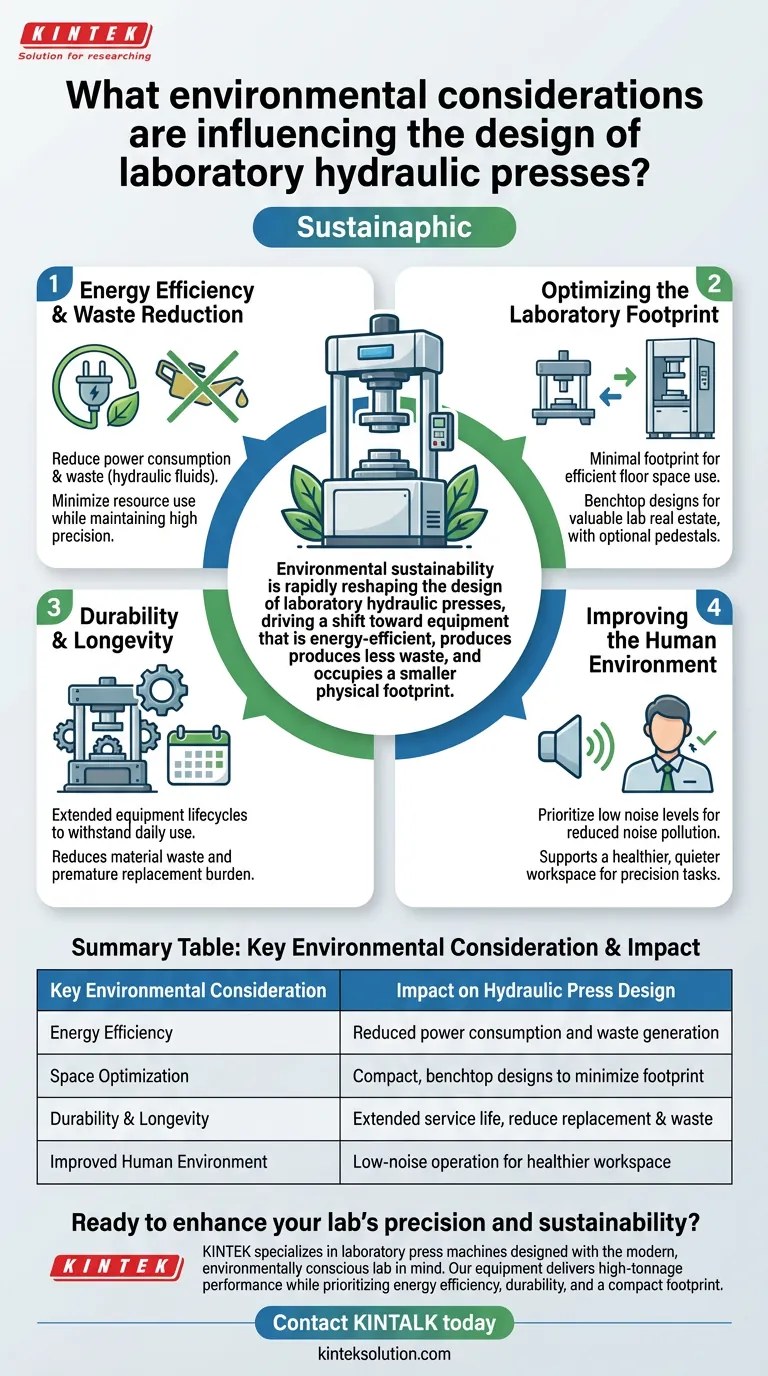
Environmental sustainability is rapidly reshaping the design of laboratory hydraulic presses, driving a shift toward equipment that is energy-efficient, produces less waste, and occupies a smaller physical footprint. Manufacturers are moving beyond simple force generation to create devices that minimize resource consumption while maintaining the high precision required for material testing and spectroscopic analysis.
The core evolution in hydraulic press design involves a holistic view of sustainability: balancing high-tonnage performance with reduced energy intake, extended equipment lifecycles, and a less intrusive presence in the laboratory environment.
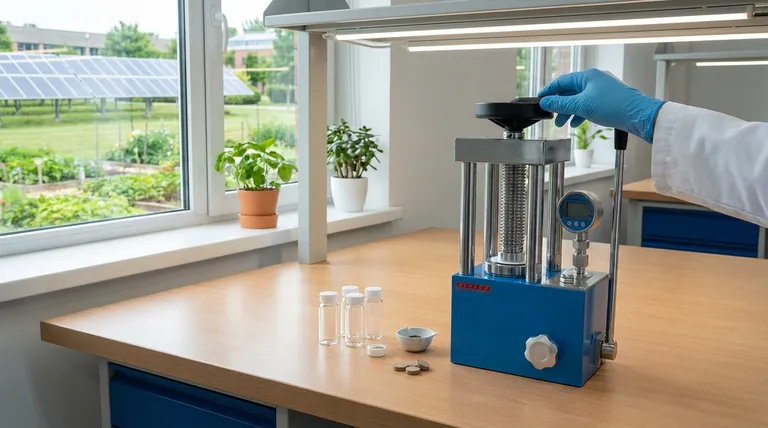
Key Drivers of Sustainable Design
Energy Efficiency and Waste Reduction
Hydraulic presses traditionally consume significant power and can generate waste through hydraulic fluids and maintenance parts. Manufacturers are now actively exploring engineering methods to reduce this energy footprint.
The goal is to deliver the necessary high pressure for applications like sample preparation without excessive power draw. Additionally, newer designs focus on minimizing waste generation, which is critical for labs adhering to strict environmental protocols.
Optimizing the Laboratory Footprint
Space is a finite resource in any research facility, and efficient use of floor space is a key environmental consideration. Modern presses are increasingly designed with a minimal footprint to conserve valuable laboratory real estate.
Many models are now engineered for benchtop or countertop placement to reduce the need for large, floor-standing units. However, optional pedestals are often available to convert these compact units into floor-standing models if specific lab logistics require it.
Operational Impact and Longevity
Durability as a Sustainability Feature
One of the most effective ways to reduce environmental impact is to extend the service life of the equipment. Presses are being built to withstand the rigors of daily use, ensuring they do not become obsolete or require replacement prematurely.
High durability ensures consistent results over time, reducing the material waste associated with failed experiments or broken machinery. A press that lasts longer naturally reduces the manufacturing and disposal burden on the environment.
Improving the Human Environment
Environmental considerations extend to the immediate workspace of the researcher. Designers are prioritizing low noise levels to minimize noise pollution and workplace disruptions.
This focus on a quieter operation supports a healthier, more sustainable working environment. It allows researchers to focus on precision tasks—such as creating uniform pellets for FTIR and XRF analysis—without constant auditory stress.
Understanding the Trade-offs
Balancing Compactness with Capacity
While a minimal footprint is desirable for sustainability, it must not come at the cost of capability. Users must ensure that smaller, benchtop-friendly units still offer the specific tonnage and platen sizes required for their process needs.
Precision Control vs. Complexity
Modern presses often include precise digital temperature controls to meet exact requirements. While this increases accuracy and reduces sample waste, it can add complexity to the machine. Users must balance the need for advanced features with the desire for low maintenance requirements.
Making the Right Choice for Your Goal
To select the right hydraulic press, you must align the environmental features with your specific research objectives.
- If your primary focus is Space Optimization: Prioritize benchtop models with a minimal footprint that preserve floor space for other critical equipment.
- If your primary focus is Long-Term Sustainability: Look for units with a reputation for high durability and low maintenance to reduce the frequency of parts replacement and disposal.
- If your primary focus is Operational Efficiency: Choose a press with low noise levels and precise digital controls to ensure consistent results and a safe working environment.
By selecting a press designed with these environmental principles, you invest in a tool that enhances both your research precision and your laboratory's ecological responsibility.
Summary Table:
| Key Environmental Consideration | Impact on Hydraulic Press Design |
|---|---|
| Energy Efficiency | Reduced power consumption and waste generation (e.g., hydraulic fluids). |
| Space Optimization | Compact, benchtop designs to minimize laboratory footprint. |
| Durability & Longevity | Extended service life to reduce replacement frequency and waste. |
| Improved Human Environment | Low-noise operation for a healthier, more focused workspace. |
Ready to enhance your lab's precision and sustainability?
KINTEK specializes in laboratory press machines, including automatic lab presses, isostatic presses, and heated lab presses, designed with the modern, environmentally conscious lab in mind. Our equipment delivers the high-tonnage performance you need while prioritizing energy efficiency, durability, and a compact footprint to support your research and sustainability goals.
Contact KINTALK today to find the perfect hydraulic press for your application and join the movement towards greener laboratory operations.
Visual Guide
Related Products
- Laboratory Hydraulic Press Lab Pellet Press Button Battery Press
- Laboratory Hydraulic Press 2T Lab Pellet Press for KBR FTIR
- Laboratory Hydraulic Press Lab Pellet Press Machine for Glove Box
- 24T 30T 60T Heated Hydraulic Lab Press Machine with Hot Plates for Laboratory
- Automatic Laboratory Hydraulic Press Lab Pellet Press Machine
People Also Ask
- How is a laboratory hydraulic press used for HAP composite gels? Master Mineral Substrate Standardization
- What role does a laboratory hydraulic press play in reaction pellets? Optimizing Lunar Soil and Metal Fuel Density
- What role does a laboratory hydraulic press play in the preparation of piezoelectric ceramic discs for DC-PG? | KINTEK
- Why is a laboratory hydraulic press required for PBAT and PLA sample preparation? Achieve Flawless Characterization
- What role does a laboratory hydraulic press play in the assembly of all-solid-state battery test cells? Expert Guide



















