
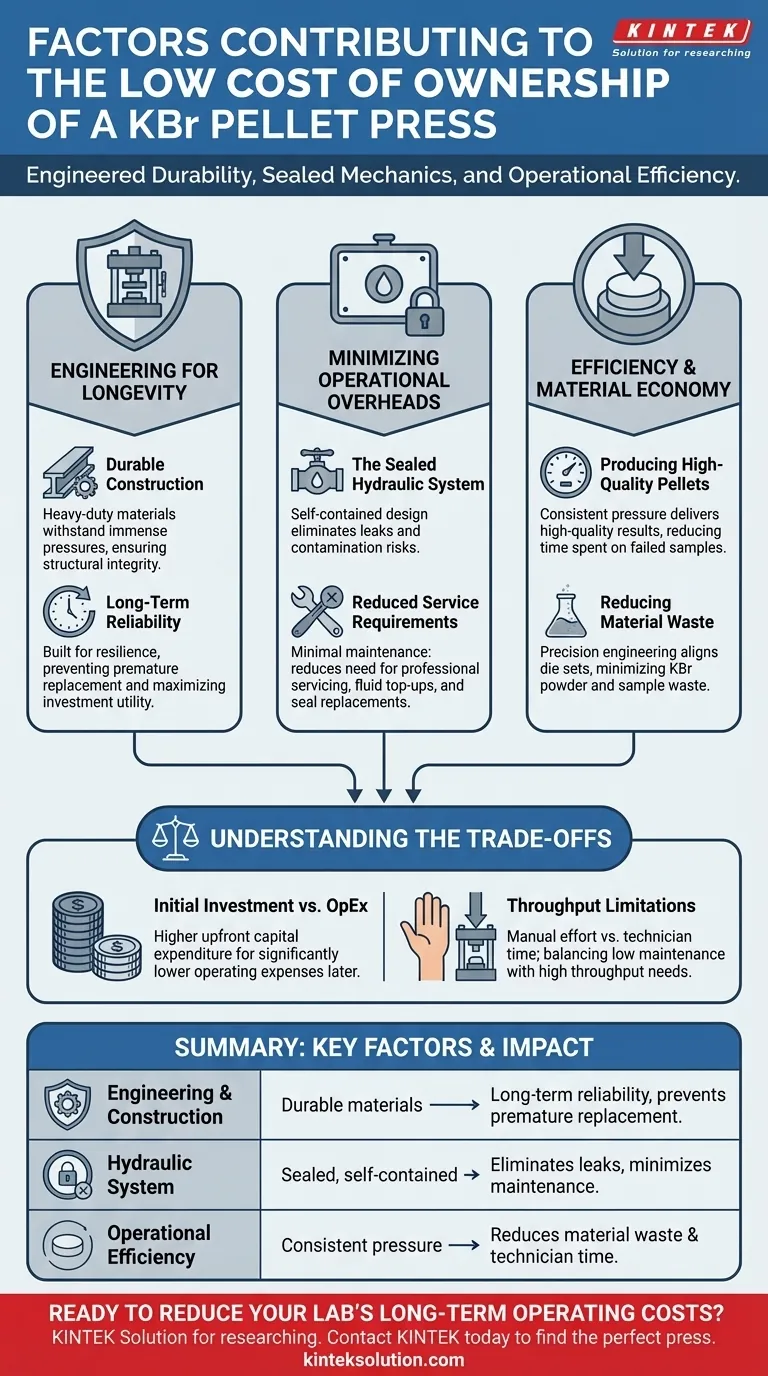
The low cost of ownership for a KBr Pellet Press is primarily determined by its engineered durability, sealed hydraulic mechanics, and operational efficiency. By combining a robust build that resists wear with a sealed system that minimizes maintenance, these devices significantly reduce the total cost per sample over the life of the instrument.
The true economic value of a KBr Pellet Press is not just in its purchase price, but in the elimination of recurring costs. A sealed hydraulic system and precision engineering remove the need for frequent servicing and material waste, transforming a capital expense into a long-term savings asset.
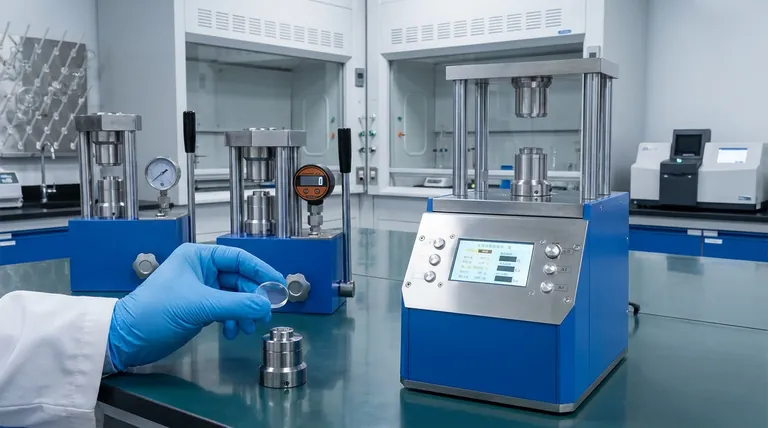
Engineering for Longevity
To understand the economics of this equipment, one must look at how physical construction impacts the replacement cycle.
Durable Construction
The press is constructed with heavy-duty materials designed to withstand the immense pressures required for spectroscopy sample preparation. This durable construction ensures that the unit maintains structural integrity despite repeated high-stress cycles.
Long-Term Reliability
Because the core components are built for resilience, the risk of mechanical failure is low. This ensures long-term reliability, preventing premature equipment replacement and ensuring the lab gets maximum utility from the initial investment.
Minimizing Operational Overheads
The most significant hidden costs in laboratory equipment are maintenance and downtime. The KBr Pellet Press addresses this through specific design choices.
The Sealed Hydraulic System
A critical factor in reducing ownership costs is the sealed hydraulic system. Unlike open systems that are prone to leaks or contamination, a sealed unit is self-contained.
Reduced Service Requirements
This design choice directly results in minimal maintenance. By protecting the hydraulic fluid and internal mechanisms, the press reduces the need for frequent professional servicing, fluid top-ups, or seal replacements.
Efficiency and Material Economy
Cost of ownership is also influenced by daily operational expenses, specifically regarding consumables and technician time.
Producing High-Quality Pellets
The press is designed to deliver consistent pressure application. This efficiency in producing high-quality pellets means technicians spend less time re-doing failed samples due to equipment inconsistency.
Reducing Material Waste
Precision engineering ensures that the die sets and pressure mechanisms work in perfect alignment. This leads to minimal material waste, saving money on Potassium Bromide (KBr) powder and precious analytical samples over time.
Understanding the Trade-offs
While the low cost of ownership is a significant advantage, it is important to view these benefits within the context of your laboratory's workflow.
Initial Investment vs. Operational Cost
Presses built with high-durability materials and sealed hydraulics often carry a higher initial price tag than lower-quality alternatives. You are effectively trading a higher upfront capital expenditure for significantly lower operating expenses later.
Throughput Limitations
A manual hydraulic press is cost-effective regarding maintenance, but it requires physical operator effort. For laboratories with extremely high throughput requirements, the "low cost" of the machine must be weighed against the potential cost of technician time and fatigue.
Making the Right Choice for Your Laboratory
Selecting the right press requires balancing your immediate budget with your long-term operational goals.
- If your primary focus is minimizing OpEx (Operating Expenses): Prioritize a unit with a sealed hydraulic system to virtually eliminate the need for service contracts and spare parts.
- If your primary focus is sample consistency: Lean on the durable construction aspects to ensure that mechanical wear does not degrade the quality of your pellets over time.
By focusing on build quality and sealed mechanics, you ensure your laboratory invests in a tool that pays for itself through reliability.
Summary Table:
| Factor | Key Feature | Impact on Cost of Ownership |
|---|---|---|
| Engineering & Construction | Durable, heavy-duty materials | Ensures long-term reliability, prevents premature replacement |
| Hydraulic System | Sealed, self-contained design | Eliminates leaks, minimizes maintenance and service requirements |
| Operational Efficiency | Consistent pressure for high-quality pellets | Reduces material waste (KBr/samples) and technician time |
Ready to reduce your lab's long-term operating costs?
A KINTEK KBr Pellet Press is engineered for durability and minimal maintenance, providing long-term reliability that saves you money on service contracts, spare parts, and material waste. Our automatic lab presses, isostatic presses, and heated lab presses are designed to deliver consistent results for your laboratory.
Contact KINTEK today to find the perfect press for your needs and start maximizing your efficiency.
Visual Guide
Related Products
- Laboratory Hydraulic Press 2T Lab Pellet Press for KBR FTIR
- XRF KBR Plastic Ring Lab Powder Pellet Pressing Mold for FTIR
- XRF KBR Steel Ring Lab Powder Pellet Pressing Mold for FTIR
- Laboratory Hydraulic Pellet Press for XRF KBR FTIR Lab Press
- Automatic Laboratory Hydraulic Press for XRF and KBR Pellet Pressing
People Also Ask
- What is the role of a laboratory pressure machine and KBr in FTIR? Master Sample Preparation for Flame Retardants
- What is the role of a laboratory hydraulic press in high-loading NCM811 cathode prep for solid-state batteries?
- Why is a laboratory hydraulic press necessary for sample preparation? Precise Pelleting for Spiro Heterocyclic Analysis
- What role does a laboratory hydraulic press play in reaction pellets? Optimizing Lunar Soil and Metal Fuel Density
- Why is precise load control from laboratory pressure equipment necessary for soil bulk density? Ensure Data Integrity



















