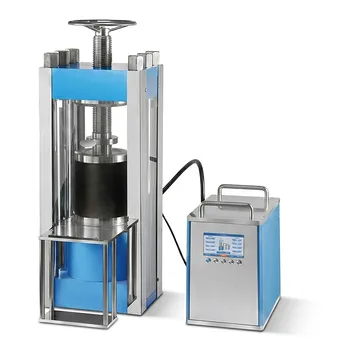
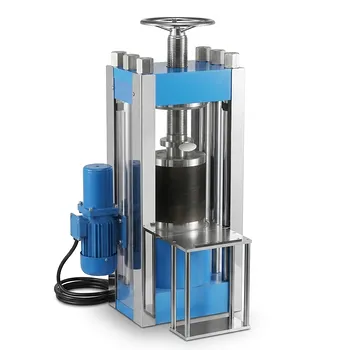
Platen versatility in heated lab presses is primarily defined by variable sizing options, surface material interchangeability, and adaptable operational modes. These features allow researchers to scale from single-sample testing to multi-sample processing while ensuring the pressing surface is chemically and thermally compatible with materials ranging from polymers to ceramics.
The true utility of a heated press lies in its ability to reconfigure the physical interface—the platen—to match the specific geometry and chemical requirements of the sample being processed.
Optimizing for Sample Dimensions and Throughput
The most immediate factor in platen versatility is the physical dimension of the working area.
Accommodating Various Sample Sizes
Heated lab presses are available with various platen sizes to match the specific dimensions of your workpiece.
This prevents the inefficiency of heating a massive surface area for a microscopic sample, or conversely, the inability to process a large composite sheet.
Increasing Processing Volume
Larger platens unlock the ability to engage in batch processing.
By utilizing a wider surface area, operators can compress and heat multiple samples simultaneously, significantly increasing throughput for quality control or high-volume research applications.
Adapting Surface Materials to Experimental Needs
Standard steel surfaces are not suitable for every chemical interaction or temperature requirement. Versatile presses address this through interchangeable surfaces.
Interchangeable Platen Materials
Advanced models offer interchangeable platens manufactured from diverse materials.
Common options include stainless steel, ceramic, and aluminum.
Matching Material to Application
This flexibility ensures that the platen surface does not react negatively with the sample.
For example, ceramic might be chosen for high-temperature stability (up to 500 °C in some units), while aluminum might be selected for its rapid heat transfer properties when working with specific polymers or rubber.
Enhancing Workflow with Operational Modes
Versatility also extends to how the platens are mounted and accessed within the press structure.
Diverse Working Modes
To suit different laboratory workflows, presses are designed with different platform configurations.
These include single, rotary, and mobile platforms.
Operational Adaptability
A rotary or mobile platform facilitates easier loading and unloading of samples.
This is particularly useful in high-paced environments where minimizing downtime between cycles is critical to efficiency.
Understanding the Trade-offs
While versatility is generally advantageous, it introduces variables that must be managed carefully.
Complexity vs. Stability
Systems with interchangeable or mobile platens introduce mechanical joints and interfaces that fixed systems do not have.
Operators must ensure these components are aligned perfectly to maintain uniform pressure distribution and thermal conductivity.
Material Limitations
While aluminum heats quickly, it may not withstand the same extreme pressures or abrasive wear as hardened stainless steel.
Selecting the wrong interchangeable platen for a high-pressure application can result in surface damage or sample contamination.
Making the Right Choice for Your Goal
When selecting a heated lab press, focus on the specific bottleneck in your current workflow.
- If your primary focus is High Throughput: Prioritize larger platen dimensions and rotary platforms to process multiple samples at once with minimal downtime.
- If your primary focus is Material Research: Prioritize systems with interchangeable platens (ceramic, steel, aluminum) to ensure chemical compatibility across a wide range of experimental substances.
Select the platen configuration that solves your daily operational friction, not just the one with the most features.
Summary Table:
| Versatility Feature | Benefit | Common Applications |
|---|---|---|
| Variable Sizing | Accommodates different sample dimensions and batch processing | Quality control, scaling from R&D to production |
| Interchangeable Materials | Provides chemical compatibility (Steel, Ceramic, Aluminum) | High-temp ceramics, reactive polymers, rapid-cool rubbers |
| Mobile/Rotary Platforms | Facilitates easier loading and reduces downtime | High-throughput testing, glovebox-integrated research |
| Temperature Range | Precision control for specific material thermal profiles | Battery material research, composite curing |
Elevate Your Material Research with KINTEK Solutions
At KINTEK, we understand that every sample requires a precise touch. As specialists in comprehensive laboratory pressing solutions, we offer a robust range of manual, automatic, heated, multifunctional, and glovebox-compatible models, alongside cold and warm isostatic presses tailored for advanced battery research and polymer science.
Our versatile platen configurations are designed to solve your daily operational friction—ensuring uniform pressure and thermal stability for every application. Ready to optimize your lab’s throughput?
Contact KINTEK Today for a Expert Consultation
Related Products
- 24T 30T 60T Heated Hydraulic Lab Press Machine with Hot Plates for Laboratory
- Automatic Heated Hydraulic Lab Press 120x120mm Plate Fully Automated Material Research Press
- Automatic Heated Hydraulic Lab Press with Programmable Touch Screen Controls and Precision Temperature Regulation
- Automatic Heated Hydraulic Lab Press Machine 200x200 Plate Size for Battery Research and Materials Science
- Manual Heated Hydraulic Lab Press with Integrated Hot Plates Hydraulic Press Machine
People Also Ask
- Function of a Laboratory Hydraulic Press with Heated Platens in SSE? Enhance Battery Density & Conductivity
- Why is a laboratory hydraulic press with heating plates required for PLA/TEC films? Achieve Precise Sample Integrity
- What role does a laboratory heated hydraulic press play in LTCC? Essential for High-Density Ceramic Lamination
- What is the primary function of a laboratory heated hydraulic press? Mastering Thermoplastic Carbon Fiber Composites
- What is the critical role of a laboratory heated hydraulic press? Mastering PVC Sample Prep for Testing