Hot pressing is a specialized manufacturing process that simultaneously applies heat and pressure to shape and bond materials, most notably in powder metallurgy. By subjecting a powder or compact to high pressure at a low strain rate, the process induces sintering and creep, allowing for the formation of dense, strong components that separate heating and pressing steps cannot achieve.
By combining thermal energy with mechanical force, hot pressing softens materials to accelerate diffusion and densification. This technique is critical for producing high-performance materials where superior mechanical strength and minimal porosity are non-negotiable.
The Mechanics of the Process
Simultaneous Application of Forces
The core differentiator of hot pressing is the concurrent application of thermal and mechanical energy.
In traditional methods, a part might be pressed into shape and then fired (sintered) in a furnace. Hot pressing combines these steps, using heat to soften the material—making it pliable—while pressure ensures uniform flow and bonding.
Inducing Sintering and Creep
According to powder metallurgy principles, this process works by triggering specific microstructural changes.
The elevated temperatures allow the material to undergo sintering (particles bonding together) and creep (slow deformation under stress). This leads to a substantial reduction in porosity and ensures the final product reaches near-theoretical density.
Heating Methods
Heat is often generated via induction heating, where a graphite or steel mold containing the powder is subjected to a high-frequency electromagnetic field.
This method allows for precise temperature control, ranging from 500 to 700 degrees Celsius in specific applications. The pressure is typically applied by cylinders acting on punches within the mold.
Why Industries Use Hot Pressing
Superior Material Properties
The primary reason engineers select this method is to achieve physical properties that exceed those of pressureless sintering.
For example, in battery technology, nitride lithium electrolytes produced via hot pressing exhibit higher ionic conductivity and mechanical strength. The pressure suppresses abnormal grain growth, resulting in a more uniform and stable microstructure.
Environmental Control
To ensure purity, the process is frequently conducted in a vacuum environment.
This is essential for metallurgy and advanced ceramics to prevent oxidation during the heating phase. By removing air from the chamber, manufacturers can produce high-quality components with minimal chemical degradation.
Diverse Material Compatibility
While rooted in metallurgy, the equipment is versatile enough for polymers and composites.
For polymers like polyethylene oxide (PEO), the machine utilizes the material's viscoelasticity above its glass transition temperature. This allows for the creation of dense membranes with excellent interface conformity, crucial for complex electrode structures.
Understanding the Trade-offs
Production Speed Constraints
Hot pressing is defined as a low-strain-rate process.
Because the material must be heated, held at pressure to allow diffusion, and then cooled, cycle times are generally longer than cold pressing or standard stamping. It is optimized for quality and density rather than high-speed, high-volume throughput.
Complexity and Cost
The equipment required is sophisticated, often involving automated systems for vacuuming, heating, and demolding.
This automation reduces human error and ensures precision, but it also represents a higher initial capital investment compared to simpler forming methods. Additionally, the molds (often graphite) are subject to wear and require careful maintenance.
Making the Right Choice for Your Goal
Hot pressing is a high-fidelity solution for specific engineering challenges.
- If your primary focus is Structural Integrity: Choose this method for metallurgy or ceramics when you require maximum density and superior mechanical strength that pressureless sintering cannot provide.
- If your primary focus is Composite Layering: Utilize this process for bonding dissimilar materials, such as wood laminates or polymer-electrolyte interfaces, where uniform adhesion is critical.
- If your primary focus is Material Purity: Rely on hot pressing in a vacuum environment to process oxidation-sensitive materials without compromising their chemical composition.
Hot pressing transforms raw powders and distinct layers into unified, high-performance components by leveraging the physics of heat and pressure in unison.
Summary Table:
| Feature | Description | Benefit |
|---|---|---|
| Sintering Mechanism | Concurrent heat and pressure | Triggers creep and particle diffusion for near-theoretical density |
| Heating Method | Induction heating (Graphite/Steel molds) | Precise temperature control and uniform thermal distribution |
| Atmosphere | Vacuum or inert gas options | Prevents oxidation and maintains high chemical purity |
| Microstructure | Suppressed grain growth | Uniform, stable structure with enhanced mechanical properties |
| Material Range | Ceramics, metals, and polymers | Versatile application from battery research to advanced composites |
Elevate Your Material Research with KINTEK
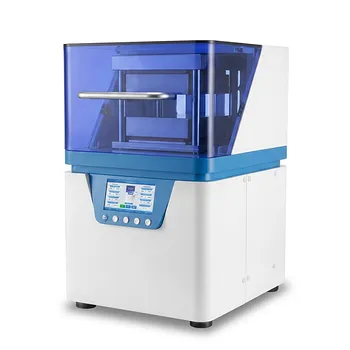
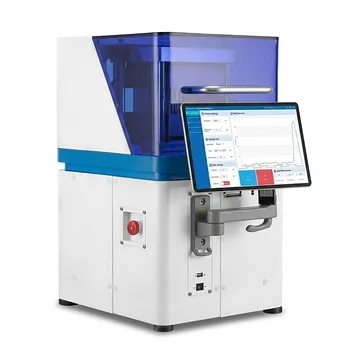
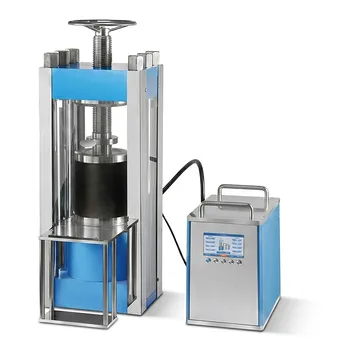
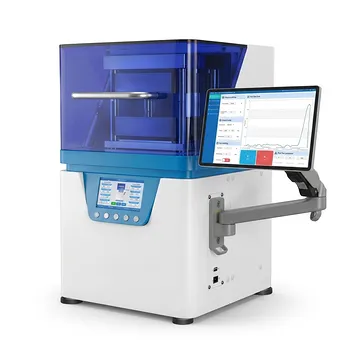
Precision matters in advanced manufacturing. KINTEK specializes in comprehensive laboratory pressing solutions, offering a versatile range of manual, automatic, heated, multifunctional, and glovebox-compatible models, alongside high-performance cold and warm isostatic presses.
Whether you are pioneering breakthroughs in battery research or developing high-strength metallurgy components, our equipment is designed to deliver the consistency and density your projects demand.
Ready to optimize your sintering process? Contact us today to discover how KINTEK’s expert solutions can bring superior structural integrity to your lab.
Related Products
- Automatic Hydraulic Hot Press with Large Plate and Precision Temperature Control for Advanced Material Sample Preparation and Industrial Research
- Heated Hydraulic Press Machine with Heated Plates for Vacuum Box Laboratory Hot Press
- Automatic High Temperature Heated Hydraulic Press Machine with Heated Plates for Lab
- Automatic Heated Hydraulic Press Machine with Hot Plates for Laboratory
- Automatic Hydraulic Heat Press Machine with Multi Stage Programmable Control and Integrated Water Cooling Plate Size 180x180mm
People Also Ask
- What are the specific features and applications of hydraulic hot press machines? Precision Solutions for Modern Labs
- How does an automatic hydraulic press operate? Achieve Precision and Consistency in Lab Pelleting
- What are the advantages and common applications of an automatic hydraulic press? Elevate Your Lab's Precision
- What is the technical significance of setting a precise dwell time? Achieve Peak Material Density and Stability
- When is an automatic hydraulic press more suitable than a manual press? Scale Your Lab with Precision & Speed