The primary purpose of adding superparamagnetic carbonyl-iron powder is to impart magnetic responsiveness to the polymer matrix while preventing permanent magnetization. This high-performance filler enables artificial cilia to execute precise, controlled movements under an external magnetic field without the risk of the cilia sticking together once the field is removed.
Carbonyl-iron powder acts as the functional driver for magnetic artificial cilia, converting external magnetic energy into mechanical motion. Its superparamagnetic nature is critical for ensuring that this process is fully reversible, preventing the cilia from becoming permanent magnets that clump together.
The Mechanics of Magnetic Actuation
Creating a Responsive Matrix
Carbonyl-iron powder serves as a magnetic filler that is mixed directly into a non-magnetic polymer matrix. This inclusion transforms a static material into a dynamic composite capable of reacting to external forces.
Enabling Precise Control
Once the powder is integrated, the cilia can follow specific magnetic inputs. For example, when subjected to a rotating magnetic field, the cilia can perform complex, synchronized movements required for fluid manipulation.
Why Superparamagnetism is Critical
Eliminating Residual Magnetism
The specific "superparamagnetic" nature of carbonyl-iron powder is a vital functional characteristic. It ensures that the particles do not retain any magnetic charge (remanence) after the external magnetic field is removed.
Preventing Self-Aggregation
If the filler material were to retain magnetism, individual cilia would act like tiny permanent magnets. They would attract one another and stick together, a failure mode that would render the device useless. Superparamagnetism ensures the cilia return to a neutral state immediately, preventing this clumping.
Understanding the Operational Trade-offs
Dependence on External Fields
Because superparamagnetic materials do not hold a charge, the cilia have no "memory" of a magnetic shape on their own. They require a constant, active external field to maintain any position other than their resting state.
Material Density Considerations
Carbonyl-iron powder is dense. While high loading increases magnetic responsiveness, it can also alter the mechanical properties of the polymer, potentially making the cilia stiffer or more brittle if the ratio is not carefully balanced.
Making the Right Choice for Your Goal
To ensure your magnetic cilia function as intended, consider how the filler properties align with your performance requirements.
- If your primary focus is high-frequency actuation: The high responsiveness of carbonyl-iron powder allows the cilia to react instantly to rapid changes in the external field.
- If your primary focus is long-term reliability: The superparamagnetic property is essential to prevent the gradual "sticking" failure that occurs with ferromagnetic materials over repeated cycles.
By selecting superparamagnetic carbonyl-iron powder, you prioritize clean, reversible actuation over permanent magnetic strength.
Summary Table:
| Feature | Benefit for Artificial Cilia |
|---|---|
| High Magnetic Permeability | Enables rapid conversion of magnetic energy to mechanical motion. |
| Superparamagnetism | Ensures zero remanence; cilia return to neutral state instantly. |
| Filler Integration | Transforms non-magnetic polymers into responsive magnetic composites. |
| Reversibility | Prevents permanent magnetization and cilia clumping (self-aggregation). |
Elevate Your Material Research with KINTEK Precision
Ready to optimize your magnetic composite fabrication? KINTEK specializes in comprehensive laboratory pressing solutions tailored for advanced materials research. Whether you are developing magnetic artificial cilia or cutting-edge battery technology, our range of manual, automatic, heated, and glovebox-compatible presses, alongside our isostatic pressing systems, provides the precision you need.
Don't let equipment limitations hinder your innovation. Contact KINTEK today to find the perfect pressing solution for your lab!
References
- Tongsheng Wang, Ye Wang. Programmable metachronal motion of closely packed magnetic artificial cilia. DOI: 10.1039/d3lc00956d
This article is also based on technical information from Kintek Solution Knowledge Base .
Related Products
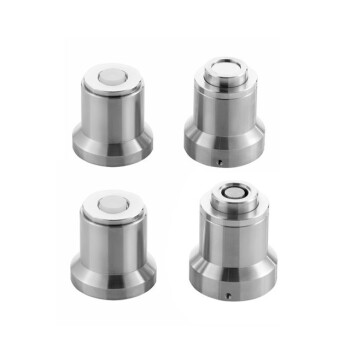
- Lab Button Battery Disassembly and Sealing Mold
- Lab Cylindrical Press Mold for Laboratory Use
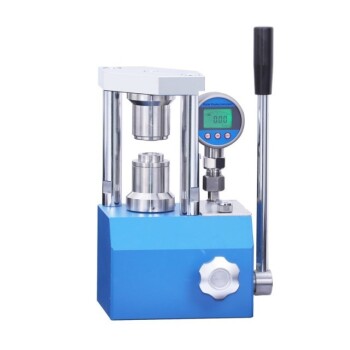
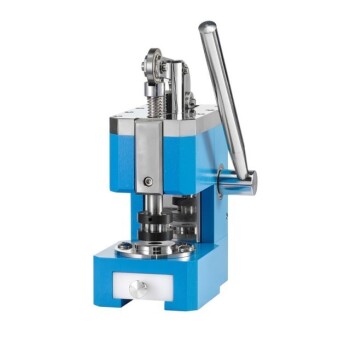
- Button Battery Sealing Machine for Button Batteries
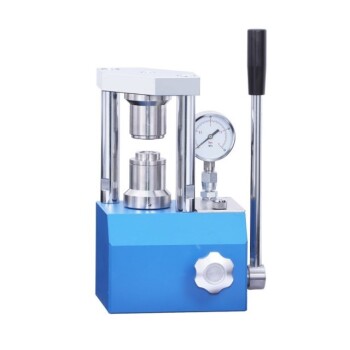
- Manual Button Battery Sealing Machine for Battery Sealing
- Lab Round Bidirectional Press Mold
People Also Ask
- How does a sealed battery mold facilitate the assembly and testing of asymmetric supercapacitors using VO2?
- What is the function of specialized battery molds and sealing consumables? Optimize Your In-situ XRD Testing Today
- How does the geometry of laboratory molds influence mycelium-based composites? Optimize Density and Strength
- Why are specialized battery test molds used? Ensure Peak Performance for All-Solid-State Sodium Batteries (ASSIBs)
- What role do battery testing molds play in electrolyte performance? Exploring Pressure vs. Viscoelasticity