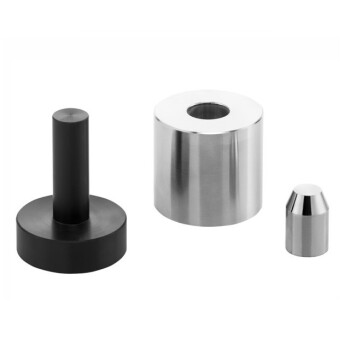
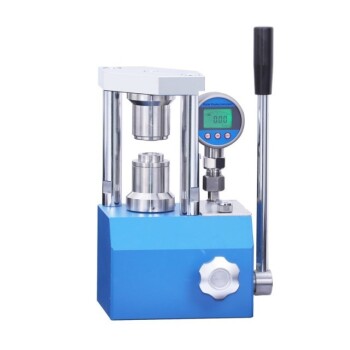
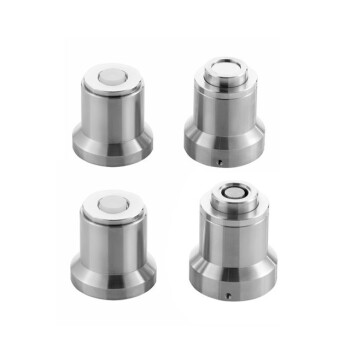
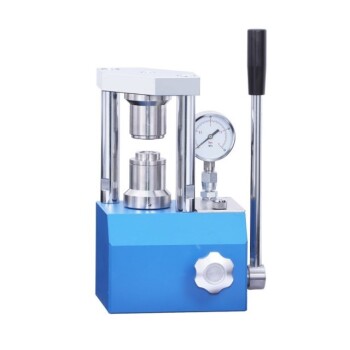
A laboratory sealing press is the primary instrument used to mechanically finalize coin cell assembly by applying precise radial pressure. Its role extends beyond simply closing the battery casing; it is responsible for establishing the necessary internal physical environment for electrochemical reactions. By creating a hermetic seal, the press ensures component connectivity and chemical isolation, which are prerequisites for gathering valid experimental data.
The sealing press is the gatekeeper of battery performance data. It transforms a stack of loose components into a functional electrochemical system by minimizing internal resistance and preventing environmental contamination, ensuring that test results reflect true material chemistry rather than assembly errors.
The Mechanism of Electrochemical Connectivity
The most immediate function of the sealing press is to compress the internal "stack" of the battery. This mechanical action has direct electrical consequences that define the cell's performance.
Minimizing Ohmic Internal Resistance
A coin cell consists of multiple layers, including the current collector, electrodes, separator, and electrolyte. The sealing press applies a calculated amount of pressure to force these layers into tight contact. This compression minimizes ohmic internal resistance, ensuring that electrons can flow efficiently through the system without unnecessary impedance.
Optimizing Interfacial Contact
The interface between the electrode material and the current collector is a common source of resistance. By applying uniform radial pressure, the press ensures these surfaces bond securely. This reduction in interfacial contact resistance is critical for high-rate performance, as loose contact leads to voltage drops and poor energy transfer.
Ensuring Chemical Stability and Integrity
Lithium-based chemistries are highly sensitive to their environment. The sealing press provides the physical barrier necessary to maintain the chemical stability of the cell.
Hermetic Encapsulation
The press mechanically crimps the battery casing (often stainless steel) against a sealing gasket. This creates a hermetic seal that isolates the internal components from the external environment. This barrier prevents the ingress of oxygen and moisture, both of which can degrade lithium electrodes and cause immediate cell failure.
Preventing Electrolyte Volatilization
Electrolytes are often volatile and prone to evaporation. A proper seal prevents the internal electrolyte from drying out or leaking. This is essential for extending cycle life, as the loss of electrolyte fundamentally alters the cell's capacity and eventually halts ion transport entirely.
The Impact on Experimental Data
For researchers, the value of a sealing press lies in the reliability of the data it helps generate.
Guaranteeing Data Accuracy
Test results are only as good as the assembly quality. If a cell is loosely crimped, the resulting high resistance will appear as poor material performance in the data. A precise sealing press removes this variable, ensuring that the accuracy of battery test data is maintained and that results are attributable to the chemistry, not the assembly process.
Ensuring Reproducibility
To compare different materials or battery designs, the assembly conditions must be identical for every cell. The sealing press provides constant and precise pressure application. This consistency is vital for repeatability, allowing researchers to trust that variations in cycling stability or impedance are genuine and not artifacts of inconsistent crimping force.
Understanding the Trade-offs of Pressure Application
While pressure is essential, it must be balanced carefully. A sealing press is a precision tool, and misuse can lead to compromised data.
The Risk of Insufficient Pressure
If the radial pressure applied is too low, the casing will not deform sufficiently to grip the gasket. This leads to immediate electrolyte leakage and the infiltration of air. Furthermore, the internal components will lack the physical contact pressure required for low impedance, rendering the cell useless for high-performance testing.
The Danger of Excessive Force
Conversely, applying too much pressure can mechanically damage the internal components. Excessive force may crush the separator or deform the casing to the point of structural failure. This can cause internal short circuits or inconsistent contact points, which introduces noise into impedance measurements and cycling data.
Ensuring Reliability in Your Assembly Process
To maximize the utility of your laboratory sealing press, focus on the specific requirements of your testing goals.
- If your primary focus is material characterization: Ensure the press applies sufficient pressure to minimize contact resistance so that impedance data reflects the material properties, not the contact quality.
- If your primary focus is long-term cycle life: Prioritize the integrity of the hermetic seal to prevent electrolyte volatilization, which is the leading cause of premature failure in long-duration tests.
The laboratory sealing press acts as the final quality control step in battery assembly, bridging the gap between raw materials and reliable electrochemical data.
Summary Table:
| Key Role | Impact on Battery Assembly | Benefit for Researchers |
|---|---|---|
| Electrical Connectivity | Minimizes ohmic & interfacial resistance | Accurate material performance data |
| Hermetic Sealing | Prevents moisture ingress & electrolyte loss | Extended cycle life & chemical stability |
| Mechanical Precision | Uniform radial pressure application | Reproducible results across test batches |
| Safety & Integrity | Prevents casing leaks and short circuits | Secure handling and stable cell environment |
Maximize Your Battery Research Precision with KINTEK
Don't let assembly errors compromise your electrochemical data. KINTEK specializes in comprehensive laboratory pressing solutions tailored for high-stakes battery research. Whether you need manual, automatic, heated, or multifunctional models—including glovebox-compatible and isostatic presses—we provide the tools necessary to ensure your coin cells are perfectly sealed every time.
Our value to you:
- Precision Engineering: Minimize internal resistance with consistent radial pressure.
- Versatile Solutions: Equipment designed specifically for battery materials and glovebox integration.
- Reliable Data: Ensure every result reflects your material chemistry, not assembly flaws.
Contact KINTEK Today for a Solution Consultation
References
- Zeyi Wang, Chunsheng Wang. Interlayer Design for Halide Electrolytes in All‐Solid‐State Lithium Metal Batteries (Adv. Mater. 30/2025). DOI: 10.1002/adma.202570206
This article is also based on technical information from Kintek Solution Knowledge Base .
Related Products
- Button Battery Sealing Press Machine for Lab
- Lab Button Battery Tablet Press Sealing Mold
- Button Battery Sealing Machine for Button Batteries
- Lab Button Battery Disassembly and Sealing Mold
- Manual Button Battery Sealing Machine for Battery Sealing
People Also Ask
- Why use standardized CR2032 components & high-precision presses? Ensure reliability in lithium metal battery research.
- Why is a laboratory battery sealing press essential for desolvation energy testing? Ensure Reliable Kinetic Data
- Why is a laboratory hydraulic press or battery sealing machine essential? Ensure Coin Cell Data Integrity
- How do laboratory battery sealing machines ensure performance consistency? Master Your Lithium and LFP Battery Assembly
- What role does a laboratory sealing press play in thermal analysis of solid dispersion films? Ensure Data Integrity