
Routine maintenance is the single most effective way to protect your investment. To extend the life of your pellet press, you must establish a schedule for lubricating moving parts with high-quality agents and inspecting critical components like the die and plunger for wear. Furthermore, protecting the machine from environmental factors through proper covered storage is essential to prevent rust and corrosion.
Neglecting basic upkeep is the leading cause of premature equipment failure in pellet production. By transitioning from reactive repairs to proactive care, you stabilize production quality and drastically reduce the risk of catastrophic mechanical breakdown.
Preserving Mechanical Integrity
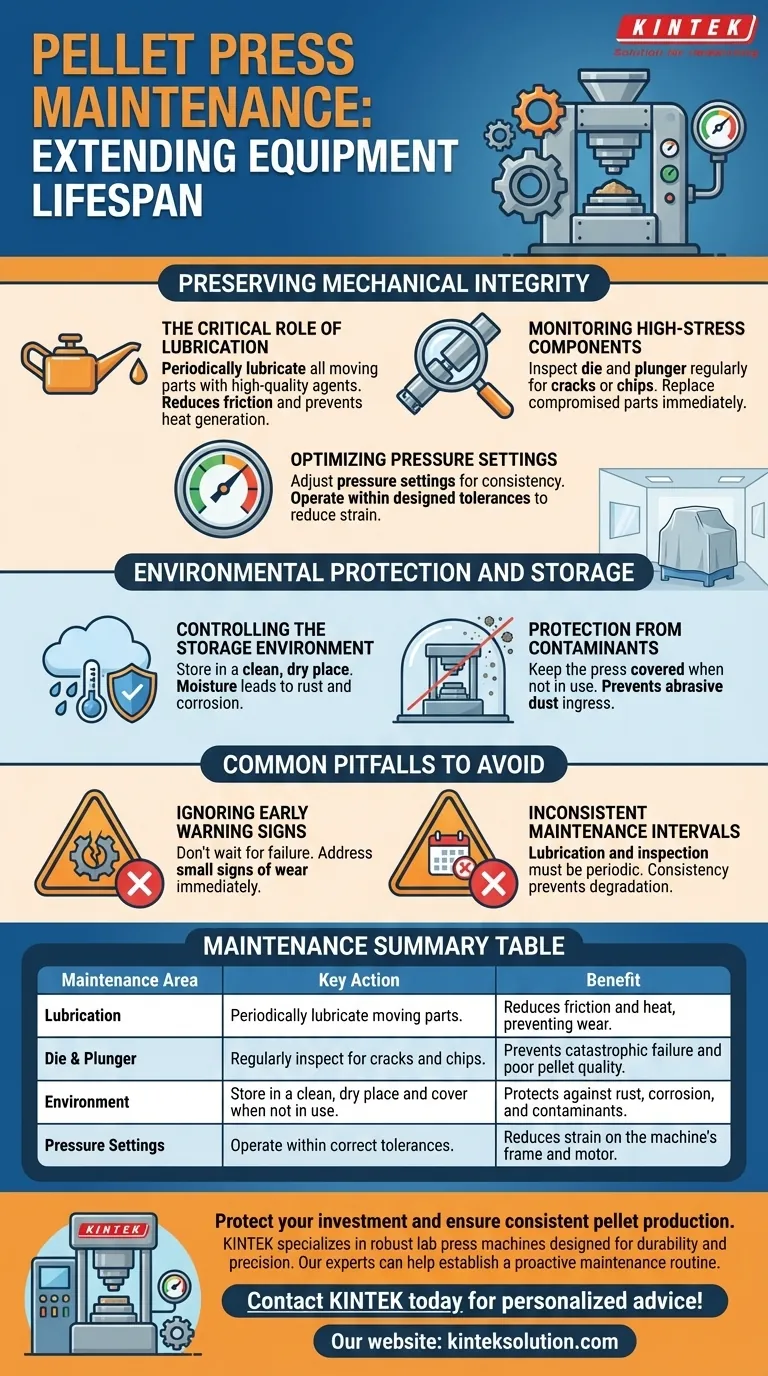
The Critical Role of Lubrication
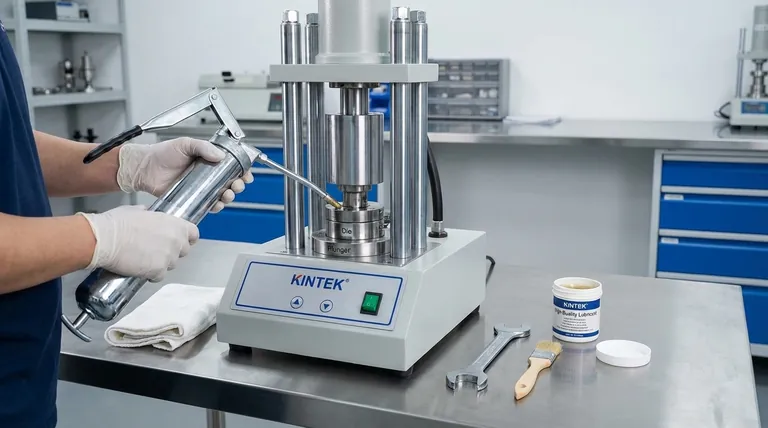
Friction is the primary enemy of any high-pressure machinery. You must periodically lubricate all moving parts using a high-quality lubricant designed for heavy loads. This reduces heat generation and prevents metal-on-metal abrasion that shortens component lifespan.
Monitoring High-Stress Components
The die and plunger endure the most physical stress during operation. You should inspect these parts regularly for visible signs of damage, such as cracks or chips. Replacing compromised parts immediately prevents them from shattering and causing extensive damage to the rest of the press.
Optimizing Pressure Settings
Incorrect pressure settings do more than just produce bad pellets; they strain the machine's frame and motor. If you notice pellet quality becoming inconsistent, adjust the pressure settings immediately. Operating at the correct pressure ensures the machine runs within its designed tolerances.
Environmental Protection and Storage
Controlling the Storage Environment
When the machine is not in active operation, the environment determines its longevity. You must store the press in a clean, dry place. Moisture is a silent destroyer that leads to rust and corrosion, which can seize moving parts and degrade the metal.
Protection from Contaminants
Dust and debris are inevitable in pellet production environments, but they should not settle on idle machinery. Keep the press covered when not in use. This simple step prevents abrasive dust from entering the internal mechanisms and absorbing moisture from the air.
Common Pitfalls to Avoid
Ignoring Early Warning Signs
A common mistake is waiting for a component to fail completely before replacing it. If a die shows a small crack, it is already structurally compromised. Ignoring these small signs of wear often leads to more expensive, complex repairs later.
Inconsistent Maintenance Intervals
Lubrication and inspection must be periodic, not random. Skipping a lubrication cycle because the machine "looks fine" allows internal damage to accrue unseen. Consistency is vital for preventing the gradual degradation of the press.
Making the Right Choice for Your Goal
To get the most out of your equipment, align your maintenance habits with your operational priorities.
- If your primary focus is machine longevity: Prioritize environmental control and rust prevention by keeping the unit dry and covered whenever it is idle.
- If your primary focus is product consistency: Focus heavily on the condition of the die and plunger, replacing them at the first sign of surface imperfections.
Treat your pellet press with the discipline of a precision tool, and it will deliver reliable performance for years to come.
Summary Table:
| Maintenance Area | Key Action | Benefit |
|---|---|---|
| Lubrication | Periodically lubricate moving parts | Reduces friction and heat, preventing wear |
| Die & Plunger | Regularly inspect for cracks and chips | Prevents catastrophic failure and poor pellet quality |
| Environment | Store in a clean, dry place and cover when not in use | Protects against rust, corrosion, and contaminants |
| Pressure Settings | Operate within correct tolerances | Reduces strain on the machine's frame and motor |
Protect your investment and ensure consistent pellet production. KINTEK specializes in robust lab press machines, including automatic lab presses and heated lab presses, designed for durability and precision in laboratory settings. Our experts can help you establish a proactive maintenance routine to maximize your equipment's lifespan and performance.
Contact KINTEK today for personalized advice and discover the right press for your needs!
Visual Guide
Related Products
- Laboratory Hydraulic Split Electric Lab Pellet Press
- Laboratory Hydraulic Pellet Press for XRF KBR FTIR Lab Press
- Manual Laboratory Hydraulic Pellet Press Lab Hydraulic Press
- Automatic Laboratory Hydraulic Press Lab Pellet Press Machine
- Automatic Laboratory Hydraulic Press for XRF and KBR Pellet Pressing
People Also Ask
- What are the emerging trends in the design and materials of lab pellet presses? Modernize Your Lab Efficiency
- How do lab pellet presses support customization and flexibility? Optimize Your Sample Prep for Any Material
- What are common lab pellet press issues? Expert Troubleshooting Guide for Reliable Material Research
- What are the common operational types of lab pellet presses? Choosing the Right Manual, Automatic, or Hydraulic System
- Why use a laboratory pellet press for solid-state battery evaluation? Ensure Accuracy in Interface Stability Testing



















