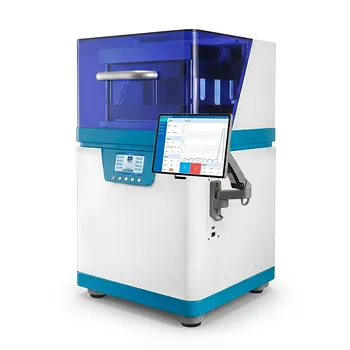
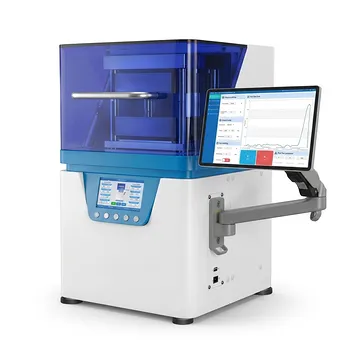
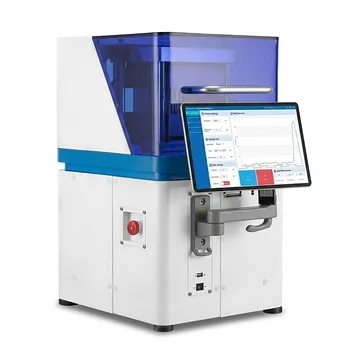
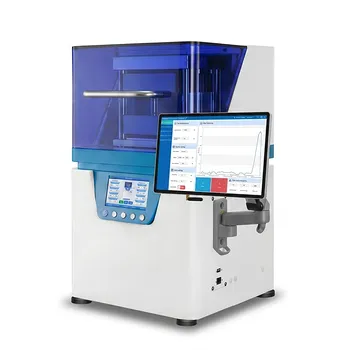
Laboratory hot presses can be customized with four primary auxiliary systems: rapid cooling units, vacuum environments, atmosphere protection, and enhanced safety mechanisms. While the core system handles basic heating and pressure, these optional integrations allow for precise control over material chemistry, cycle speed, and operational safety.
While the core frame and heating elements handle basic compaction, optional auxiliary systems are essential for controlling material chemistry and process efficiency. Integrating cooling, vacuum, or inert gas environments allows you to prevent oxidation, reduce cycle times, and ensure operator safety in high-performance applications.
Enhancing Thermal Efficiency
Rapid Cooling Systems
Standard presses rely on natural heat dissipation, which can result in long processing cycles. Cooling systems use either forced air or water circulation to rapidly lower the temperature of the platens and samples.
The Impact on Microstructure
Beyond simply saving time, active cooling allows you to "freeze" specific microstructures in place. This is critical for materials that may degrade or undergo unwanted phase changes if cooled too slowly.
Controlling the Processing Environment
Vacuum Systems
For materials sensitive to air, a vacuum system is an essential upgrade. This typically includes a sealed vacuum chamber and a dedicated pump.
Removing Volatiles and Preventing Oxidation
The primary function of the vacuum is to prevent oxidation during the heating phase. Additionally, it effectively pulls trapped volatiles and moisture out of the sample, resulting in denser, higher-quality composites.
Atmosphere Protection Systems
For processes requiring more than just a vacuum, atmosphere protection systems introduce inert gases into the chamber. Commonly used gases include nitrogen or argon.
Stabilizing Material Chemistry
This creates a positive pressure environment that actively shields the sample. It is particularly useful for materials that are highly reactive to oxygen or moisture even at low partial pressures.
Prioritizing Operator Safety
Integrated Safety Guards
While safety should never be optional, specific advanced safety guards are often categorized as auxiliary integrations. These include interlocking safety doors and emergency stop buttons.
Over-Limit Protection
Advanced auxiliary packages also include automated protection against over-temperature and over-pressure events. These systems automatically shut down the unit if parameters exceed safe operating limits, protecting both the operator and the equipment.
Understanding the Trade-offs
Increased Complexity and Footprint
Adding auxiliary systems significantly increases the footprint of the machine. Vacuum pumps and water chillers require additional floor space and utility connections, which may not be available in smaller labs.
Maintenance Requirements
More subsystems introduce more points of failure. Vacuum seals require regular inspection, and water cooling lines must be monitored for leaks or blockages, increasing the total cost of ownership.
Making the Right Choice for Your Goal
Selecting the right auxiliary systems depends entirely on your specific processing requirements and material constraints.
- If your primary focus is high throughput: Prioritize a water cooling system to drastically reduce cycle times between runs.
- If your primary focus is preventing oxidation: Invest in a high-quality vacuum system or atmosphere protection to ensure chemical purity.
- If your primary focus is risk mitigation: Ensure the specific configuration includes comprehensive safety guards and over-limit protection features.
By matching the auxiliary system to your core constraint, you turn a standard press into a precision instrument tailored to your research.
Summary Table:
| Auxiliary System | Primary Function | Key Benefit |
|---|---|---|
| Rapid Cooling | Forced air or water circulation | Reduces cycle times and preserves material microstructure. |
| Vacuum System | Creates a sealed, low-pressure environment | Prevents oxidation and removes volatile impurities. |
| Inert Atmosphere | Introduces Nitrogen or Argon gas | Stabilizes chemistry for highly reactive materials. |
| Safety Mechanisms | Interlocks and over-limit protection | Protects operators and equipment from pressure/heat hazards. |
Elevate Your Material Research with KINTEK
Take full control of your pressing environment with KINTEK’s comprehensive laboratory pressing solutions. Whether you are working on advanced battery research or high-performance composites, our systems are designed to meet the most demanding specifications.
Why choose KINTEK?
- Versatile Models: Choose from manual, automatic, heated, multifunctional, and glovebox-compatible presses.
- Advanced Processing: Specialized cold and warm isostatic presses for superior material density.
- Customizable Auxiliaries: Integrate precision vacuum, cooling, and atmosphere protection systems tailored to your workflow.
Ready to transform your lab's capabilities? Contact KINTEK today to consult with our experts and find the perfect pressing solution for your target applications!
Related Products
- Laboratory Split Manual Heated Hydraulic Press Machine with Hot Plates
- 24T 30T 60T Heated Hydraulic Lab Press Machine with Hot Plates for Laboratory
- Heated Hydraulic Press Machine with Heated Plates for Vacuum Box Laboratory Hot Press
- Automatic Hydraulic Hot Press with Large Plate and Precision Temperature Control for Advanced Material Sample Preparation and Industrial Research
- Laboratory Manual Heated Hydraulic Press Machine with Hot Plates
People Also Ask
- Why is a laboratory hydraulic press with heating plates required for PLA/TEC films? Achieve Precise Sample Integrity
- What role does a laboratory heated hydraulic press play in LTCC? Essential for High-Density Ceramic Lamination
- Why reduce load when applying composite strengthening tabs? Protect Specimen Integrity and Data Accuracy
- Why is a laboratory heated hydraulic press required? Ensure Precise Vulcanization for NBR/EPDM Nanocomposites
- What is the critical role of a laboratory heated hydraulic press? Mastering PVC Sample Prep for Testing