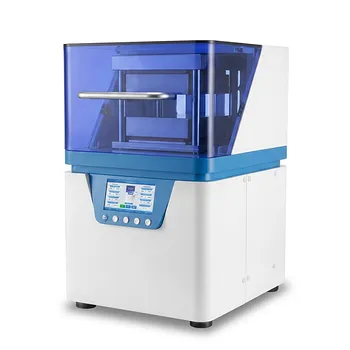
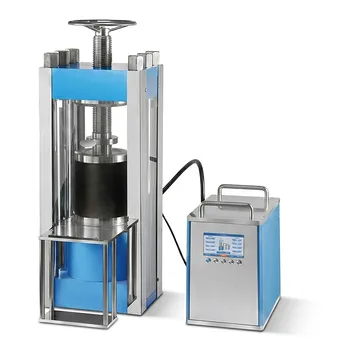
Recent development work utilizes direct hot pressing to create advanced metal-diamond-composite heat sinks. This manufacturing technique is currently being applied to solve thermal management challenges in high-performance electronics, specifically for LEDs and lasers.
The core insight here is that while the application for electronics is recent, the underlying technology is mature; direct hot pressing of metal-diamond compounds is a standard sintering process established in the 1950s.
The Core Application: Heat Sinks
The primary focus of recent development efforts is the synthesis of materials capable of managing high thermal loads.
Metal-Diamond Composites
Engineers are using direct hot pressing to manufacture metal-diamond-composite heat sinks. This process fuses metal with diamond particles to leverage the superior thermal conductivity of diamond within a metal matrix.
Targeting High-Power Electronics
These components are not for general-purpose electronics. They are specifically developed for demanding applications such as LEDs and lasers, where efficient heat dissipation is critical for performance and longevity.
Historical Context and Industry Adoption
To understand the reliability of this development, it is necessary to look at the history of the manufacturing process itself.
A Mature Technology
This is not an experimental or unproven manufacturing method. The sintering of metal-diamond compounds using direct hot presses dates back to the 1950s.
Industrial Precedence
The technology has been refined over decades of use. It is already a common, standard practice in the diamond tool industry, proving its viability for creating robust composite materials.
Operational Context and Distinctions
When evaluating this development, it is important to distinguish between the novelty of the product and the maturity of the process.
The Sintering Mechanism
Direct hot pressing operates as a sintering technique. It applies heat and pressure simultaneously to compact and form the metal-diamond powder into a solid, cohesive shape.
Innovation vs. Adaptation
The "recent development" is strictly an application innovation, not a process invention. The trade-off to consider is that while the manufacturing method is stable, adapting it from tool-making to creating precision heat sinks for microelectronics requires specific material tuning.
Making the Right Choice for Your Goal
When assessing the relevance of direct hot pressing for your projects, consider the following distinctions:
- If your primary focus is thermal management: Investigate metal-diamond composites for high-heat applications like LEDs, as they leverage established manufacturing methods.
- If your primary focus is process engineering: Recognize that this is a re-application of the standard sintering techniques used in the diamond tool industry since the 1950s.
This development represents the successful adaptation of a legacy industrial process to meet modern optoelectronic challenges.
Summary Table:
| Feature | Detail |
|---|---|
| Primary Application | Metal-Diamond Composite Heat Sinks |
| Target Industry | High-performance electronics (LEDs, Lasers) |
| Process Type | Simultaneous Sintering (Heat + Pressure) |
| Historical Origin | Established in the 1950s (Diamond Tool Industry) |
| Key Benefit | Superior thermal conductivity & material durability |
Elevate Your Research with KINTEK Pressing Solutions
Are you developing next-generation thermal management materials or advanced composites? KINTEK specializes in comprehensive laboratory pressing solutions tailored for precision research. Whether you need manual, automatic, heated, or multifunctional models—including glovebox-compatible and isostatic presses—our equipment provides the stability and control required for high-stakes battery and material science research.
Take the next step in material innovation. Contact KINTEK today to find your perfect pressing solution.
Related Products
- Automatic Hydraulic Hot Press with Large Plate and Precision Temperature Control for Advanced Material Sample Preparation and Industrial Research
- Heated Hydraulic Press Machine with Heated Plates for Vacuum Box Laboratory Hot Press
- Automatic Heated Hydraulic Press Machine with Hot Plates for Laboratory
- Automatic High Temperature Heated Hydraulic Press Machine with Heated Plates for Lab
- Laboratory Manual Heated Hydraulic Press Machine with Hot Plates
People Also Ask
- What are the specific features and applications of hydraulic hot press machines? Precision Solutions for Modern Labs
- How does an automatic hydraulic press operate? Achieve Precision and Consistency in Lab Pelleting
- What are the advantages and common applications of an automatic hydraulic press? Elevate Your Lab's Precision
- What is the technical significance of setting a precise dwell time? Achieve Peak Material Density and Stability
- When is an automatic hydraulic press more suitable than a manual press? Scale Your Lab with Precision & Speed