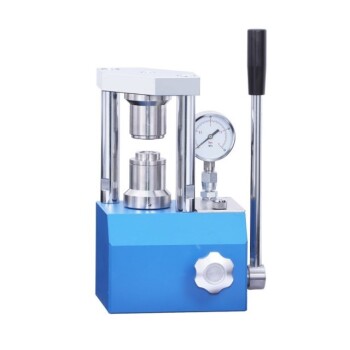
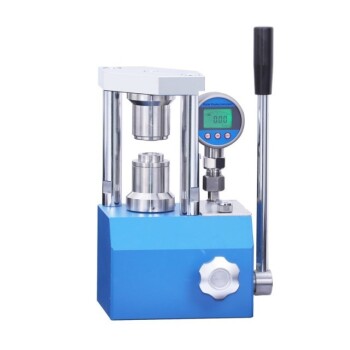
Lamination and sealing equipment act as the definitive assembly mechanism for pouch-type zinc-air batteries, utilizing precise uniform pressure and temperature to bond the air cathode, gel electrolyte, and zinc foil anode. This equipment is responsible for transforming these loose layers into a single, cohesive unit, ensuring the physical durability required for large-area flexible energy storage.
By facilitating a tight mechanical bond between the electrolyte and electrodes, this process drastically reduces contact resistance while preserving the semi-open architecture necessary for oxygen intake.
The Mechanics of Electrochemical Assembly
Achieving Component Unification
In pouch-type zinc-air batteries, the internal stack consists of three distinct layers: the air cathode, the gel electrolyte, and the zinc foil anode.
Lamination equipment applies calculated heat and force to press these layers together. This transforms individual components into an integrated stack capable of functioning as a unified energy source.
Minimizing Contact Resistance
The primary electrochemical goal of this assembly phase is the reduction of contact resistance.
If the layers are not pressed tightly, microscopic gaps prevent efficient ion transfer between the electrolyte and the electrodes. Proper lamination eliminates these voids, ensuring optimal conductivity and battery efficiency.
Preserving Functional Architecture
Maintaining the Semi-Open Structure
Unlike sealed lithium-ion batteries, zinc-air batteries require a semi-open structure to function.
The sealing equipment must encapsulate the battery to prevent electrolyte leakage while strictly maintaining "breathable windows." This allows essential oxygen diffusion to reach the cathode without compromising the cell's internal stability.
Ensuring Structural Integrity
Pouch cells are often designed for flexibility, which introduces mechanical stress during use.
The encapsulation process provides the necessary structural reinforcement. It ensures that the large-area device remains stable and does not delaminate when flexed or handled.
Repeatability in Prototyping
As highlighted in laboratory settings, the use of precision presses ensures repeatable mechanical pressure.
This consistency is vital for development; without it, variations in performance could be attributed to poor assembly rather than the chemistry itself.
Understanding the Constraints and Trade-offs
The Balance of Pressure
There is a critical threshold regarding the pressure applied during lamination.
Insufficient pressure leads to high internal resistance and poor contact between the gel electrolyte and the zinc anode.
Conversely, excessive pressure risks damaging the delicate air cathode or sealing the breathing windows too tightly, suffocating the reaction.
Making the Right Choice for Your Goal
To maximize the performance of pouch-type zinc-air batteries, your assembly process must prioritize the specific needs of the chemistry.
- If your primary focus is electrical efficiency: Prioritize equipment that delivers high thermal uniformity to minimize contact resistance across the entire electrolyte interface.
- If your primary focus is device longevity: Ensure your sealing parameters strictly reinforce the semi-open structure to prevent electrolyte dry-out while permitting airflow.
- If your primary focus is R&D validation: Utilize laboratory presses with quantifiable pressure settings to ensure data integrity across multiple test batches.
Precision in the lamination phase is the single most effective way to transition a theoretical battery design into a viable, high-performance device.
Summary Table:
| Function | Key Role in Assembly | Impact on Battery Performance |
|---|---|---|
| Lamination | Uniform pressure & heat application | Minimizes contact resistance and eliminates voids |
| Sealing | Controlled encapsulation | Prevents electrolyte leakage while maintaining oxygen intake |
| Structural Reinforcement | Bonding layers (Cathode/Electrolyte/Anode) | Ensures durability and flexibility for large-area devices |
| Precision Control | Quantifiable pressure settings | Ensures R&D repeatability and prevents electrode damage |
Elevate Your Battery Research with KINTEK Precision Solutions
Transition your theoretical designs into high-performance energy storage devices with KINTEK’s specialized laboratory pressing solutions. Whether you are developing flexible pouch cells or next-generation energy systems, our comprehensive range of manual, automatic, heated, and multifunctional presses—including glovebox-compatible and isostatic models—ensures the repeatable mechanical pressure vital for minimizing contact resistance.
Our Value to You:
- Precision Engineering: Achieve the perfect balance of pressure to protect delicate air cathodes.
- Versatile Solutions: Equipment tailored for battery research, from cold to warm isostatic pressing.
- Expert Support: Benefit from high thermal uniformity and quantifiable settings for validated R&D results.
Ready to optimize your assembly process? Contact KINTEK today to find your ideal pressing solution.
References
- Yeon-Woo Kim, Sung Hoon Ahn. Tailoring Two-Dimensional NiFeCo-Layered Double Hydroxide onto One-Dimensional N-Doped CNTs for High-Performance Bifunctional Air Electrodes in Flexible Zinc–Air Batteries. DOI: 10.3390/batteries11040155
This article is also based on technical information from Kintek Solution Knowledge Base .
Related Products
- Button Battery Sealing Press Machine for Lab
- Warm Isostatic Press for Solid State Battery Research Warm Isostatic Press
- Manual Button Battery Sealing Machine for Battery Sealing
- Button Battery Sealing Machine for Button Batteries
- Lab Button Battery Disassembly and Sealing Mold
People Also Ask
- Why use standardized CR2032 components & high-precision presses? Ensure reliability in lithium metal battery research.
- Why is a laboratory battery sealing press essential for desolvation energy testing? Ensure Reliable Kinetic Data
- Why is a laboratory hydraulic press or battery sealing machine essential? Ensure Coin Cell Data Integrity
- How do laboratory battery sealing machines ensure performance consistency? Master Your Lithium and LFP Battery Assembly
- What role does a laboratory sealing press play in thermal analysis of solid dispersion films? Ensure Data Integrity