Coin cell assembly equipment serves as the critical mechanical stabilizer required to validate the chemistry of solid-state electrolytes.
Specifically, devices like cell crimpers and hydraulic presses apply constant, standardized pressure to seal the battery casing. This creates the robust interfacial contact between the electrodes and solid-state pellets necessary to conduct symmetrical long-cycle stripping and plating tests, effectively isolating the material's electrochemical performance from mechanical assembly failures.
Core Takeaway The primary function of assembly equipment in this context is to eliminate interfacial resistance interference caused by poor physical contact. By standardizing the mechanical pressure within the cell, the hardware ensures that test data reflects the intrinsic chemical stability of the electrolyte, rather than the quality of the assembly.
Establishing the Hardware Prerequisite
The Necessity of Uniform Pressure
In liquid batteries, the electrolyte naturally wets the electrode surface. In solid-state batteries, establishing a connection requires force.
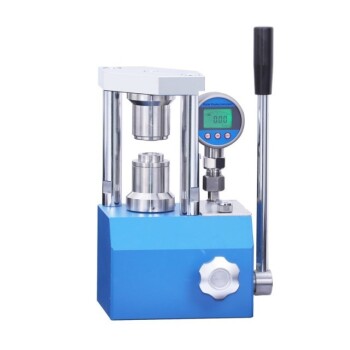
Coin cell crimpers and laboratory presses apply uniform, controllable pressure during assembly. This forces the solid electrolyte pellet, lithium/sodium metal electrodes, and current collectors into a tight, interlocking physical state.
Without this standardized encapsulation, gaps at the interface create high resistance, making it impossible to accurately evaluate the material.
Enabling Long-Term Testing
Once the cell is sealed under pressure, researchers can perform symmetrical battery long-cycle stripping and plating tests.
These tests are essential for observing how interfacial impedance evolves over time. The assembly equipment ensures that the contact remains robust throughout the cycle, preventing mechanical detachment that could be mistaken for chemical degradation.
Ensuring Data Integrity in Electrochemical Tests
Isolating Intrinsic Properties
The goal of stability evaluation is to measure the material, not the setup.
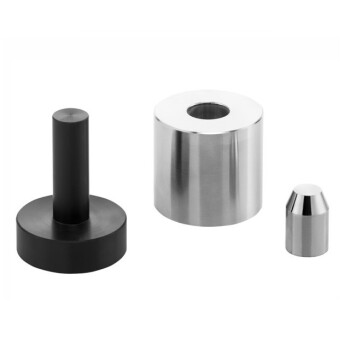
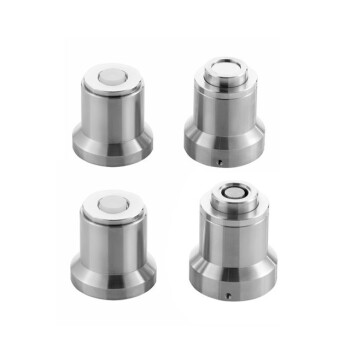
Specialized molds and flat cell fixtures utilize a rigid structure to maintain constant mechanical pressure (often on a specific area, e.g., 0.785 cm²).
This effectively suppresses contact failure caused by volume expansion during charging and discharging. By removing mechanical variables, the resulting data reflects the true intrinsic properties of the solid electrolyte.
Accuracy in Stability Windows
To determine the electrochemical stability window, researchers rely on Cyclic Voltammetry (CV) and Linear Sweep Voltammetry (LSV).
These sensitive measurements are easily distorted by impedance deviations. High-rigidity experimental devices ensure the repeatability and accuracy of these scans by minimizing contact resistance interference.
Understanding the Trade-offs
The "Pressure Masking" Effect
While high pressure is necessary for contact, excessive pressure applied by laboratory presses can sometimes mask poor intrinsic wetting properties of an electrolyte.
A material might perform well under the immense pressure of a coin cell crimp but fail in a practical format where such pressure cannot be maintained.
Volume Expansion Limitations
Rigid coin cell molds provide a confined space that suppresses volume expansion.
While this is excellent for obtaining clean EIS (Electrochemical Impedance Spectroscopy) data, it does not perfectly simulate the mechanical stresses a battery encounters in flexible or pouch cell formats. The coin cell remains a rigid, idealized environment.
Making the Right Choice for Your Goal
To select the correct assembly approach for your specific evaluation needs, consider the following:
- If your primary focus is determining the Electrochemical Stability Window (CV/LSV): Prioritize high-rigidity molds and flat cell fixtures to eliminate contact resistance noise and ensure precise voltage measurements.
- If your primary focus is Long-Term Cycle Life: Focus on the quality of the crimping and sealing process to ensure the cell maintains hermeticity and pressure against volume expansion over weeks of testing.
- If your primary focus is Interfacial Impedance Evolution: Use a laboratory press with controllable pressure settings to establish a baseline of robust contact before initiating symmetrical stripping/plating tests.
Reliable solid-state research relies as much on the mechanical consistency of the assembly as it does on the chemistry of the material.
Summary Table:
| Feature | Role in Solid-State Testing | Benefit to Researcher |
|---|---|---|
| Standardized Pressure | Creates robust electrode-pellet contact | Eliminates interfacial resistance noise |
| Hermetic Sealing | Maintains constant environment | Enables long-cycle stripping and plating tests |
| Rigid Mold Structure | Suppresses volume expansion | Ensures data reflects intrinsic chemical properties |
| Mechanical Stability | Minimizes contact resistance | Enhances accuracy of CV and LSV measurements |
Maximize Your Battery Research Precision with KINTEK
Don't let mechanical inconsistencies compromise your electrochemical data. KINTEK specializes in comprehensive laboratory pressing solutions tailored for cutting-edge battery research. From manual and automatic presses to specialized heated, multifunctional, and glovebox-compatible models—including cold and warm isostatic presses—we provide the tools necessary to eliminate assembly variables.
Ready to achieve superior interfacial contact and repeatable results? Contact KINTEK today for a customized solution and see how our expertise in solid-state assembly can accelerate your material breakthroughs.
References
- Manuel Salado, Maria Forsyth. Ammonium-Based Plastic Crystals as Solid-State Electrolytes for Lithium and Sodium Batteries. DOI: 10.1021/jacsau.4c01086
This article is also based on technical information from Kintek Solution Knowledge Base .
Related Products
- Lab Button Battery Tablet Press Sealing Mold
- Button Battery Sealing Press Machine for Lab
- Assemble Lab Cylindrical Press Mold for Laboratory Use
- Lab Button Battery Disassembly and Sealing Mold
- Button Battery Sealing Machine for Button Batteries
People Also Ask
- How does a sealed battery mold facilitate the assembly and testing of asymmetric supercapacitors using VO2?
- Why use standardized CR2032 components & high-precision presses? Ensure reliability in lithium metal battery research.
- Why is a laboratory battery sealing press essential for desolvation energy testing? Ensure Reliable Kinetic Data
- What is the function of specialized battery molds and sealing consumables? Optimize Your In-situ XRD Testing Today
- What role does a laboratory sealing press play in thermal analysis of solid dispersion films? Ensure Data Integrity