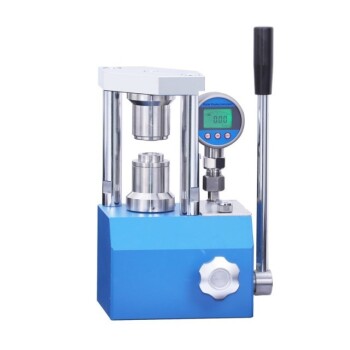
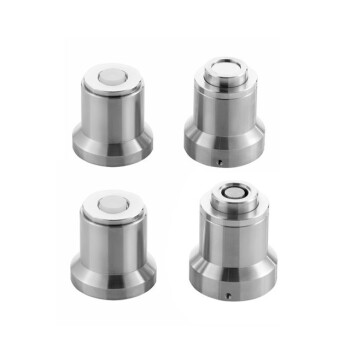
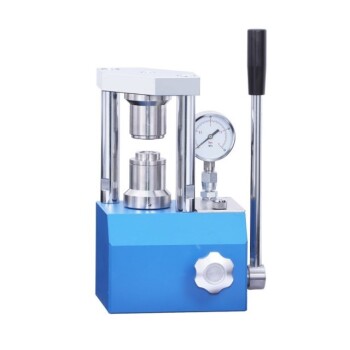
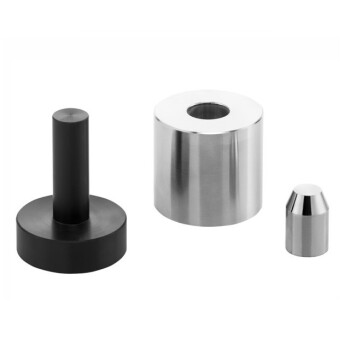
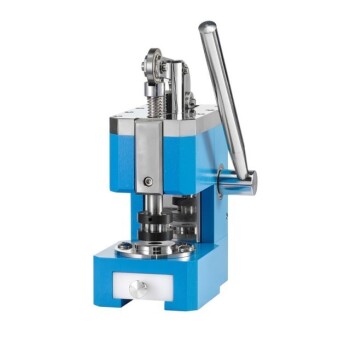
A precision coin cell crimper is the critical mechanical gatekeeper that ensures the validity of your electrochemical data by applying uniform, constant pressure to the battery casing. This equipment physically forces the zinc foil anode, separator, and cathode into optimal contact while creating a hermetic seal to prevent the evaporation of aqueous electrolytes or the ingress of air.
By eliminating mechanical variables such as poor contact and environmental contamination, a precision crimper ensures that your cycle life and rate performance data reflect the true chemistry of your materials, rather than assembly inconsistencies.
Optimizing the Internal Interface
Minimizing Internal Contact Resistance
The primary function of the crimper is to compress the internal stack—specifically the zinc foil negative electrode, the separator, and the Zn(CN)2–V2O3–C cathode.
Without sufficient pressure, gaps remain between these layers. Precision crimping eliminates these gaps, creating a stable solid-to-solid physical contact interface. This directly lowers internal resistance, which is fundamental for accurate high-current testing.
Achieving Uniform Current Distribution
It is not enough to simply apply pressure; that pressure must be uniform across the entire surface area of the electrode.
A precision crimper applies force evenly, preventing "hot spots" where current density might be artificially high. This ensures that the electrochemical reactions are distributed evenly across the active material, providing a true representation of the battery's efficiency.
Preserving Chemical Stability
Preventing Electrolyte Evaporation
Zinc-ion batteries frequently utilize aqueous (water-based) electrolytes.
A precision crimper creates a reliable airtight seal by mechanically deforming the battery case against the gasket. This prevents the water in the electrolyte from evaporating, which would otherwise alter the concentration of the solution and skew long-term cycle life data.
Blocking Environmental Contaminants
Experimental accuracy depends on isolation from external variables.
If the crimp is not hermetic, air can ingress into the cell. Oxygen and other atmospheric impurities can react with the zinc anode or the electrolyte, causing side reactions that degrade performance and produce false failure modes in your data.
Common Pitfalls and Trade-offs
The Risk of Over-Compression
While contact is essential, excessive force is detrimental.
If a crimper is set to apply too much pressure, it can physically crush the separator or deform the casing. This can lead to internal short circuits or damage the structural integrity of the active materials, rendering the cell useless before testing begins.
The Danger of Under-Compression
Conversely, insufficient pressure results in a "loose" cell.
This leads to high impedance and unstable cycling performance. The key is tunable precision: the ability to apply the exact amount of force required to seal the gasket without crushing the internal components.
Ensuring Data Reliability in Battery Assembly
To maximize the accuracy of your zinc-ion research, your assembly process must prioritize consistency above all else.
- If your primary focus is Cycle Life Stability: Ensure the crimper provides a hermetic seal to prevent electrolyte evaporation, which is the leading cause of premature failure in aqueous systems.
- If your primary focus is Rate Capability (High Current): Prioritize uniform mechanical pressure to minimize contact resistance, allowing electrons to flow freely between the zinc anode and cathode.
Precision in assembly is the only way to ensure that your data tells the true story of your chemistry.
Summary Table:
| Feature | Impact on Data Accuracy | Benefit for Zinc-ion Research |
|---|---|---|
| Uniform Pressure | Eliminates hot spots and uneven current distribution | Ensures true representation of battery efficiency |
| Hermetic Sealing | Prevents electrolyte evaporation and air ingress | Protects aqueous chemistry for reliable cycle life |
| Optimal Compression | Minimizes internal contact resistance | Enables accurate high-current rate performance testing |
| Tunable Force | Prevents separator crushing and internal shorts | Maintains structural integrity of battery components |
Elevate Your Battery Research with KINTEK Precision
Consistency is the foundation of breakthrough electrochemical data. KINTEK specializes in comprehensive laboratory pressing solutions, offering manual, automatic, heated, multifunctional, and glovebox-compatible models, as well as cold and warm isostatic presses widely applied in battery research.
Whether you are focusing on cycle life stability or high-current rate capability, our precision equipment ensures your assembly is a constant, not a variable.
Ready to eliminate assembly inconsistencies and achieve superior data accuracy?
Contact KINTEK Today to Find Your Perfect Lab Pressing Solution
References
- H.-S. Lee, Byoungnam Park. Binder-Free Metal–Organic Framework-Derived Zn(CN)2/V2O3/Carbon Cathode Fabricated via Electrophoretic Deposition for High-Performance Zn-Ion Batteries. DOI: 10.3390/inorganics13060194
This article is also based on technical information from Kintek Solution Knowledge Base .
Related Products
- Button Battery Sealing Machine for Button Batteries
- Lab Button Battery Disassembly and Sealing Mold
- Manual Button Battery Sealing Machine for Battery Sealing
- Lab Button Battery Tablet Press Sealing Mold
- Button Battery Sealing Press Machine for Lab
People Also Ask
- Why is a laboratory hydraulic press or battery sealing machine essential? Ensure Coin Cell Data Integrity
- What role does a laboratory press perform for CR2032 coin cell assembly? Ensure Precision in Battery Research
- Why is a high-pressure manual or automatic coin cell crimper required? Optimize Solid-State Battery Performance
- How does a high-precision lab press or coin cell crimper affect the performance of assembled lithium-metal batteries?
- How does the mechanical pressure provided by a laboratory crimper affect the performance of assembled 2032-type coin cells?