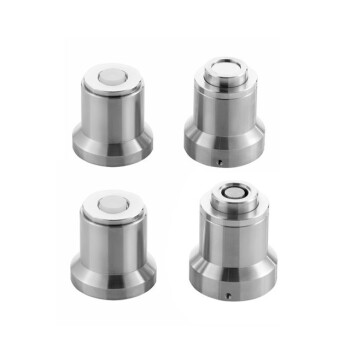
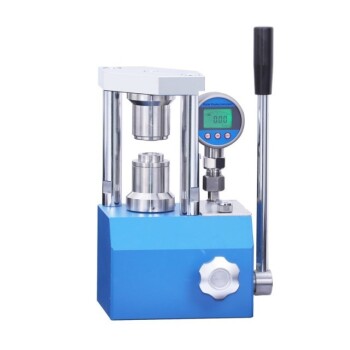
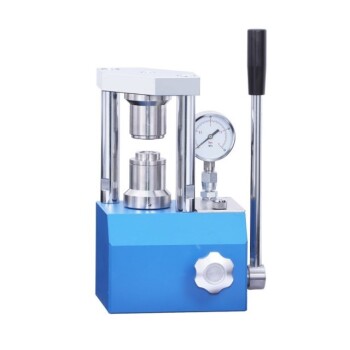
In-situ copolymerization demands strict performance standards regarding sealing integrity, injection precision, and thermal control from battery encapsulation and assembly equipment. Because the process relies on transforming liquid precursors into a solid state within the battery, the machinery must effectively prevent precursor leakage or volatilization while ensuring the internal porous framework is completely wetted.
Core Takeaway The success of in-situ copolymerization hinges on managing a delicate phase transition from liquid to solid without material loss. Therefore, equipment must prioritize hermetic sealing to contain volatile components and precise thermal regulation to drive uniform solidification.
Critical Sealing and Containment Requirements
Preventing Volatilization
The polymerization process typically occurs at high temperatures, which significantly increases the risk of precursor chemicals turning into gas.
To counter this, encapsulation equipment and battery molds must possess superior sealing performance. This ensures that volatile precursors remain contained within the cell structure during the heating phase.
Mitigating Liquid Leakage
Before the phase transition occurs, the electrolyte exists as a liquid precursor.
The assembly equipment must maintain a tight seal to prevent this liquid from leaking out of the battery casing before it has time to solidify.
Precision in Assembly and Processing
High-Precision Liquid Injection
The equipment must be capable of delivering the liquid precursor with extreme accuracy.
This precision is required to ensure that the liquid electrolyte fully penetrates and wets the porous framework of the battery components.
Managing the Phase Transition
The core of this process is the in-situ phase transition from liquid to solid.
Assembly equipment must support this specific chemical evolution, ensuring the electrolyte solidifies uniformly inside the battery rather than merely coating the exterior surfaces.
Accurate Temperature Control
Since polymerization is thermally driven, the equipment requires precise temperature regulation systems.
Fluctuations in temperature can lead to uneven curing or incomplete polymerization, making thermal stability a non-negotiable requirement for the assembly hardware.
Understanding the Manufacturing Risks
The Consequence of Poor Sealing
If the equipment fails to provide a near-perfect seal, the loss of precursors via volatilization acts as a critical failure mode.
This loss alters the chemical stoichiometry of the electrolyte, likely resulting in poor ionic conductivity or total battery failure.
Risks of Inadequate Wetting
If the injection equipment lacks precision, the porous framework may not be fully saturated before solidification.
This leads to "dry spots" within the solid electrolyte, which creates internal resistance and severely limits the battery's performance and lifespan.
Optimizing Equipment for Production Success
To ensure high-yield manufacturing for in-situ copolymerization batteries, prioritize equipment features based on your specific quality goals:
- If your primary focus is Process Safety and Yield: Prioritize equipment with superior mold sealing capabilities to eliminate the risk of hazardous leakage and precursor volatilization.
- If your primary focus is Electrochemical Performance: Prioritize equipment with high-precision injection and wetting systems to ensure the solid electrolyte creates a perfect interface with the porous framework.
Ultimately, your equipment must function not just as an assembly tool, but as a precise reactor that facilitates a controlled chemical evolution from liquid to solid.
Summary Table:
| Requirement Category | Specific Technical Need | Impact on Battery Quality |
|---|---|---|
| Sealing Performance | Hermetic mold & casing seals | Prevents precursor leakage and high-temp volatilization |
| Injection Precision | High-accuracy liquid dosing | Ensures complete wetting of the porous framework |
| Thermal Management | Precise regulation systems | Drives uniform liquid-to-solid phase transition |
| Material Integrity | Stoichiometric containment | Maintains ionic conductivity and prevents cell failure |
Elevate Your Battery Research with KINTEK Precision
Transitioning from liquid precursors to solid-state stability requires equipment that functions as a precise chemical reactor. KINTEK specializes in comprehensive laboratory pressing and assembly solutions designed to meet these rigorous demands. Whether you are developing next-generation solid-state cells or advanced battery chemistries, our range of manual, automatic, heated, and glovebox-compatible presses, alongside our isostatic pressing technology, ensures the uniform density and perfect sealing your in-situ processes require.
Ready to eliminate leakage and optimize your electrochemical performance? Contact KINTEK Today to Find Your Solution
References
- Shuixin Xia, Zhanhu Guo. Ultrathin Polymer Electrolyte With Fast Ion Transport and Stable Interface for Practical Solid‐state Lithium Metal Batteries. DOI: 10.1002/adma.202510376
This article is also based on technical information from Kintek Solution Knowledge Base .
Related Products
- Lab Button Battery Tablet Press Sealing Mold
- Lab Button Battery Disassembly and Sealing Mold
- Button Battery Sealing Machine for Button Batteries
- Warm Isostatic Press for Solid State Battery Research Warm Isostatic Press
- Manual Button Battery Sealing Machine for Battery Sealing
People Also Ask
- How does a sealed battery mold facilitate the assembly and testing of asymmetric supercapacitors using VO2?
- Why use standardized CR2032 components & high-precision presses? Ensure reliability in lithium metal battery research.
- Why is a laboratory battery sealing press essential for desolvation energy testing? Ensure Reliable Kinetic Data
- What is the function of specialized battery molds and sealing consumables? Optimize Your In-situ XRD Testing Today
- What role does a laboratory sealing press play in thermal analysis of solid dispersion films? Ensure Data Integrity