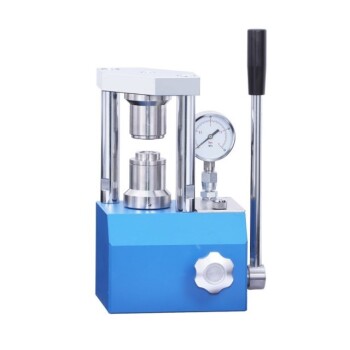
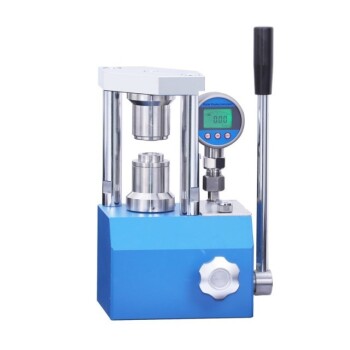
A high-performance battery testing system serves as a precision analytical tool that applies exact constant currents (C-rates) to generate detailed voltage-capacity curves. Its primary function is to rigorously record the electrochemical behavior of thin-film anodes, distinguishing the specific contributions of composite materials over repeated usage.
A robust testing system allows you to correlate electrical output with material structural integrity. It quantifies how engineering strategies—such as adding TiO2 or rGO—directly impact long-term stability and rate performance under varying loads.
Quantifying Electrochemical Performance
Precision Current Control
The fundamental role of the battery cycler is the application of precise constant currents, also known as C-rates.
By strictly controlling the input and output current, the system ensures that the test conditions remain consistent. This eliminates variables when comparing different anode compositions.
Voltage-Capacity Mapping
As the current is applied, the system continuously records voltage-capacity curves.
This data visualization provides the baseline "fingerprint" of the battery's energy storage capability. It allows for the immediate identification of capacity fade or voltage hysteresis during the initial cycles.
Validating Composite Material Engineering
Evaluating Structural Stability
A critical function of the system is facilitating long-term cycling.
For materials like Fe2O3, which are prone to physical changes, the system tracks performance over many cycles to evaluate specific degradation mechanisms.
Specifically, the cycling data is used to verify if additives like TiO2 successfully suppress volume expansion. If the capacity remains stable over the long term, it indicates that the structural integrity of the anode is being maintained.
Measuring Conductive Networks
The system must be capable of testing at various current densities.
This variance allows researchers to stress-test the anode's rate performance. High-performance cycling isolates the contribution of conductive additives, such as an rGO (reduced graphene oxide) network.
By ramping the current up and down, the system quantifies how much the rGO network enhances electron transport and overall battery power.
Understanding the Trade-offs
Indirect Physical Observation
It is important to recognize that a battery cycler measures electrical signals, not physical dimensions.
While the system evaluates the effect of volume expansion suppression (via capacity retention), it does not visually inspect the expansion itself. You are relying on electrochemical stability as a proxy for physical durability.
The Cost of Validation
Validating the suppression of volume expansion is a time-intensive process.
Because the benefit of additives like TiO2 is seen through long-term cycling, the testing system is occupied for extended periods. There is a necessary trade-off between the depth of data (cycle life) and the throughput of testing multiple samples.
Making the Right Choice for Your Goal
To select the right testing protocol for your composite anodes, align the system's capabilities with your material challenges:
- If your primary focus is Structural Integrity: Prioritize long-term cycling protocols to verify that TiO2 additions are effectively suppressing volume expansion in materials like Fe2O3.
- If your primary focus is Power and Speed: Utilize testing at various current densities to quantify the rate performance enhancements provided by conductive networks like rGO.
A high-performance testing system ultimately bridges the gap between material synthesis and verified electrochemical reality.
Summary Table:
| Core Function | Evaluation Metric | Impact on Composite Anode Analysis |
|---|---|---|
| Precision Current Control | Constant C-rates | Ensures consistent conditions for comparing different material compositions. |
| Voltage-Capacity Mapping | Voltage Curves | Identifies capacity fade, voltage hysteresis, and energy storage fingerprints. |
| Long-term Cycling | Cycle Life | Validates structural stability and suppression of volume expansion (e.g., TiO2). |
| Multi-density Testing | Rate Performance | Quantifies the effectiveness of conductive networks (e.g., rGO) on electron transport. |
Elevate Your Battery Research with KINTEK
Precise data is the foundation of breakthrough battery technology. At KINTEK, we specialize in comprehensive laboratory pressing solutions designed to support every stage of your research—from electrode preparation to final testing. Our extensive range includes:
- Manual & Automatic Presses: For consistent pellet and electrode formation.
- Heated & Multifunctional Models: Ideal for advanced material synthesis.
- Glovebox-Compatible Systems: Ensuring high-purity environments for air-sensitive anode materials.
- Cold & Warm Isostatic Presses: Critical for achieving the material density required in high-performance battery studies.
Whether you are engineering TiO2-stabilized anodes or rGO conductive networks, our equipment ensures the structural integrity your testing demands. Contact KINTEK today to find the perfect press for your laboratory and accelerate your path to more stable, higher-capacity energy solutions.
References
- Kaspars Kaprāns, Gints Kučinskis. Study of Three-Component Fe2O3/TiO2/rGO Nanocomposite Thin Films Anode for Lithium-Ion Batteries. DOI: 10.3390/en18133490
This article is also based on technical information from Kintek Solution Knowledge Base .
Related Products
- Laboratory Hydraulic Press Lab Pellet Press Button Battery Press
- Manual Button Battery Sealing Machine for Battery Sealing
- Button Battery Sealing Machine for Button Batteries
- Warm Isostatic Press for Solid State Battery Research Warm Isostatic Press
- Button Battery Sealing Press Machine for Lab
People Also Ask
- How is a laboratory hydraulic press used for HAP composite gels? Master Mineral Substrate Standardization
- What role does a laboratory hydraulic press play in the preparation of piezoelectric ceramic discs for DC-PG? | KINTEK
- What role does a laboratory hydraulic press play in reaction pellets? Optimizing Lunar Soil and Metal Fuel Density
- Why is a laboratory hydraulic press required for PBAT and PLA sample preparation? Achieve Flawless Characterization
- What role does a laboratory hydraulic press play in the assembly of all-solid-state battery test cells? Expert Guide