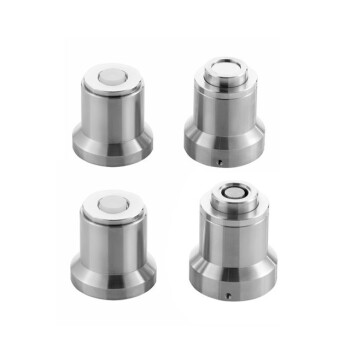
Zirconia grinding media are the standard choice for LLZTO milling because they offer a critical balance of extreme hardness and chemical inertness. This selection is primarily driven by the need to achieve high grinding efficiency while strictly preventing the introduction of performance-killing impurities into the powder.
The integrity of a solid electrolyte depends entirely on its purity. Zirconia is selected because its resistance to wear prevents foreign contaminants from entering the mixture, avoiding the specific degradation of ionic conductivity and the electrochemical window that occurs with other grinding media.
The Critical Role of Purity in LLZTO
The Sensitivity of Solid Electrolytes
LLZTO (Lithium Lanthanum Zirconium Tantalum Oxide) is a high-performance solid electrolyte. Its utility is defined by how well it conducts ions.
The Consequence of Contamination
Any introduction of metals or impurities during the milling process can be catastrophic. The primary reference indicates that such contamination leads directly to a decrease in ionic conductivity.
Impact on the Electrochemical Window
Beyond conductivity, impurities destabilize the material's operating range. Contamination results in a narrowing of the electrochemical window, limiting the voltage range in which the battery can safely operate.
Why Zirconia Material Properties Matter
Extreme Hardness for Efficiency
Zirconia is selected for its physical density and strength. It possesses extremely high hardness.
This allows the grinding media to deliver high grinding efficiency, breaking down the LLZTO mixed powder effectively without shattering or degrading itself.
Excellent Chemical Stability
Mechanical strength is not enough; the media must be chemically inert. Zirconia offers excellent chemical stability.
It does not react chemically with the LLZTO powder during the high-energy milling process. This ensures the chemical purity of the electrolyte material is maintained throughout the cycle.
Resistance to Wear
Because zirconia is so hard, it effectively resists wear.
This is the primary defense against contamination. If the grinding balls or jars were to wear down, that material would end up in the powder; zirconia's durability minimizes this risk.
Understanding the Risks of Alternatives
The "Any Impurity" Threshold
It is crucial to understand that LLZTO does not have a high tolerance for error.
The reference explicitly states that any metal or impurity contamination is detrimental.
The Failure of Softer Media
Using grinding media with lower hardness would result in rapid wear. This would flood the mixture with foreign particles, immediately compromising the specific electrochemical properties required for the solid electrolyte to function.
Making the Right Choice for Your Goal
When setting up your secondary milling process for LLZTO, the choice of media dictates the final quality of your electrolyte.
- If your primary focus is Ionic Conductivity: Select high-purity zirconia to prevent metallic contamination that blocks ion transport.
- If your primary focus is Operational Stability: rely on zirconia's chemical inertness to maintain a wide electrochemical window.
For LLZTO processing, zirconia is not merely a grinding tool; it is a necessary safeguard for the material's electrochemical performance.
Summary Table:
| Feature | Zirconia (YSZ) Benefit | Impact on LLZTO Powder |
|---|---|---|
| Hardness | Extremely High | High grinding efficiency & minimal media wear |
| Chemical Stability | Inert / Non-reactive | Maintains chemical purity of the electrolyte |
| Contamination Risk | Ultra-low | Prevents reduction in ionic conductivity |
| Durability | High wear resistance | Ensures a wide electrochemical operating window |
Elevate Your Battery Research with KINTEK Precision
Maintaining the integrity of solid electrolytes like LLZTO requires equipment that refuses to compromise on purity. KINTEK specializes in comprehensive laboratory pressing and milling solutions designed for high-stakes material science. Whether you need manual, automatic, or heated presses, or specialized zirconia grinding media for contamination-free results, our tools are engineered for excellence.
From glovebox-compatible models to advanced isostatic presses, we provide the precision you need to maximize ionic conductivity and electrochemical stability. Contact KINTEK today to optimize your lab's performance and ensure your research reaches its full potential.
References
- Steffen Weinmann, Kunjoong Kim. Stabilizing Interfaces of All‐Ceramic Composite Cathodes for Li‐Garnet Batteries. DOI: 10.1002/aenm.202502280
This article is also based on technical information from Kintek Solution Knowledge Base .
Related Products
- Lab Cylindrical Press Mold for Laboratory Use
- Lab Ball Press Mold
- Lab Ring Press Mold for Sample Preparation
- Lab Round Bidirectional Press Mold
- Lab Button Battery Disassembly and Sealing Mold
People Also Ask
- What is the purpose of incorporating cartridge heaters into a lab press mold for MLCC block compression? Optimize Results
- What is the function of a pressing tool in thermoplastic panels? Master Precision Shaping & Fusion Bonding
- Why is precise cooling management of the lab press mold necessary? Protect Core Integrity in Thermoforming
- Why is a high-performance laboratory molding press critical for in-situ electrolyte formation? Unlock Battery Success
- How does the geometry of laboratory molds influence mycelium-based composites? Optimize Density and Strength