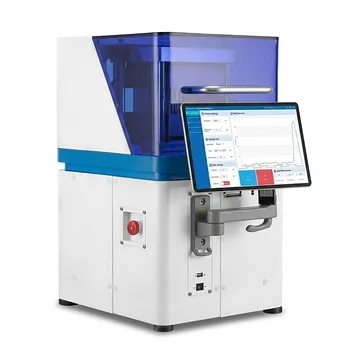
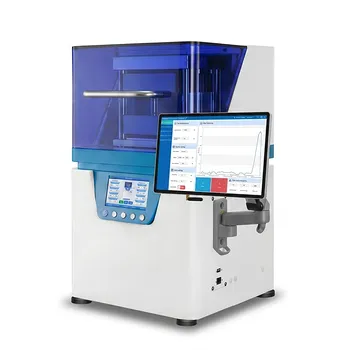
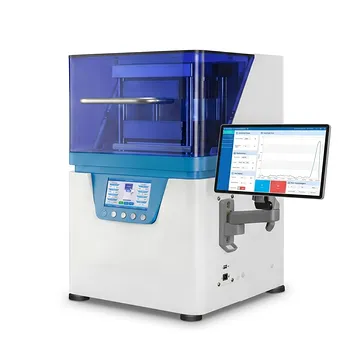
Laboratory presses are engineered for longevity because they utilize robust construction specifically designed to handle the rigorous, continuous demands of modern research environments. This heavy-duty build ensures they provide reliable, reproducible results over a lifespan that spans many years, even under constant strain.
The durability of a laboratory press stems from its ability to maintain structural integrity and precision during repetitive, high-force operations. By requiring minimal maintenance while delivering consistent performance, these tools serve as long-term foundational assets for R&D and material testing.
Engineered for Continuous Operation
Robust Structural Integrity
The primary driver of a laboratory press's durability is its robust construction. These machines are built to withstand the physical stress of generating significant force in a compact space.
Unlike lighter-duty equipment, laboratory presses are designed to endure the rigorous demands of continuous use without warping or degrading. This structural resilience is essential for environments where equipment failure can halt critical research.
Consistency Over Time
Durability is not just about the machine staying powered on; it is about the reproducibility of results.
A durable press maintains its calibration and alignment over many years of operation. This ensures that a test run today yields comparable data to a test run performed five years from now.
The Mechanics of Long-Term Value
Minimal Maintenance Requirements
A key indicator of a durable tool is its serviceability profile. Laboratory presses are noted for requiring minimal maintenance despite their heavy workloads.
This reliability reduces downtime in the lab and lowers the total cost of ownership. The simple, rugged design of hydraulic systems contributes significantly to this low-maintenance characteristic.
Precision Reduces Mechanical Stress
Modern laboratory presses offer adjustable pressure settings, allowing researchers to apply the exact force needed for a specific task.
By avoiding the application of excessive force, the machine protects both the sample and its own internal components. This precision control extends the life of the unit by preventing unnecessary mechanical wear during operations on materials ranging from polymers to ceramics.
Understanding the Trade-offs
The Requirement for Routine Care
While laboratory presses are described as requiring "minimal" maintenance, this does not mean "zero" maintenance. Neglecting hydraulic fluids or seals can lead to sudden performance drops, regardless of the machine's build quality.
Weight and Footprint
The robust construction that provides durability often results in a heavy, dense piece of equipment. While efficient in generating force, these units are generally not portable and require a permanent, stable benchtop location to operate safely.
Making the Right Choice for Your Goal
To maximize the lifespan and utility of a laboratory press, align your selection with your specific operational tempo.
- If your primary focus is Research and Development: Prioritize a unit with high precision and adjustable pressure controls to ensure reproducibility across years of diverse experiments.
- If your primary focus is Lean Manufacturing or Production: Look for a press with the most robust chassis available to withstand the heat and stress of repetitive, continuous cycles.
Invest in a press that balances raw force with precise control to ensure your laboratory remains operational and accurate for the long haul.
Summary Table:
| Feature | Durability Benefit | Impact on Research |
|---|---|---|
| Robust Chassis | Withstands high-force cycles without warping | Long-term structural integrity |
| Precision Control | Minimizes mechanical wear and component stress | Consistent data reproducibility |
| Hydraulic Systems | Rugged, simple mechanical design | Minimal maintenance & low downtime |
| Adjustable Pressure | Prevents over-straining internal components | Extended equipment lifespan |
Maximize Your Lab’s Lifecycle with KINTEK
Don’t let equipment fatigue compromise your research. KINTEK specializes in comprehensive laboratory pressing solutions designed for the most rigorous environments. Whether you need manual, automatic, heated, or multifunctional models, or specialized cold and warm isostatic presses for advanced battery research, we provide the robust engineering your team deserves.
Ready to upgrade to a press that lasts? Contact our experts today to find the perfect durable solution for your specific material testing and production needs.
Related Products
- Laboratory Hydraulic Press Lab Pellet Press Button Battery Press
- Laboratory Hydraulic Press Lab Pellet Press Machine for Glove Box
- Laboratory Split Manual Heated Hydraulic Press Machine with Hot Plates
- Laboratory Hydraulic Pellet Press for XRF KBR FTIR Lab Press
- Laboratory Hydraulic Split Electric Lab Pellet Press
People Also Ask
- How is a laboratory hydraulic press used for HAP composite gels? Master Mineral Substrate Standardization
- What role does a laboratory hydraulic press play in the preparation of piezoelectric ceramic discs for DC-PG? | KINTEK
- What role does a laboratory hydraulic press play in reaction pellets? Optimizing Lunar Soil and Metal Fuel Density
- Why is a laboratory hydraulic press required for PBAT and PLA sample preparation? Achieve Flawless Characterization
- What role does a laboratory hydraulic press play in the assembly of all-solid-state battery test cells? Expert Guide