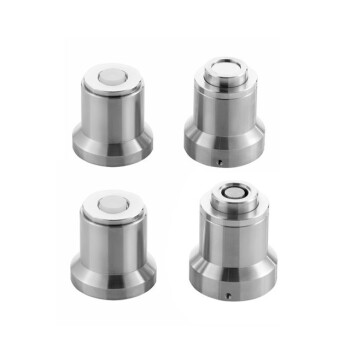
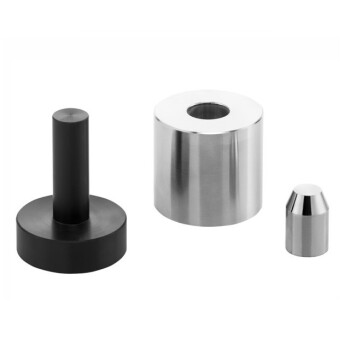
Macor ceramic and PEEK (Polyether ether ketone) are preferred for solid-state battery assembly primarily because they serve as robust electrical insulators that can withstand high mechanical pressure. By using these non-conductive materials for sleeves and molds, researchers effectively prevent electrode short-circuits during axial pressure testing while ensuring the chemical environment remains stable and uncontaminated.
Success in all-solid-state battery research requires a test environment that is both mechanically rigid and chemically inert. Macor and PEEK are the industry standards because they allow for high-pressure compaction and in-situ testing without the risks of electrical interference, chemical corrosion, or metallic contamination.
Critical Performance Criteria
Electrical Isolation Under Load
The most immediate function of Macor and PEEK is electrical insulation. In solid-state battery assembly, components are often subjected to significant axial pressure testing.
If conductive metal molds were used without insulation, the risk of electrode short-circuits would be catastrophic to the experiment. Macor and PEEK maintain their insulating properties even under stress, ensuring the electrical data collected is accurate and derived solely from the battery materials.
Chemical Stability and Resistance
The internal environment of a battery is chemically aggressive. Molds and sleeves must resist corrosion from highly reactive electrolytes and metallic lithium.
Both Macor and PEEK are chemically inert in these environments. This prevents the degradation of the mold itself and ensures that the structural integrity of the test setup is maintained throughout the experiment.
Structural and Experimental Integrity
Precision Machining and Fit
High machining precision is a defining characteristic of Macor ceramic. This allows for the creation of sleeves and molds with extremely tight tolerances.
Precise components ensure that pressure is applied uniformly across the battery stack. This uniformity is vital for reproducible results in solid-state electrolytes where contact quality dictates performance.
Handling Mechanical Stress
While they are not metals, high-performance engineering plastics like PEEK offer substantial mechanical strength.
They are capable of withstanding the lateral stresses generated during high-pressure compaction. This strength ensures the mold does not deform significantly during assembly, maintaining the correct geometry of the battery cell.
Preventing Sample Contamination
Using these materials prevents metal impurities from leaching into the battery sample.
Metal contamination can alter electrochemical behavior, leading to false positives or negatives in research data. By using PEEK or Macor, the purity of the sample is preserved.
Enabling In-Situ Testing
A major advantage of using these robust, insulating materials is the ability to perform in-situ electrochemical testing.
Because the mold itself is insulating and chemically stable, the battery does not need to be removed for testing. This avoids the risk of interface damage that frequently occurs when transferring fragile solid-state samples from a mold to a separate test fixture.
Understanding the Trade-offs
Material Limitations
While excellent, neither material is indestructible. Macor, being a ceramic, offers superior rigidity but can be brittle if subjected to sudden shock or uneven torque.
Pressure Limits
PEEK is tough, but it has a lower modulus of elasticity compared to steel or ceramic. Under extreme compaction pressures, PEEK may experience slight deformation, which could affect the dimensional accuracy of the electrode stack if not accounted for in the design.
Making the Right Choice for Your Goal
Selecting between these materials often depends on the specific mechanical and thermal demands of your assembly process.
- If your primary focus is mechanical toughness: PEEK is often ideal as it withstands lateral stresses and handling without the brittleness associated with ceramics.
- If your primary focus is high-precision tolerancing: Macor ceramic is preferred for its ability to be machined to exacting standards for rigid, dimensionally stable fixtures.
- If your primary focus is data fidelity: Both materials are essential for enabling in-situ testing, allowing you to collect data without disturbing the delicate solid-state interfaces.
By choosing Macor or PEEK, you prioritize the validity of your electrochemical data over the lower cost of standard materials.
Summary Table:
| Feature | Macor Ceramic | PEEK (Engineering Plastic) |
|---|---|---|
| Primary Benefit | High precision & thermal stability | Mechanical toughness & impact resistance |
| Electrical Property | Excellent insulator | Excellent insulator |
| Chemical Stability | Inert to reactive battery chemistries | Highly resistant to electrolyte corrosion |
| Mechanical Risk | Brittle; prone to chipping under shock | Slight deformation under extreme pressure |
| Application | Precise, dimensionally stable fixtures | Durable, stress-resistant sleeves |
Elevate Your Battery Research with KINTEK
Precision and purity are non-negotiable in solid-state battery development. KINTEK specializes in comprehensive laboratory pressing solutions, offering manual, automatic, heated, multifunctional, and glovebox-compatible models, alongside cold and warm isostatic presses.
Whether you need the high-machining precision of Macor or the mechanical resilience of PEEK, our expertise in providing the right tools for battery research ensures your experiments are free from short-circuits and contamination.
Ready to optimize your assembly process? Contact us today to find the perfect laboratory press and mold configuration for your needs.
References
- Matthew Burton, Mauro Pasta. The role of phosphorus in the solid electrolyte interphase of argyrodite solid electrolytes. DOI: 10.1038/s41467-025-64357-3
This article is also based on technical information from Kintek Solution Knowledge Base .
Related Products
- Lab Button Battery Disassembly and Sealing Mold
- Lab Button Battery Tablet Press Sealing Mold
- Carbide Lab Press Mold for Laboratory Sample Preparation
- Lab Cylindrical Press Mold for Laboratory Use
- Lab Infrared Press Mold for Laboratory Applications
People Also Ask
- How does a sealed battery mold facilitate the assembly and testing of asymmetric supercapacitors using VO2?
- What is the function of specialized battery molds and sealing consumables? Optimize Your In-situ XRD Testing Today
- How does the geometry of laboratory molds influence mycelium-based composites? Optimize Density and Strength
- Why are specialized battery test molds used? Ensure Peak Performance for All-Solid-State Sodium Batteries (ASSIBs)
- What role do battery testing molds play in electrolyte performance? Exploring Pressure vs. Viscoelasticity