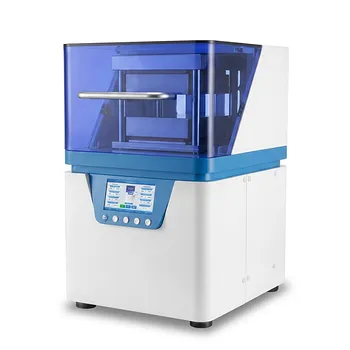
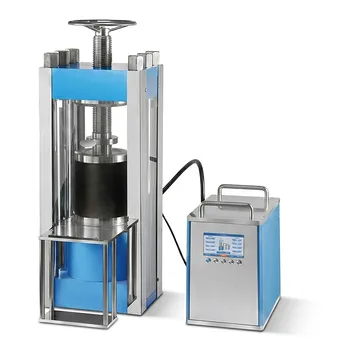
Operational efficiency and rapid data acquisition are the primary reasons research facilities utilize hot pressing. These institutions specifically choose this method because it offers exceptionally short sinter cycles, which drastically reduces the time required to process materials compared to conventional methods. This acceleration is critical for universities and institutes aiming to fast-track their research and development workflows.
Core Takeaway Research environments thrive on iteration; hot pressing minimizes the time gap between design and testing. By significantly shortening sinter cycles, facilities can accelerate their R&D processes, allowing for faster scientific validation and material breakthroughs.
The Strategic Advantage of Speed
In the competitive landscape of academic and industrial research, time is often the most valuable resource. Hot pressing directly addresses this constraint through its processing capabilities.
Drastically Reduced Sinter Cycles
The defining feature of hot pressing in a research context is the ability to achieve short sinter cycles. Unlike traditional methods that may require long heating and cooling ramps, hot pressing consolidates powder into solid components rapidly.
This allows researchers to complete a consolidation run in a fraction of the time usually required.
Accelerating the Feedback Loop
For R&D facilities, the speed of the machine dictates the speed of learning. Short cycles mean that a researcher can process a sample, analyze the results, and adjust parameters for the next run much faster.
This capability significantly speeds up the research and development process, allowing for multiple iterations to occur within a timeframe that might otherwise accommodate only a single test.
Understanding the Operational Context
While the speed of hot pressing is advantageous, it is important to understand why this specific benefit appeals to institutes versus other manufacturing sectors.
Focused on Iteration, Not Mass Production
Research facilities prioritize agility over volume. The goal of a university or institute is typically to gather data, prove a concept, or develop a new material composition, not to manufacture thousands of identical parts.
Therefore, the "short cycle" advantage is leveraged specifically to facilitate a high turnover of different experiments, rather than a high throughput of identical commercial products.
Considerations for Research Planning
When incorporating hot pressing into a facility, it is essential to align the process with the organization's specific output goals.
Balancing Speed and Scope
While the cycles are short, they are distinct events. This process is optimized for batch-based research where conditions change frequently between runs.
Facilities use this to their advantage by rapidly testing a wide matrix of variables (such as temperature, pressure, or dwell time) in succession, effectively compressing the R&D timeline.
How to Apply This to Your Project
Understanding the link between hot pressing and cycle time helps in selecting the right equipment for your laboratory goals.
- If your primary focus is Rapid Prototyping: Leverage hot pressing to minimize the wait time between material synthesis and performance testing, allowing for same-day iterations.
- If your primary focus is Academic Efficiency: Utilize the short cycle times to maximize equipment utilization rates, allowing more students or researchers to access the machine within a limited timeframe.
By capitalizing on short sinter cycles, research facilities transform time saved into faster innovation.
Summary Table:
| Feature | Research Impact |
|---|---|
| Sinter Cycle Duration | Exceptionally short; reduces processing time significantly |
| R&D Workflow | Accelerates feedback loops for faster material validation |
| Production Type | Optimized for agile, batch-based experimental iterations |
| Resource Efficiency | Maximizes equipment utilization for multiple researchers |
Elevate Your Material Research with KINTEK Precision
Innovation moves at the speed of your laboratory equipment. At KINTEK, we specialize in comprehensive laboratory pressing solutions designed to meet the rigorous demands of modern research. Whether you are advancing battery technology or developing novel ceramics, our range of manual, automatic, heated, and multifunctional models—including specialized cold and warm isostatic presses—ensures your facility achieves maximum efficiency.
Why partner with KINTEK?
- Glovebox-Compatible Designs: Seamlessly integrate pressing into controlled environments.
- Versatile Solutions: From rapid prototyping to complex battery research.
- Expert Support: We help you select the exact pressure and temperature parameters required for your unique R&D goals.
Don't let slow cycles stall your next breakthrough. Contact KINTEK today to find your ideal pressing solution and transform your research timeline.
Related Products
- Automatic Hydraulic Hot Press with Large Plate and Precision Temperature Control for Advanced Material Sample Preparation and Industrial Research
- Automatic High Temperature Heated Hydraulic Press Machine with Heated Plates for Lab
- Heated Hydraulic Press Machine with Heated Plates for Vacuum Box Laboratory Hot Press
- Automatic Heated Hydraulic Press Machine with Hot Plates for Laboratory
- Heated Hydraulic Press Machine With Heated Plates For Vacuum Box Laboratory Hot Press
People Also Ask
- What are the specific features and applications of hydraulic hot press machines? Precision Solutions for Modern Labs
- How does an automatic hydraulic press operate? Achieve Precision and Consistency in Lab Pelleting
- What are the advantages and common applications of an automatic hydraulic press? Elevate Your Lab's Precision
- What is the technical significance of setting a precise dwell time? Achieve Peak Material Density and Stability
- When is an automatic hydraulic press more suitable than a manual press? Scale Your Lab with Precision & Speed