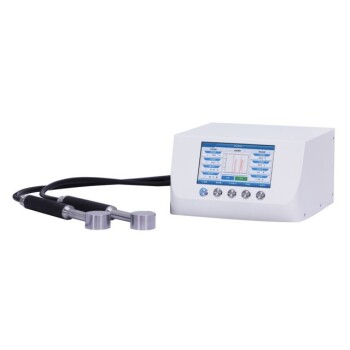
Precision is the defining factor in casein modification because specific functional changes occur only at rigid temperature thresholds. A high-precision system ensures that you trigger exact chemical reactions—such as protein bonding or hydrolysis—without inadvertently degrading the product or missing the reaction window entirely.
Core Takeaway Strict thermal control is required to navigate distinct chemical pathways: binding whey proteins to casein at moderate temperatures and altering amino acid structures at high temperatures. Without this precision, achieving consistent heat stability or film-forming capabilities is impossible.
Navigating Critical Thermal Thresholds
The 70°C Activation Point
At temperatures maintained above 70°C, a specific interaction occurs between whey proteins and casein. This thermal environment allows beta-lactoglobulin to covalently bond with casein via disulfide bridges. This reaction is essential for fundamentally altering the surface properties of the casein micelle.
The 110°C Reaction Tier
Pushing the temperature above 110°C activates a completely different mechanism. This level of heat is required to induce the controlled hydrolysis of phosphoserine residues. This is a distinct chemical change that cannot be achieved at lower thermal settings.
Targeting Specific Technological Functions
Managing Temperature Gradients
Effective modification requires more than just hitting a peak number; it requires managing the temperature gradient. A high-precision system allows you to control the rate of heating and the duration at specific plateaus. This control is essential for guiding the proteins toward specific functional states rather than random denaturation.
Engineering End-Product Traits
By locking in these specific temperature zones, you determine the final capabilities of the casein product. Precise control is the mechanism that enables the creation of specific traits, such as enhanced heat stability or specialized film-forming properties.
The Risks of Thermal Imprecision
Unintended Structural Changes
The primary trade-off in thermal processing is the fine line between modification and destruction. If a system lacks precision, you risk fluctuating between the 70°C and 110°C thresholds unpredictably. This can lead to incomplete disulfide bonding or excessive hydrolysis, resulting in a product with inconsistent rheological properties.
Missed Functional Windows
Without tight control, you may fail to trigger the desired reaction entirely. Being off by a few degrees prevents the necessary chemical pathways from opening. This results in "functional drift," where the final product fails to meet the specifications required for its intended industrial application.
Aligning Temperature with Functionality
To achieve the desired modification, you must map your heating strategy directly to the chemical outcome you need.
- If your primary focus is altering micelle surface properties: Target a stable hold above 70°C to maximize beta-lactoglobulin and casein bonding via disulfide bridges.
- If your primary focus is structural hydrolysis: Ensure the system can safely and precisely reach temperatures above 110°C to target phosphoserine residues.
Mastering the temperature gradient is the only way to transform raw casein into a highly functional technical ingredient.
Summary Table:
| Temperature Threshold | Chemical Mechanism | Functional Outcome |
|---|---|---|
| > 70°C | Covalent bonding (disulfide bridges) | Altered micelle surface properties |
| > 110°C | Hydrolysis of phosphoserine residues | Structural chemical modification |
| Controlled Gradient | Managed protein denaturation | Enhanced heat stability & film-forming |
Elevate Your Material Research with KINTEK Precision
Achieving exact chemical pathways in protein modification requires laboratory equipment that never wavers. KINTEK specializes in comprehensive laboratory pressing and heating solutions, offering a versatile range of manual, automatic, heated, and multifunctional models designed for rigorous scientific environments.
Whether you are conducting battery research or engineering advanced biomaterials, our high-precision systems—including cold and warm isostatic presses—ensure your thermal gradients are perfectly maintained. Don't let 'functional drift' compromise your results.
Contact KINTEK today to find the perfect precision solution for your lab.
References
- Camille Broyard, Frédéric Gaucheron. Modifications of structures and functions of caseins: a scientific and technological challenge. DOI: 10.1007/s13594-015-0220-y
This article is also based on technical information from Kintek Solution Knowledge Base .
Related Products
- Infrared Heating Quantitative Flat Plate Mold for Precise Temperature Control
- Automatic High Temperature Heated Hydraulic Press Machine with Heated Plates for Lab
- Lab Double Plate Heating Mold for Laboratory Use
- Automatic Heated Hydraulic Press Machine with Heated Plates for Laboratory
- Automatic Heated Hydraulic Press Machine with Hot Plates for Laboratory
People Also Ask
- How do precision temperature-controlled heating plates function in electrolyte thermal stability storage experiments?
- What is the importance of a precision temperature-controlled heating module? Ensure Aluminum-Cadmium Thermal Stability
- How does heating platen precision affect rubber specimens? Achieve uniform density and reliable testing results.
- How are thin polymer films produced for spectroscopic analysis? Expert Guide to Heat and Low-Pressure Methods
- What accessories and field services can be used to optimize the capabilities of presses? Maximize Your Lab Performance