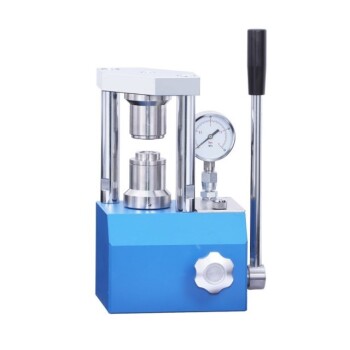
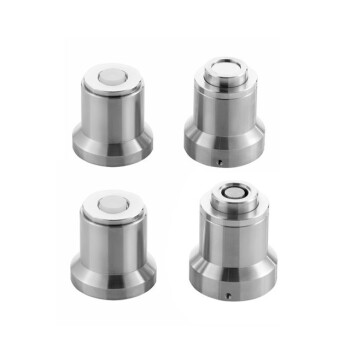
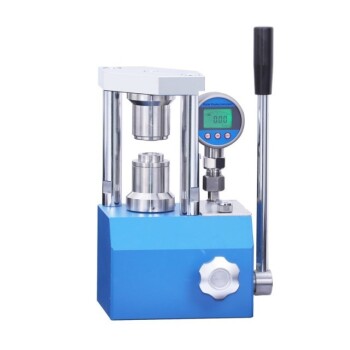
The primary function of a laboratory thermoplastic sealing machine in this context is to create a protective, vacuum-sealed barrier around your sample. Specifically, it encapsulates the TiO2-coated film within a soft packaging bag, isolating the semiconductor material from the hydraulic fluids used in the subsequent Cold Isostatic Pressing (CIP) step.
Core Insight: The sealing process serves a dual purpose: it hermetically shields the chemically sensitive TiO2 film from oil or water contamination, while creating a flexible "skin" that allows the hydrostatic pressure to be transferred uniformly to the sample surface.
The Mechanics of Isolation
Preventing Fluid Contamination
The Cold Isostatic Pressing (CIP) process relies on a high-pressure liquid medium to apply force. This medium is typically oil or a specialized pressure-transmitting fluid.
Without a barrier, this fluid would come into direct contact with the ITO/PEN film coated with TiO2 paste. The thermoplastic sealing machine ensures the sample is hermetically sealed, preventing the liquid from penetrating the sample and altering its chemical composition or electrical properties.
Enabling Hydrostatic Pressure Transfer
While the bag blocks the fluid, it does not block the pressure. The sealing machine utilizes a soft packaging bag rather than a rigid container.
Because the packaging is flexible, the pressure exerted by the liquid medium is transmitted directly through the bag material. This allows the physical force to reach the film without the physical medium touching it.
Enhancing Film Properties
Facilitating Omnidirectional Pressure
The goal of using CIP on TiO2 films is to achieve a uniform microstructure and high relative density.
By vacuum-sealing the film in a flexible bag, the pressure is applied isostatically, meaning it comes equally from all directions. This creates a uniform density throughout the film that axial pressing (pressing from only top and bottom) cannot achieve.
Improving Mechanical Connections
The uniform pressure transmitted through the sealed bag significantly enhances the contact between particles.
This leads to stronger mechanical connection strength within the thin film. It overcomes issues of poor uniformity often seen in large-scale devices, resulting in a more consistent and durable final product.
Critical Dependencies and Risks
The Necessity of Vacuum Integrity
The sealing machine is not just a heater; it is a vacuum sealer.
It is critical that the bag is thoroughly vacuumed before the final seal is applied. If air pockets remain inside the bag, they will compress differently than the sample during pressurization, leading to uneven surfaces or potential cracking of the film.
Seal Failure Consequences
The reliability of the thermoplastic seal is the single point of failure for the process.
If the sealing parameters (temperature or dwell time) are incorrect, the seal may breach under the immense pressure of the CIP tank. A breach results in immediate infiltration of the hydraulic fluid and the total loss of the sample.
Ensuring Process Success
To maximize the quality of your TiO2 films, align your sealing protocol with your specific goals:
- If your primary focus is chemical purity: Verify the seal width and integrity under a microscope to guarantee zero ingress of the hydraulic oil or fluid.
- If your primary focus is microstructural uniformity: Maximize the vacuum draw on the sealing machine to remove all air, ensuring the pressure medium acts directly on the film surface without interference.
The thermoplastic sealing machine is the gatekeeper that allows dry, delicate electronics to benefit from wet, high-pressure densification.
Summary Table:
| Feature | Role in CIP Process | Importance for TiO2 Films |
|---|---|---|
| Vacuum Sealing | Removes air pockets | Prevents uneven pressure and surface cracking |
| Hermetic Barrier | Isolates sample from fluid | Prevents chemical contamination by hydraulic oil |
| Flexible Packaging | Transfers hydrostatic force | Ensures omnidirectional pressure for uniform density |
| Seal Integrity | Reliable thermal bonding | Prevents sample loss due to high-pressure breaches |
Elevate Your Battery and Semiconductor Research with KINTEK
Precise sample preparation is the foundation of high-performance TiO2 films. KINTEK specializes in comprehensive laboratory pressing solutions, providing the advanced tools you need to transition from sealing to densification seamlessly. Whether you require manual, automatic, heated, or multifunctional models, our equipment—including specialized cold and warm isostatic presses—is engineered for maximum reliability and vacuum integrity.
Our value to your lab:
- Superior Protection: Reliable sealing technology to prevent sample contamination.
- Precision Engineering: Isostatic presses designed for battery research and advanced thin-film development.
- Expert Support: Solutions tailored to your specific material science requirements.
Ready to optimize your thin-film densification process? Contact KINTEK today for a consultation and find the perfect pressing solution for your research goals.
References
- Congcong Wu, Shashank Priya. Scaling of the flexible dye sensitized solar cell module. DOI: 10.1016/j.solmat.2016.07.021
This article is also based on technical information from Kintek Solution Knowledge Base .
Related Products
- Button Battery Sealing Press Machine for Lab
- Manual Button Battery Sealing Machine for Battery Sealing
- Laboratory Hydraulic Press Lab Pellet Press Machine for Glove Box
- Automatic Lab Cold Isostatic Pressing CIP Machine
- Electric Split Lab Cold Isostatic Pressing CIP Machine
People Also Ask
- Why use standardized CR2032 components & high-precision presses? Ensure reliability in lithium metal battery research.
- Why is a laboratory battery sealing press essential for desolvation energy testing? Ensure Reliable Kinetic Data
- Why is a laboratory hydraulic press or battery sealing machine essential? Ensure Coin Cell Data Integrity
- How do laboratory battery sealing machines ensure performance consistency? Master Your Lithium and LFP Battery Assembly
- What role does a laboratory sealing press play in thermal analysis of solid dispersion films? Ensure Data Integrity