Equipment parameter flexibility is critical because diverse active materials—such as graphite, silicon-carbon, and ternary (NCM) systems—possess fundamentally different physical characteristics. Without the ability to adjust key machinery settings like coating gaps or calendering pressure, researchers cannot accommodate the specific density, viscosity, and elasticity of these materials, leading to processing failures and unusable data.
The physical properties of battery materials vary significantly, requiring precise mechanical adjustments to process them correctly. Flexible equipment not only ensures successful fabrication but also generates the diverse, high-quality datasets necessary to train robust transfer learning models for performance prediction.
Managing Physical Property Variations
Adapting to Density and Viscosity
Different chemical systems interact with solvents and binders in unique ways, resulting in slurries with vastly different rheological behaviors. A setting that produces a uniform coating for a graphite anode may result in defects when applied to a silicon-carbon mixture due to differences in viscosity.
Addressing Compressive Elasticity
Active materials respond differently to physical pressure during the electrode densification process. Ternary materials and graphite have distinct compressive elasticity, meaning they will "bounce back" differently after passing through rollers.
The Necessity of Mechanical Control
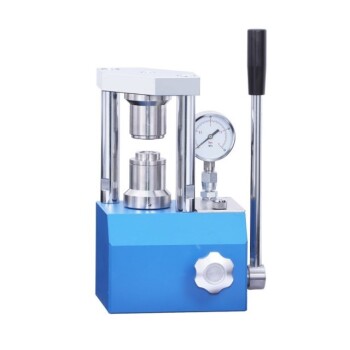
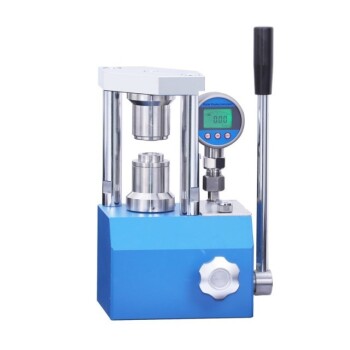
To manage these variables, researchers must be able to adjust specific equipment components. This includes tuning the comma gap on a coater to control thickness or altering the roll gap of a lab press calender to achieve the correct target density.
Enhancing Data Quality for Modeling
Creating a Broad Data Range
Fixed equipment parameters restrict experiments to a narrow operational window, effectively silencing the nuances of new materials. Flexible equipment allows researchers to sweep through a wide range of processing conditions, capturing data on how materials perform under various stresses.
Powering Transfer Learning
Modern material science increasingly relies on AI and machine learning to predict performance. To build accurate transfer learning models, algorithms require diverse training samples that represent a wide spectrum of material behaviors.
Improving Prediction Accuracy
By generating comprehensive datasets across different chemical systems, researchers can train models that generalize better. This leads to more accurate performance predictions when applying knowledge from one material system (like graphite) to a novel one (like silicon-carbon).
Understanding the Trade-offs
Increased Experimental Complexity
While flexibility allows for optimization, it introduces more variables into the experimental design. Researchers must be disciplined in their Design of Experiments (DoE) to isolate which parameter changes are driving performance shifts, rather than creating noise.
Calibration and Repeatability
Equipment with highly adjustable components often requires more rigorous calibration than fixed-parameter machinery. If the mechanical "zero point" of a roll gap or coating blade drifts, the resulting data will be inconsistent, undermining the accuracy of any subsequent modeling.
Making the Right Choice for Your Research
To leverage the full potential of your experimental setup, align your equipment choices with your specific research outcomes:
- If your primary focus is Process Feasibility: Prioritize equipment that offers fine mechanical resolution on critical settings like comma gaps to handle extreme variations in viscosity and elasticity.
- If your primary focus is Computational Modeling: Ensure your machinery allows for automated or rapid parameter sweeps to generate the high-volume, diverse datasets needed for training transfer learning algorithms.
True innovation in battery materials requires the mechanical agility to treat every chemical system according to its unique physical demands.
Summary Table:
| Material Characteristic | Impact on Processing | Required Equipment Adjustment |
|---|---|---|
| Slurry Viscosity | Affects coating uniformity | Precision Comma Gap adjustment |
| Compressive Elasticity | Causes material "bounce back" | Adjustable Roll Gap/Pressure |
| Material Density | Dictates electrode thickness | Variable Calendering settings |
| System Chemistry | Requires unique rheological handling | Automated Parameter Sweeps |
Elevate Your Battery Research with KINTEK Precision
Don't let rigid equipment limit your innovation. KINTEK specializes in comprehensive laboratory pressing solutions designed for the rigorous demands of graphite, silicon-carbon, and ternary material research. Whether you require manual, automatic, heated, multifunctional, or glovebox-compatible models, our range of cold and warm isostatic presses provides the mechanical agility needed to optimize every chemical system.
Unlock the full potential of your active materials today:
- Precision Control: Fine-tune gaps and pressures for diverse viscosities.
- Data-Rich Results: Generate high-quality datasets for advanced transfer learning models.
- Versatile Solutions: Equipment tailored for both process feasibility and computational modeling.
Contact KINTEK for a Consultation
References
- Francisco Fernández‐Navarro, Alejandro A. Franco. Transfer learning assessment of small datasets relating manufacturing parameters with electrochemical energy cell component properties. DOI: 10.1038/s44334-025-00024-1
This article is also based on technical information from Kintek Solution Knowledge Base .
Related Products
- Laboratory Hydraulic Press Lab Pellet Press Button Battery Press
- Warm Isostatic Press for Solid State Battery Research Warm Isostatic Press
- Button Battery Sealing Press Machine for Lab
- Manual Button Battery Sealing Machine for Battery Sealing
- Carbide Lab Press Mold for Laboratory Sample Preparation
People Also Ask
- How is a laboratory hydraulic press used for HAP composite gels? Master Mineral Substrate Standardization
- What role does a laboratory hydraulic press play in the preparation of piezoelectric ceramic discs for DC-PG? | KINTEK
- What role does a laboratory hydraulic press play in reaction pellets? Optimizing Lunar Soil and Metal Fuel Density
- Why is a laboratory hydraulic press required for PBAT and PLA sample preparation? Achieve Flawless Characterization
- What role does a laboratory hydraulic press play in the assembly of all-solid-state battery test cells? Expert Guide