Isostatic pressing is the preferred method for ferroelectric memristors because it applies equal pressure from all directions through a liquid medium. Unlike uniaxial pressing, which creates density gradients due to friction, isostatic pressing eliminates "wall friction effects" to create a perfectly uniform green body. This structural homogeneity is critical for minimizing grain size variations and internal stress, directly translating to more consistent switching behavior and enhanced durability.
Isostatic pressing addresses the fundamental requirement for microstructure uniformity in ferroelectric materials. By utilizing isotropic pressure, it eliminates the internal defects and density gradients that otherwise lead to premature device failure or inconsistent performance during electrical cycling.
Overcoming the Physical Limitations of Uniaxial Pressing
The Problem of Directional Friction
In traditional uniaxial pressing, force is applied along a single axis using a mechanical piston. This creates significant friction between the powder and the mold walls, leading to uneven pressure distribution throughout the sample.
Achieving Isotropic Density
Isostatic pressing uses a liquid medium to transmit pressure uniformly across every surface of the material. This ensures that the green body reaches a high, uniform density that is impossible to achieve with directional mechanical force.
Eliminating Internal Gradients
By applying pressure from all directions simultaneously, the technology removes internal density gradients. This prevents the formation of high-stress zones within the material that often serve as the starting point for structural failure.
Impact on Microstructure and the Sintering Process
Controlling Grain Size Distribution
Uniformity in the initial green body leads to highly predictable grain size distribution during the sintering process. In ferroelectric memristors, maintaining small and consistent grain sizes is vital for ensuring that the electrical properties remain constant across the entire device.
Reducing Internal Stress
The absence of density gradients significantly reduces internal stress distribution after the material is heated. This prevents common manufacturing defects such as warping, uneven shrinkage, or the development of microscopic cracks.
Preventing Structural Deformation
Because the shrinkage is consistent across all dimensions, the structural integrity of the material is preserved. This is particularly important for complex layered structures where even minor deformations can disrupt the internal diffusion networks or electrical paths.
Direct Benefits to Memristor Performance
Enhancing Switching Consistency
Memristors rely on the precise movement of ferroelectric domains or ions under an electric field. A uniform microstructure ensures that the switching voltage and resistance states remain consistent from one cycle to the next, which is the primary challenge in memristor development.
Long-Term Stability and Reliability
Isostatic pressing minimizes micro-cracks that can expand during repeated electrical cycling. By preventing these structural defects, the device gains significantly better long-term stability and a higher resistance to degradation under high current densities.
Inhibiting Filamentary Defects
In many solid-state electronics, non-uniformities act as pathways for unwanted phenomena like dendrite penetration. The homogenous density provided by isostatic pressing creates a more robust barrier against these failure modes, improving the overall safety and life of the material.
Understanding the Trade-offs
Equipment Complexity and Cost
Isostatic pressing systems are generally more expensive and complex than uniaxial presses. They require high-pressure liquid pumps and specialized chambers to maintain the isotropic environment, making the initial capital investment significantly higher.
Processing Throughput
Uniaxial pressing is typically faster and better suited for high-volume, simple shapes. Isostatic pressing involves a more time-consuming preparation and cycle time, which may be a limiting factor if rapid production is the primary goal over absolute material quality.
Material Handling
The use of a liquid medium requires the powder to be encapsulated in a flexible, leak-proof mold. This adds an extra step to the fabrication process and necessitates careful handling to avoid contaminating the material or the pressing medium.
Applying This to Your Research or Production
How to Choose the Right Strategy
- If your primary focus is ultimate performance and reliability: Use isostatic pressing to ensure the highest degree of microstructure uniformity and switching consistency.
- If your primary focus is rapid prototyping or low-cost manufacturing: Uniaxial pressing may be sufficient, provided the resulting density gradients do not compromise the core functionality of your specific material.
- If your primary focus is complex or large-scale geometries: Isostatic pressing is the only viable option to ensure consistent shrinkage and prevent cracking during the sintering phase.
By prioritizing isotropic pressure distribution, you ensure the structural and electrical integrity required for next-generation ferroelectric devices.
Summary Table:
| Feature | Isostatic Pressing | Uniaxial Pressing |
|---|---|---|
| Pressure Distribution | Isotropic (Equal from all directions) | Directional (Along a single axis) |
| Density Gradient | Virtually eliminated; highly uniform | High (due to wall friction) |
| Microstructure | Consistent grain size distribution | Variable grain size and internal stress |
| Shrinkage Control | Uniform across all dimensions | Potential for warping and cracking |
| Device Performance | Superior switching consistency & reliability | Higher risk of failure and inconsistency |
| Complexity/Cost | Higher (Specialized chambers/pumps) | Lower (Simple mechanical piston) |
Elevate Your Material Research with KINTEK’s Precision Pressing Solutions
Precise microstructure control is the key to high-performance ferroelectric memristors and advanced battery research. KINTEK specializes in comprehensive laboratory pressing solutions designed to eliminate internal defects and ensure material homogeneity.
Whether you need manual, automatic, heated, multifunctional, or glovebox-compatible models, our range of cold and warm isostatic presses provides the isotropic pressure required for consistent device switching and long-term reliability.
Ready to optimize your fabrication process? Contact our experts today to find the perfect pressing system for your laboratory’s unique requirements.
References
- D. M. Hoyle, Tom McLeish. Large amplitude oscillatory shear and Fourier transform rheology analysis of branched polymer melts. DOI: 10.1122/1.4881467
This article is also based on technical information from Kintek Solution Knowledge Base .
Related Products
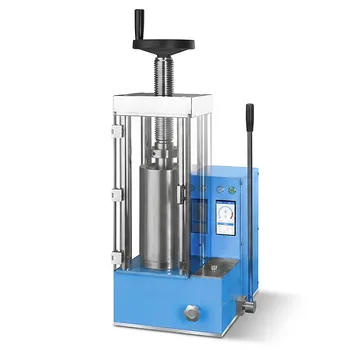
- Electric Isostatic Pressing Machine 40 Tons Automatic Laboratory Powder Compacting Press
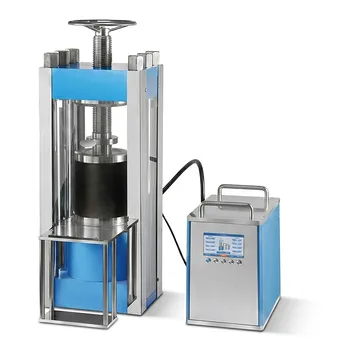
- Warm Isostatic Press for Solid State Battery Research Warm Isostatic Press
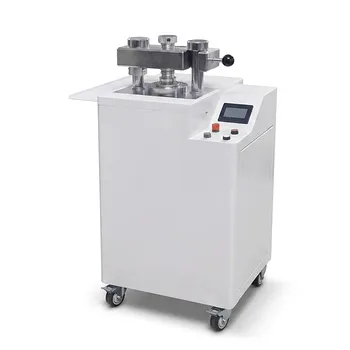
- Split Warm Isostatic Lab Press 200 Ton Powder Compaction Chamber for Battery Research and Material Science
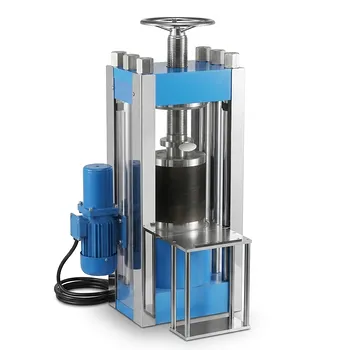
- Electric Lab Cold Isostatic Press CIP Machine
- Split Hot Isostatic Pressing Machine 150 Ton Laboratory Heated Isostatic Press
People Also Ask
- What are the key characteristics of the isostatic pressing process? Unlock Uniform Density and Complex Geometries
- Why is vacuum-sealed packaging necessary before isostatic pressing of CuPc thin films? Protect Integrity & Uniformity
- How is pressure applied to the material during isostatic pressing? Master Uniform Density and Complex Geometries
- How does pressure distribute during isostatic pressing of aluminum? Achieve Uniform Density for Your Lab Materials
- What are the applications of isostatic pressing in the automotive industry? Precision Manufacturing for High-Performance Parts