Sample compaction is fundamentally about eliminating physical variables to ensure chemical accuracy. By compressing loose powders into dense, flat pellets, you remove surface irregularities and air gaps that otherwise distort X-ray readings. This process ensures the instrument analyzes a unified, homogeneous representation of the material rather than a chaotic mix of particles and void spaces.
The Core Insight In XRF analysis, physical inconsistency leads to data inaccuracy. Compaction mitigates "matrix effects"—distortions caused by rough surfaces and air pockets—transforming a loose, variable powder into a chemically representative, high-density surface.
The Physics of Surface Reliability
Combating Matrix Effects
Matrix effects are the primary enemy of quantitative accuracy in XRF. As noted in the primary reference, these effects arise from surface variations and localized heterogeneities in loose materials.
When X-rays hit an uneven surface, the scattering and absorption of radiation become unpredictable. Compaction forces the material into a planar, smooth state, minimizing these physical anomalies so the emission spectra strictly reflect the sample's chemistry.
The Problem of "Information Depth"
You must compact samples because XRF analyzers often only "see" a fraction of the material. This concept is known as information depth or attenuation length.
Depending on the energy of the X-rays and the sample density, the analyzer may only collect radiation from the very top layer of the sample. Generally, the heavier the sample matrix, the shallower this information depth becomes.
Representative Homogeneity
Because the analyzer measures such a shallow depth, the surface must perfectly represent the bulk material. If you analyze loose powder, particle segregation may occur, or the beam might strike a non-representative cluster of grains. Compaction locks the particles into a fixed, homogeneous distribution, ensuring the surface analysis correlates to the total sample composition.
Improving Signal Quality
Eliminating Void Spaces
Loose powders contain significant amounts of empty space (air) between particles. These voids act as a diluent, effectively watering down the concentration of the elements you are trying to measure.
Pressing the sample eliminates these void spaces. This densification ensures that the X-ray beam interacts with more sample material and less empty air.
Enhancing Sensitivity and Intensity
By removing voids and increasing density, compaction directly results in higher signal intensities. This boost in intensity is critical for sensitivity.
According to technical data, pressed pellets are particularly superior for analyzing elements present in trace amounts (ppm range). Without compaction, the signal for these trace elements might be lost in the background noise created by the loose matrix.
Understanding the Trade-offs
Structural Integrity vs. Sample Purity
While compaction is necessary for accuracy, achieving a stable pellet can sometimes require additives. A common pitfall is attempting to press powders that do not bind well on their own, leading to crumbling pellets that contaminate the instrument.
To solve this, analysts often mix the powder with a cellulose wax binder or use an aluminum cup for support. While binders improve physical durability, one must be aware that adding a binder technically introduces a new material into the matrix, though this is generally preferred over the inaccuracies of loose powder.
Making the Right Choice for Your Goal
To achieve the highest quality XRF results, structure your preparation based on your specific analytical requirements:
- If your primary focus is Trace Element Analysis (ppm): You must use high-pressure compaction to maximize density and signal intensity, as loose powders will likely lack the sensitivity required.
- If your primary focus is Light Element Analysis: Ensure the surface is perfectly flat and homogeneous through compaction, as the shallow information depth for light elements makes them highly susceptible to surface roughness errors.
- If your primary focus is Hard-to-Bind Materials: Utilize a cellulose wax binder or an aluminum cup backing to maintain the pellet's geometric integrity without sacrificing surface flatness.
Compaction transforms a physically chaotic sample into a chemically readable standard, serving as the baseline for all reliable quantitative XRF data.
Summary Table:
| Factor | Loose Powder Analysis | Pressed Pellet Analysis |
|---|---|---|
| Surface Texture | Irregular, causes X-ray scattering | Smooth, flat, and reproducible |
| Material Density | Low (includes air/void spaces) | High (maximized sample interaction) |
| Signal Intensity | Lower (diluted by voids) | Higher (superior for trace elements) |
| Matrix Effects | High (physical inconsistencies) | Minimized (homogeneous representation) |
| Best Use Case | Qualitative/Screening | Quantitative/Trace Analysis (ppm) |
Optimize Your XRF Accuracy with KINTEK Pressing Solutions
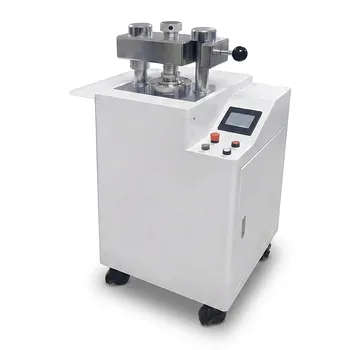
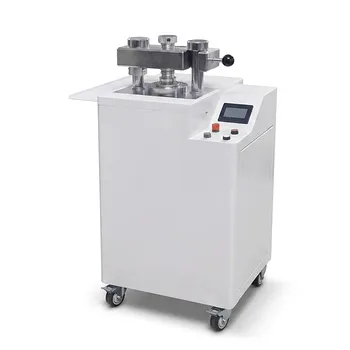
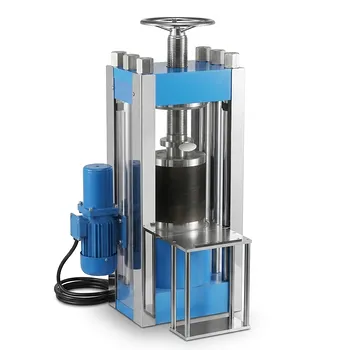
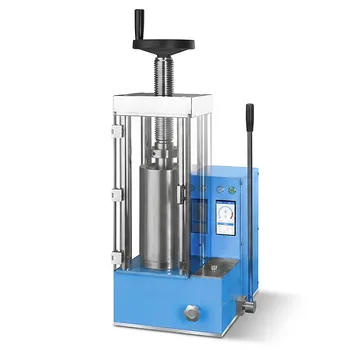
Don't let physical variables compromise your chemical data. KINTEK specializes in comprehensive laboratory pressing solutions designed to transform loose powders into high-density, representative pellets for flawless XRF analysis.
Our versatile range includes:
- Manual & Automatic Presses: For consistent, high-pressure compaction.
- Heated & Multifunctional Models: Tailored for complex material research.
- Glovebox-Compatible & Isostatic Presses: Advanced solutions for specialized battery and material science applications.
Whether you are performing trace element analysis or light element quantification, our equipment ensures the homogeneity and surface reliability your lab requires. Contact KINTEK today to find the perfect press for your lab and elevate your analytical precision.
Related Products
- Automatic Fluorescence Sample Preparation Press 40 Ton Lab Pellet Press for XRF Analysis
- Automatic XRF Pellet Press for Laboratory Spectrometry Sample Preparation
- XRF KBR Plastic Ring Lab Powder Pellet Pressing Mold for FTIR
- Lab XRF Boric Acid Powder Pellet Pressing Mold for Laboratory Use
- XRF KBR Steel Ring Lab Powder Pellet Pressing Mold for FTIR
People Also Ask
- What is the general process for preparing a sample pellet for XRF? Master Consistency for Accurate Analysis
- What are the advantages of preparing a sample as a dense pellet for XRF? Unlock High-Precision Trace Element Analysis
- What are the common operational types of lab pellet presses? Choosing the Right Manual, Automatic, or Hydraulic System
- What are the emerging trends in the design and materials of lab pellet presses? Modernize Your Lab Efficiency
- What are common lab pellet press issues? Expert Troubleshooting Guide for Reliable Material Research