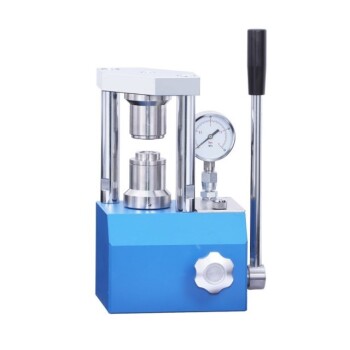
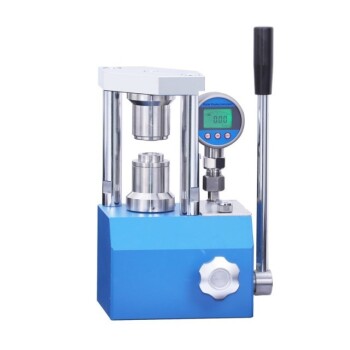
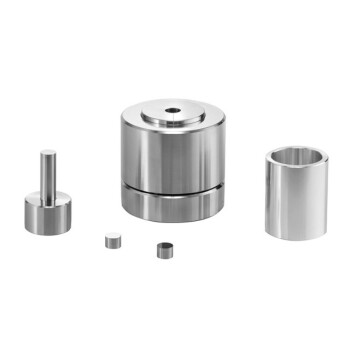
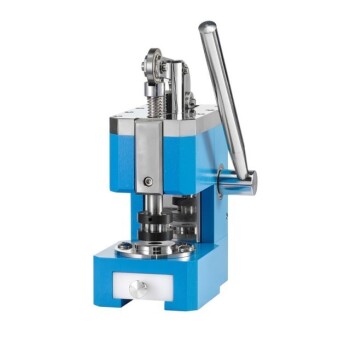
Stable pressure control is the decisive factor in establishing a functional interface within SC-NCM83/PLM-3/Li all-solid-state batteries. A laboratory sealing machine with precise pressure regulation ensures the single-crystal high-nickel cathode, composite polymer electrolyte, and lithium metal anode are forced into intimate contact. This action minimizes physical interfacial impedance and eliminates micro-displacements during assembly, guaranteeing the structural integrity required for long-term cycling and high-rate testing.
Core Takeaway Unlike liquid electrolytes that naturally wet surfaces to fill gaps, solid-state batteries rely entirely on mechanical pressure to create ionic pathways. Precise sealing pressure locks the internal components together, preventing the high impedance and physical decoupling that otherwise occur due to the lack of fluidity at the solid-solid interface.
The Challenge of the Solid-Solid Interface
Overcoming the Lack of Fluidity
In liquid batteries, the electrolyte flows to fill voids between particles. In an SC-NCM83/PLM-3/Li configuration, the electrolyte is a solid composite polymer, meaning it cannot self-repair physical gaps or "wet" the electrode surfaces.
Eliminating Internal Voids
The sealing machine must apply sufficient pressure to compact the stack and remove air pockets. Without this compression, voids act as insulators, blocking ionic transport and creating "dead spots" where electrochemical reactions cannot occur.
Minimizing Interfacial Impedance
The primary reference indicates that stable pressure creates tight contact between the high-nickel cathode and the polymer electrolyte. This physical proximity is the only way to reduce interfacial impedance to a level that supports efficient charge transfer.
Ensuring Long-Term Structural Integrity
Preventing Micro-Displacements
During the mechanical sealing process, components are prone to slight shifts. Precise pressure control holds the stack rigid, preventing micro-displacements that could misalign the layers or damage the fragile lithium metal anode before the battery is even tested.
Counteracting Volume Expansion
The SC-NCM83 cathode and Lithium anode undergo volume expansion and contraction during charge/discharge cycles. The initial seal sets the baseline tension for the cell casing.
If the initial sealing pressure is inadequate, the inevitable volume fluctuations during cycling will cause the layers to physically separate (delaminate), leading to a rapid rise in resistance and premature cell failure.
Understanding the Trade-offs
While pressure is essential, it acts as a double-edged sword if not controlled with high precision.
The Risk of Under-Pressure
If the sealing machine applies insufficient force, the contact resistance will remain high. This obscures the true performance of the materials, making it impossible to distinguish between a material failure and an assembly failure.
The Risk of Over-Pressure
Excessive pressure can physically crush the single-crystal cathode particles or puncture the polymer electrolyte layer. This can lead to internal short circuits or damage the current collectors, rendering the cell useless.
Making the Right Choice for Your Goal
Reliable data depends on eliminating assembly variables. When configuring your sealing process for SC-NCM83/PLM-3/Li batteries, align your pressure strategy with your testing objectives:
- If your primary focus is High-Rate Performance: Prioritize higher sealing pressure (within safety limits) to minimize ohmic resistance and maximize electron/ion transport speed.
- If your primary focus is Long-Term Cycle Life: Focus on the stability and repeatability of the pressure to ensure the seal can mechanically withstand the breathing (expansion/contraction) of the active materials over hundreds of cycles.
Ultimately, the sealing machine does not just close the case; it engineers the physical environment necessary for the solid-state chemistry to function.
Summary Table:
| Factor | Impact on Solid-State Assembly | Result of Poor Control |
|---|---|---|
| Interfacial Contact | Forces solid electrolyte and electrodes into intimate contact | High interfacial impedance & ionic blockage |
| Void Elimination | Removes air pockets and compacts the cell stack | Internal insulators & electrochemical 'dead spots' |
| Mechanical Stability | Prevents micro-displacements during final sealing | Layer misalignment & anode damage |
| Volume Management | Sets baseline tension for cycling expansion | Delamination & rapid resistance rise |
Elevate Your Battery Research with KINTEK Precision
Unlock the full potential of your SC-NCM83/PLM-3/Li research by ensuring flawless assembly every time. KINTEK specializes in comprehensive laboratory pressing solutions, offering manual, automatic, heated, multifunctional, and glovebox-compatible models, as well as cold and warm isostatic presses.
Our equipment provides the stable, precise pressure regulation necessary to minimize impedance and prevent delamination in advanced solid-state cells. Don't let assembly variables compromise your data—partner with the experts in lab-scale pressing.
Contact KINTEK Today for a Tailored Pressing Solution
References
- Zexi Wang, Xiangzhong Ren. Tailoring electrolyte coordination structure for high-rate polymer-based solid-state batteries. DOI: 10.1039/d5sc07849k
This article is also based on technical information from Kintek Solution Knowledge Base .
Related Products
- Button Battery Sealing Press Machine for Lab
- Manual Button Battery Sealing Machine for Battery Sealing
- Lab Button Battery Tablet Press Sealing Mold
- Lab Button Battery Disassembly and Sealing Mold
- Button Battery Sealing Machine for Button Batteries
People Also Ask
- Why use standardized CR2032 components & high-precision presses? Ensure reliability in lithium metal battery research.
- Why is a laboratory battery sealing press essential for desolvation energy testing? Ensure Reliable Kinetic Data
- Why is a laboratory hydraulic press or battery sealing machine essential? Ensure Coin Cell Data Integrity
- How do laboratory battery sealing machines ensure performance consistency? Master Your Lithium and LFP Battery Assembly
- What role does a laboratory sealing press play in thermal analysis of solid dispersion films? Ensure Data Integrity