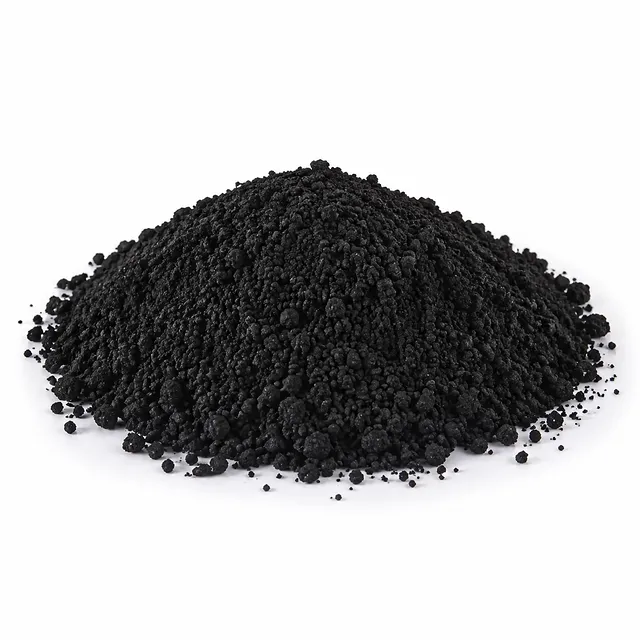
Battery powder materials
Carbon Coated Silicon Anode Material Silicon Carbon Composite Powder for Lithium Ion Batteries
Item Number : CL20
Price varies based on specs and customizations
- Discharge Capacity
- ≥400 to ≥500 mAh/g
- Initial Coulombic Efficiency (ICE)
- 87.0% to 91.0%
- BET Specific Surface Area
- < 2.0 m²/g

Shipping:
Contact us to get shipping details Enjoy On-time Dispatch Guarantee.
Why Choose Us
Easy ordering process, quality products, and dedicated support for your business success.
Product Overview
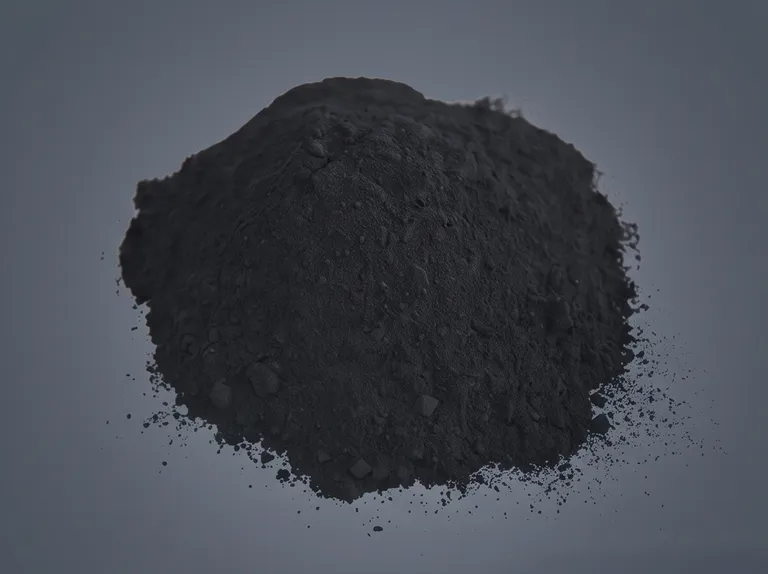
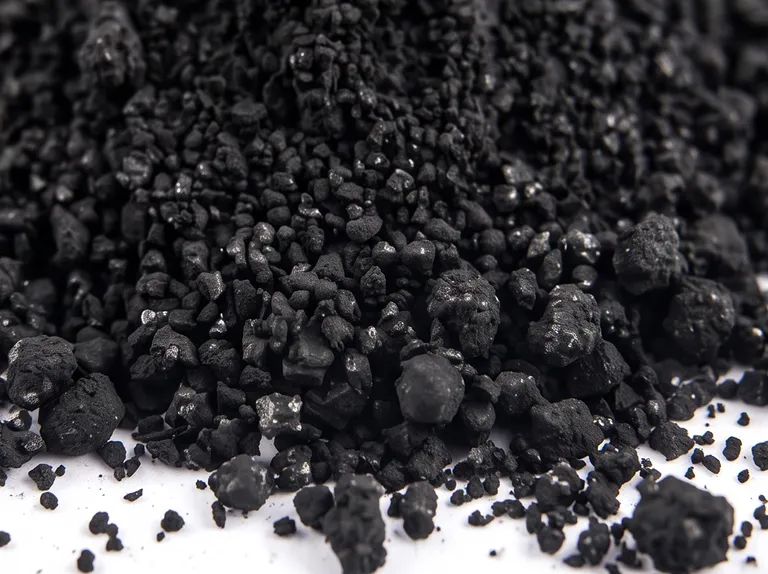
This high-performance carbon-coated silicon composite powder is engineered specifically to overcome the physical and electrochemical limitations of conventional graphite anodes in next-generation lithium-ion battery architectures. By embedding finely dispersed nanoscale silicon domains within an engineered conductive carbonaceous framework and sealing the architecture with a uniform carbon outer shell, this material delivers dramatically enhanced specific capacity while maintaining structural stability throughout repeated lithiation and delithiation cycles.
Designed for rigorous electrochemical research, battery prototyping, and commercial cell manufacturing, the composite powder accommodates the high-energy demands of electric vehicles, portable electronics, and grid-scale energy storage systems. Its tailored surface chemistry and controlled particle size distribution ensure seamless integration into existing aqueous and solvent-based electrode slurry formulations without requiring disruptive changes to standard cell manufacturing lines.
Manufactured under stringent process quality controls, this active anode material provides reliable batch-to-batch consistency, high initial Coulombic efficiency, and optimized tap density. The engineered outer carbon coating mitigates continuous solid electrolyte interphase (SEI) degradation, lowers electrical volume resistance, and suppresses mechanical pulverization, ensuring consistent and reproducible electrochemical performance in demanding testing and operational environments.
Key Features
- Engineered Core-Shell Architecture: Features a robust, uniform carbon surface coating encapsulating active silicon particles, which minimizes direct electrolyte exposure, lowers volume resistivity from ~1,500 Ω·cm down to approximately 100 mΩ·cm, and significantly stabilizes SEI formation.
- High Specific Discharge Capacity: Delivers reversible specific capacities ranging from ≥400 mAh/g to ≥500 mAh/g, offering a substantial energy density uplift compared to conventional synthetic or natural graphite anodes (372 mAh/g theoretical limit).
- High Initial Coulombic Efficiency (ICE): Optimized surface chemistry and controlled defect density yield an initial Coulombic efficiency between 87.0% and 91.0%, reducing irreversible initial lithium trapping and preserving precious active lithium inventory in full-cell configurations.
- Controlled Particle Size Distribution: Precision classification maintains tightly controlled D10, D50, and D90 metrics across all grades, preventing agglomeration, ensuring uniform current distribution across the coated foil, and promoting smooth slurry rheology.
- Optimized Specific Surface Area (BET): Retains a low specific surface area of less than 2.0 m²/g across all standard grades, suppressing excessive electrolyte consumption, side reactions, and gas generation during formation and long-term cycling.
- Mechanical Volume Strain Buffering: The internal disordered carbon matrix functions as a resilient mechanical cushion that absorbs the severe volumetric expansion of silicon during lithiation, preventing particle cracking, contact loss, and rapid capacity fade.
- High Compaction and Tap Density: Demonstrates tap densities up to 0.95 g/cm³ and compressed pellet densities exceeding 1.20 g/cm³, facilitating high volumetric energy density in calendered electrode sheets when processed on precision rolling presses.
- Ready Slurry Compatibility: Disperses uniformly with standard water-soluble binders (such as SBR/CMC and PAA) and conductive carbon additives, allowing immediate drop-in evaluation in standard slot-die, doctor-blade, or roll-to-roll laboratory coating workflows.
Applications
| Application | Description | Key Benefit |
|---|---|---|
| High-Energy Cylindrical & Prismatic EV Cells | Blended with synthetic graphite (5 wt% to 20 wt%) in commercial-scale automotive pouch, 21700, and 4680 cylindrical cell designs. | Significantly boosts volumetric and gravimetric energy density while maintaining acceptable swelling limits and cycle life. |
| Consumer Electronics & Drones | Used in ultra-slim pouch cells for mobile devices, wearable technology, power tools, and unmanned aerial vehicles requiring maximum runtime per charge. | Provides high gravimetric capacity to maximize single-discharge operational duration within constrained physical dimensions. |
| Solid-State & Hybrid Battery Research | Employed as an active anode material in sulfide- and oxide-based solid-state battery investigations and hybrid solid-liquid configurations. | Forms stable interfacial contact with solid electrolytes and reduces void formation during cyclic volumetric shifts. |
| Electrochemical Kinetic Studies | Serves as a reference silicon-carbon composite in academic and corporate R&D laboratories analyzing SEI formation dynamics, binder interactions, and electrolyte additives. | High batch-to-batch purity and consistent morphological parameters deliver reproducible, publication-grade analytical data. |
| Electrode Processing Optimization | Utilized in pilot-line calendering and slurry rheology studies evaluating hot rolling, automatic pressing, and dynamic mechanical stability under high areal loadings. | Low specific surface area and uniform particle size ensure consistent coating rheology and predictable compaction behavior. |
Technical Specifications
| Specification Parameter | CL20-S400-A | CL20-S420-A | CL20-S450-A | CL20-S500-A |
|---|---|---|---|---|
| Discharge Capacity (mAh/g) | ≥ 400 | ≥ 420 | ≥ 450 | ≥ 500 |
| Initial Coulombic Efficiency (ICE, %) | 91.0 ± 1.0 | 90.5 ± 1.0 | 88.5 ± 1.0 | 87.0 ± 1.0 |
| Particle Size D10 (µm) | 8.0 ± 2.0 | 7.5 ± 2.0 | 7.0 ± 2.0 | 6.5 ± 2.0 |
| Particle Size D50 (µm) | 16.5 ± 2.0 | 16.0 ± 2.0 | 15.0 ± 2.0 | 15.0 ± 2.0 |
| Particle Size D90 (µm) | 30.0 ± 3.0 | 30.0 ± 3.0 | 28.0 ± 3.0 | 28.0 ± 3.0 |
| BET Specific Surface Area (m²/g) | < 2.0 | < 2.0 | < 2.0 | < 2.0 |
| Tap Density (g/cm³) | 0.95 ± 1.0 | 0.95 ± 1.0 | 0.90 ± 1.0 | 0.90 ± 1.0 |
| Pellet / Compacted Density (g/cm³) | > 1.20 | > 1.20 | > 1.20 | > 1.20 |
| Standard Packaging | 500 g / bag (vacuum sealed) | 500 g / bag (vacuum sealed) | 500 g / bag (vacuum sealed) | 500 g / bag (vacuum sealed) |
Analytical & Morphological Characteristics
- Conductive Carbonaceous Coating: Surface hard carbon encapsulation creates an interconnected conductive network across each particle, reducing contact resistance between active silicon domains and current collector foils.
- Controlled Microstructure: Synthesized through precision milling, pyrolytic carbon deposition, and advanced thermal classification, eliminating agglomerates and minimizing fine particulate dust.
- Electrochemical Handling: Exhibits suppressed surface polarization and moderated lithium-silicon phase transformation, preventing hyper-lithiated alloy surface saturation and fostering uniform bulk lithiation.
- Binder Compatibility: Highly receptive to cross-linkable binders such as polyacrylic acid (PAA), sodium carboxymethyl cellulose (CMC), and styrene-butadiene rubber (SBR), ensuring robust mechanical adhesion to copper foil during high-rate cycling.
Recommended Laboratory Handling & Electrode Fabrication
To achieve optimal electrochemical performance, this anode powder should be handled under controlled ambient conditions (relative humidity < 2% or within an argon-filled glove box whenever possible). For slurry preparation, high-shear planetary mixing is recommended to uniformly disperse the composite powder alongside conductive additives (e.g., carbon nanotubes, super P) and aqueous binder systems. Following doctor-blade or slot-die coating onto battery-grade copper foil, precision roll pressing (calendering) at controlled temperatures is critical to achieve the target electrode density of 1.20 to 1.50 g/cm³ without inducing internal silicon particle fracture.
Why Choose This Product
- Superior Electrochemical Reversibility: Engineered with a high initial Coulombic efficiency up to 91% and ultra-low BET surface area (< 2.0 m²/g), minimizing irreversible capacity losses and early electrolyte exhaustion.
- Advanced Volume Strain Management: The dual-phase carbon-silicon architecture accommodates cyclic mechanical expansion and contraction, preventing structural pulverization, active material delamination, and rapid cell degradation.
- Precision Batch Manufacturing: Tight tolerances across particle size distributions (D10, D50, D90) and tap density guarantee consistent slurry viscosity, uniform film deposition, and reproducible laboratory and pilot-scale test results.
- Turnkey Integration with Laboratory Workflow: Fully compatible with standard mixing, precision coating, and heated roll pressing equipment, enabling researchers and engineers to accelerate cell development timelines without retooling.
Contact our technical sales team today to request a quotation, discuss custom packaging options, or consult with our materials specialists regarding your specific battery chemistry requirements.
Trusted by Industry Leaders

REQUEST A QUOTE
Our professional team will reply to you within one business day. Please feel free to contact us!
Related Products
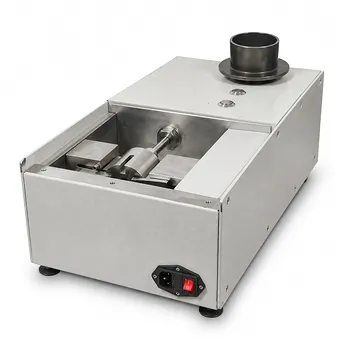
Lithium Battery Powder Resistivity and Compacted Density Measurement System
Optimize cathode and anode slurry formulations with this automated lithium battery powder resistivity and compacted density measurement system featuring closed-loop servo pressure execution high-resolution displacement monitoring synchronous environmental logging and automated analytical software for precision electrode quality control workflows
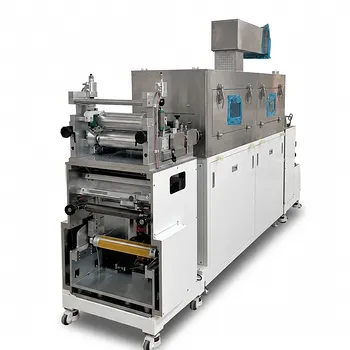
400mm Continuous and Intermittent Gap Coating Machine
400mm continuous and intermittent gap coating machine for precise lithium ion battery electrode coating with electric drying, controlled web handling, and configurable extrusion coating for cathode and anode production.
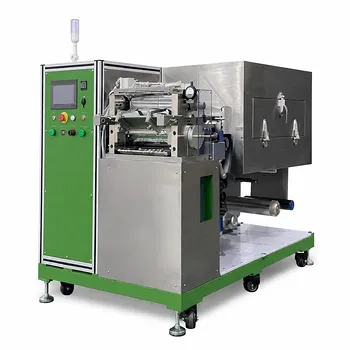
Continuous Intermittent Battery Laboratory Coating Machine
Continuous intermittent battery laboratory coating machine combines stable web tension correction precision comma blade metering three roll transfer coating and dual sided hot air drying for dependable electrode process development with PLC touch screen operation and optional solvent recovery handling.
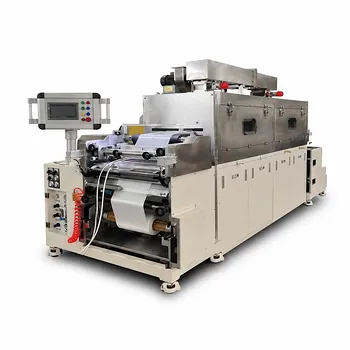
400mm Precision Separator Micro Gravure Coating Machine
400mm precision separator micro gravure coating machine delivers controlled ceramic slurry application drying and rewinding for PE and PP lithium ion battery separator production with coating widths up to 300 mm and speeds to 3 m per minute.
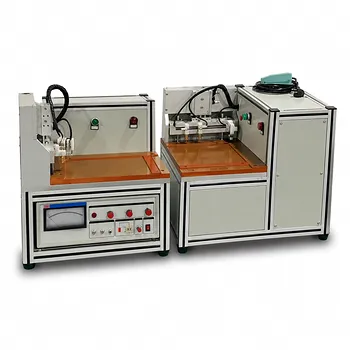
Pouch Cell Aluminum Laminated Film Short Circuit Tester Lithium Battery Testing Equipment
High precision pouch cell short circuit tester designed for reliable detection of insulation faults between tabs and aluminum laminated film prior to electrolyte injection maximizing lithium battery cell production yield process safety and high throughput quality control across manufacturing lines
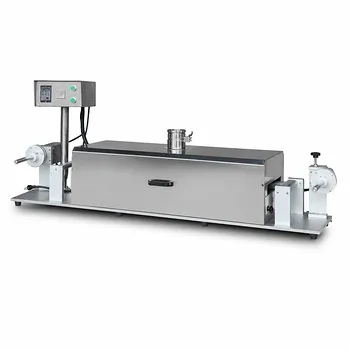
Desktop Continuous Film Coating Testing Machine for 18650 Cylindrical Batteries
Desktop continuous coating machine for lithium battery electrodes 18650 cylindrical cell research ceramic films crystal films and nanofilms offering adjustable coating width precise thickness control automatic rewinding and independent PID oven temperature regulation for university laboratories and small scale production