
Battery powder materials
Lithium Rich Manganese Based Cathode Material for High Energy Density Lithium Ion Battery Research and Manufacturing
Item Number : CL15
Price varies based on specs and customizations
- Nominal Specific Capacity
- 200 mAh/g (3.0-4.6V) / >250 mAh/g (2.0-4.8V)
- Particle Size (D50)
- 9.40 µm
- Tap Density
- 2.00 g/cm³

Shipping:
Contact us to get shipping details Enjoy On-time Dispatch Guarantee.
Why Choose Us
Easy ordering process, quality products, and dedicated support for your business success.
Product Overview
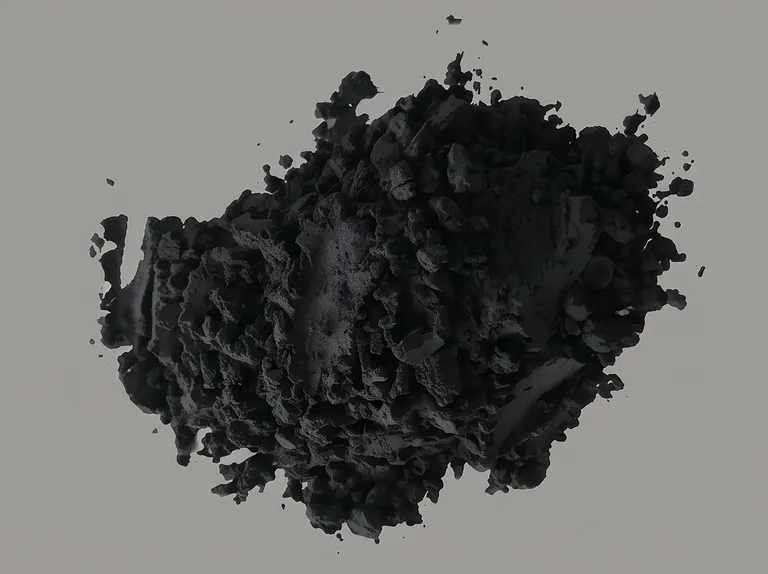
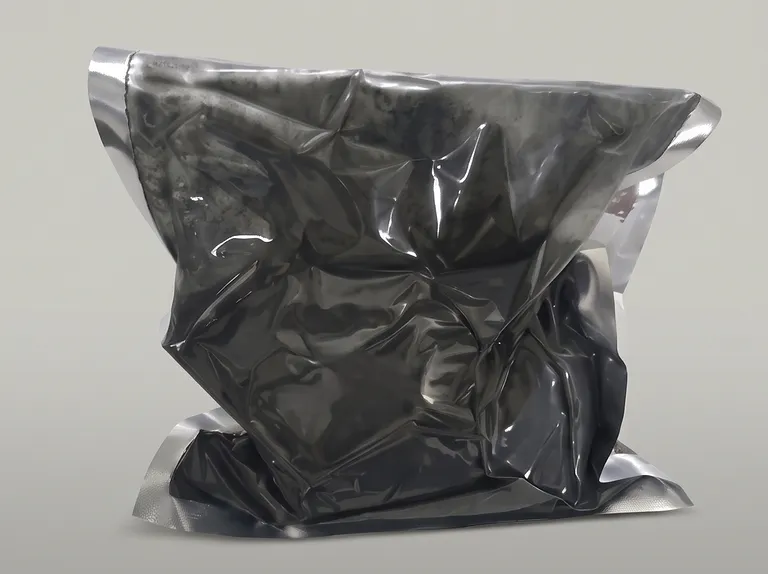

This high-capacity lithium-rich manganese-based cathode material represents an advanced solid-solution chemistry engineered specifically for next-generation lithium-ion energy storage systems. By utilizing an integrated manganese-dominated crystal matrix, this material delivers exceptional specific discharge capacities exceeding 250 mAh/g across wide operating voltage windows (2.0 V to 4.8 V), fundamentally outperforming conventional layered stoichiometric cathodes.
Optimized for both fundamental research and industrial cell prototyping, this advanced cathode powder is widely utilized across automotive electrification, high-drain cordless power tools, consumer electronics, and stationary grid storage development. Its finely tuned particle size distribution and optimized surface area facilitate seamless slurry processing, uniform electrode coating, and high packing density in both standard coin cells and multilayer pouch cells.
Manufactured under rigorous quality control standards, this cathode material features ultra-low trace impurity levels, controlled alkaline residual content, and minimal moisture retention. Researchers and cell engineers gain an economically viable, thermally stable, and cobalt-reduced cathode platform capable of sustaining high rate capabilities and extended cyclic stability under rigorous operational protocols.
Key Features
- Exceptional Specific Discharge Capacity: Delivers over 250 mAh/g reversible capacity across a 2.0 V to 4.8 V operational range, offering a standard baseline of 200 mAh/g under 3.0 V to 4.6 V cut-off conditions to dramatically increase cell-level volumetric and gravimetric energy densities.
- Cost-Optimized Manganese-Dominated Chemistry: Formulated with abundant, environmentally benign manganese while minimizing reliance on volatile, high-cost cobalt and nickel raw materials, driving down bill-of-materials costs for commercial scaling.
- Superior Intrinsic Safety and Thermal Stability: Solid-solution structural architecture exhibits exceptional structural integrity and suppressed oxygen release at elevated operating potentials, enhancing cell safety under high-voltage charging.
- Controlled Particle Morphology and Packing Density: Engineered spherical particle distribution with a median D50 of 9.40 µm and a tap density of 2.00 g/cm³ ensures high volumetric packing, smooth doctor-blade coating, and homogeneous electrode microstructure.
- Optimized Specific Surface Area: Balanced BET surface area of 0.70 m²/g provides rapid electrochemical wetting and electrolyte penetration while mitigating parasitic side reactions and gas generation during extended cycling.
- Ultra-High Chemical Purity: Stringent trace metal filtration limits copper to non-detectable levels (0.0000%) and iron below 0.0032%, effectively eliminating localized internal micro-shorting risks in thin-separator cell designs.
- Excellent High-Rate Electrochemical Kinetics: Supports continuous discharge capabilities across 0.1C, 0.2C, 0.5C, 1C, 2C, and 3C rates following high-voltage constant-current constant-voltage (CC-CV) activation.
- Seamless Slurry Processing Compatibility: Demonstrates superior dispersion rheology with standard PVDF/NMP binder-solvent systems, preventing agglomeration during continuous high-speed roll-to-roll electrode processing.
Applications
| Application | Description | Key Benefit |
|---|---|---|
| Electric Vehicle (EV) Traction Batteries | High-energy cell prototyping for automotive battery packs requiring extended driving ranges and high thermal runaway thresholds. | Substantially reduces pack weight and raw material costs while maintaining superior structural and thermal safety at high cell voltages. |
| Heavy-Duty Cordless Power Tools | High-drain cylindrical and prismatic cell development demanding robust dynamic power delivery and thermal resilience. | Sustains reliable high-rate discharge kinetics (up to 3C) without localized overheating or structural lattice collapse. |
| Pouch and Coin Cell Electrochemical R&D | Academic and industrial research benchmarking solid-solution phase transitions, anionic redox reactions, and novel high-voltage electrolytes. | Delivers consistent, highly reproducible electrochemical data across standard 2032/2016 coin cells and multi-layer pilot pouch cells. |
| Grid-Scale Stationary Energy Storage (ESS) | Low-cost, long-duration energy storage modules designed for containerized solar/wind integration and commercial peak shaving. | Lowers cathode cost per kilowatt-hour by substituting expensive cobalt with abundant manganese in high-cycle-life formulations. |
| Consumer Electronics and Tablets | Ultra-thin pouch cell applications for laptops, tablets, and smart devices requiring maximized volumetric energy within constrained dimensions. | Achieves high active material tap density (2.00 g/cm³) and superior specific capacity to maximize single-charge device runtime. |
| Smart Toys and Robotic Devices | Compact energy storage solutions for automated guided vehicles, drones, and consumer robotics operating across wide temperature spectra. | Provides an economical, highly stable power foundation with low internal self-discharge and durable cycle performance. |
Technical Specifications
| Specification Parameter | Value / Characteristic |
|---|---|
| Product Identifier | CL15 |
| Material Classification | Lithium-Rich Manganese-Based Solid-Solution Cathode Powder |
| Available Packaging Units | 20 g / 100 g / 500 g / 1000 g sealed bottles/foil packs |
| Particle Size Distribution D10 | 4.90 µm |
| Particle Size Distribution D50 | 9.40 µm |
| Particle Size Distribution D90 | 16.8 µm |
| Specific Surface Area (BET) | 0.70 m²/g |
| Tap Density | 2.00 g/cm³ |
| Nominal Specific Capacity | 200 mAh/g (at 3.0 V – 4.6 V, 0.1C, 25°C) |
| Extended Voltage Capacity Window | ≥ 250 mAh/g (at 2.0 V – 4.8 V) |
| Standard Voltage Window | 3.0 V to 4.6 V |
| Extended Testing Voltage Window | 2.0 V to 4.8 V |
| Coin Cell Testing Conditions | 25°C, 0.1C rate, 3.0 V to 4.6 V cut-off |
| Material pH Value | 10.86 |
| Moisture Content (H₂O) | ~ 0.0335% |
| Iron (Fe) Impurity Level | ~ 0.0032% |
| Copper (Cu) Impurity Level | ~ 0.0000% (Not Detectable) |
| Magnesium (Mg) Content | ~ 0.0129% |
| Gallium (Ga) Content | ~ 0.0099% |
| Rate Capability Test Protocol | Charge: 25°C, CC at 0.5C to 4.8 V, CV until current < 0.02C; Discharge: CC at 0.1C / 0.2C / 0.5C / 1C / 2C / 3C down to 3.0 V |
| Cycle Life Test Protocol | Charge: 25°C, CC at 0.5C to 4.8 V, CV until current < 0.02C; Discharge: CC at 1C down to 3.0 V |
Electrochemical Performance Guidelines
Material Structure and Working Principle
This cathode powder belongs to the structurally integrated xLi₂MnO₃·(1-x)LiMO₂ (where M = Mn, Ni, Co) solid-solution family. During initial high-voltage activation above 4.5 V, the simultaneous extraction of lithium ions and net release of oxygen sub-lattice components activate the Li₂MnO₃ domain. This unique anionic and cationic redox coupling provides the breakthrough specific discharge capacity exceeding 250 mAh/g. The manganese-rich framework maintains continuous mechanical stability throughout successive intercalation and de-intercalation cycles, offering a high-voltage operational ceiling unattainable with standard cobalt- or nickel-dominant compositions.
Recommended Slurry Preparation and Rheology
To achieve optimal dispersion and preserve particle integrity during mechanical mixing, adhere to the following preparation standards:
- Active Material Ratio: 90.0 wt% to 94.0 wt% of active cathode powder.
- Conductive Additives: 3.0 wt% to 5.0 wt% high-surface carbon black (e.g., Super P) combined optionally with carbon nanotubes (CNTs) to construct a robust three-dimensional conductive network.
- Polymeric Binder: 3.0 wt% to 5.0 wt% high-molecular-weight Polyvinylidene Fluoride (PVDF) dissolved in anhydrous N-Methyl-2-pyrrolidone (NMP).
- Mixing Procedure: Vacuum planetary mixing under controlled temperature (below 30°C) with stepwise powder addition to prevent shear-induced particle degradation.
- Coating and Drying: Apply slurry to battery-grade aluminum current collector foil via precision comma blade or slot-die coater. Perform primary drying at 85°C to 110°C in an inert or continuous dry air atmosphere, followed by secondary vacuum drying at 120°C for 12 hours prior to calendering.
- Electrode Calendering: Target an electrode compaction density of 2.8 to 3.1 g/cm³ to maintain open pore channels for electrolyte wetting while ensuring low contact impedance.
Cell Assembly and Activation Protocol
Because lithium-rich materials require high-voltage initial activation, special attention must be paid to electrolyte formulation and cell formation:
- Electrolyte Selection: Utilize high-voltage-tolerant carbonate blends (e.g., 1.0M to 1.2M LiPF₆ in EC:DMC:EMC with fluorinated additives such as FEC or high-voltage film-forming additives like PS/DTD) stable up to 4.8 V vs. Li/Li⁺.
- Formation Cycling: Initiate formation with a slow constant-current charge at 0.05C to 0.1C up to 4.8 V, holding at 4.8 V until the current tapers below 0.02C. This facilitates homogeneous solid-electrolyte interphase (SEI) growth and structural activation before regular 0.5C/1C cycling.
Why Choose This Product
- Batch-to-Batch Compositional Uniformity: Synthesized via continuous, precision-controlled chemical co-precipitation and multi-zone calcination, ensuring tightly controlled particle size distributions, consistent tap density, and uniform crystallographic phase alignment across every production lot.
- High-Voltage Purity Assurance: Comprehensive optical emission spectroscopy and rigorous filtration ensure ultra-low heavy metal contaminants, mitigating self-discharge, voltage fade, and dendrite proliferation during demanding cycle tests.
- Cost-Resilient Raw Material Design: Heavily reduces cobalt and nickel dependency in favor of earth-abundant manganese, offering cell manufacturers a high-margin, supply-chain-secure cathode alternative for multi-megawatt-hour scaling.
- Versatile Research and Commercial Adaptability: Available in scalable packaging units from 20-gram laboratory packs up to multi-kilogram quantities, facilitating direct translation from exploratory coin cell experiments to pilot-line pouch cell calendering.
Contact our technical engineering team today to request a quote, technical data sheets, or customized formulation support for your battery development program.
Trusted by Industry Leaders

REQUEST A QUOTE
Our professional team will reply to you within one business day. Please feel free to contact us!
Related Products
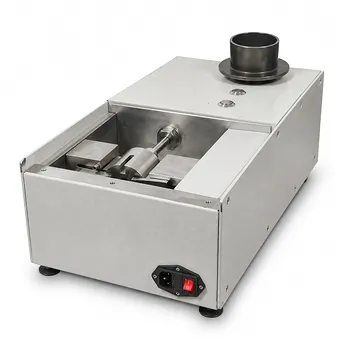
Lithium Battery Powder Resistivity and Compacted Density Measurement System
Optimize cathode and anode slurry formulations with this automated lithium battery powder resistivity and compacted density measurement system featuring closed-loop servo pressure execution high-resolution displacement monitoring synchronous environmental logging and automated analytical software for precision electrode quality control workflows
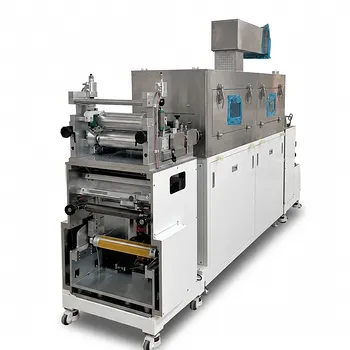
400mm Continuous and Intermittent Gap Coating Machine
400mm continuous and intermittent gap coating machine for precise lithium ion battery electrode coating with electric drying, controlled web handling, and configurable extrusion coating for cathode and anode production.
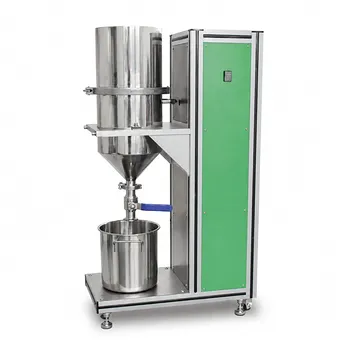
5L Laboratory Slurry Iron Removal Filtration System for Lithium Battery Electrode Production
5L laboratory slurry iron removal filtration system combines vacuum filtration and 8000–10000 gauss magnetic separation for consistent lithium battery electrode coatings before coating with cleanable stainless construction flexible filter mesh selection reliable pilot scale processing and routine maintenance
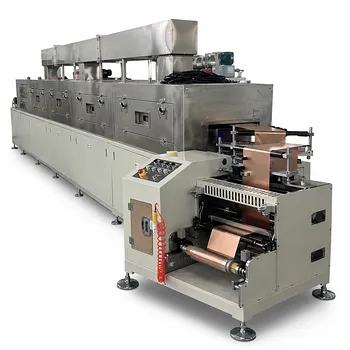
Precision Laboratory Transfer Coating Machine for Lithium Ion Battery Electrodes
Precision laboratory transfer coating machine for lithium ion battery electrodes delivers controlled continuous and intermittent coating, uniform film application, integrated drying, and reliable winding for demanding cathode and anode pilot production with compatibility for aluminum and copper foil substrates.
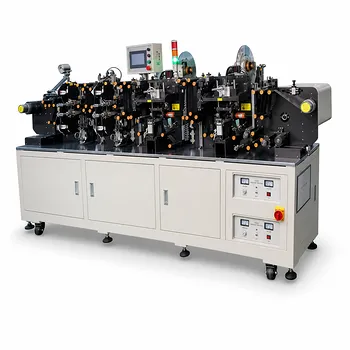
Fully Automatic Lithium Battery Positive and Negative Electrode Sheet Making Machine with Tab Welding and Automatic Rewinding
Fully automatic lithium battery electrode sheet making machine integrates ultrasonic tab welding protective tape application inspection dust collection and precision rewinding for positive and negative electrode production with reliable alignment high yield and consistent cell manufacturing performance.
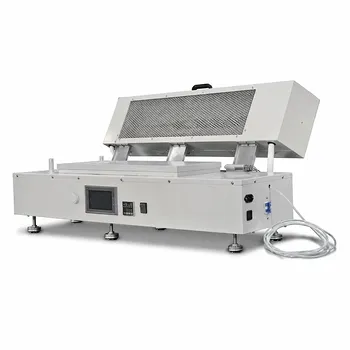
Automatic Coating Film Drying Machine Lithium Battery Laboratory Coating Machine
Automatic coating film drying machine and lithium battery laboratory coating machine with 130°C heating, adjustable coating speed, vacuum plate, precision scraper, programmable drying timer for 18650 electrode research smooth reproducible coatings across varied substrates compact bench scale development applications
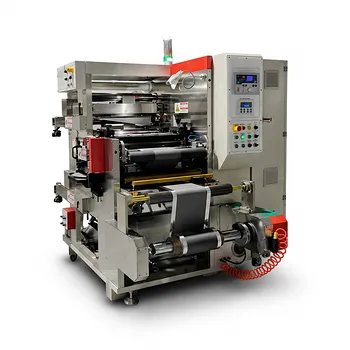
Lithium Battery Electrode Sheet Continuous Slitting Machine 200 to 560 mm Slitting Width
Continuous lithium battery electrode sheet slitting machine processes rolled coated electrodes across 200 to 560 mm widths with closed loop tension control precision web guiding dust removal and dual differential shaft rewinding.
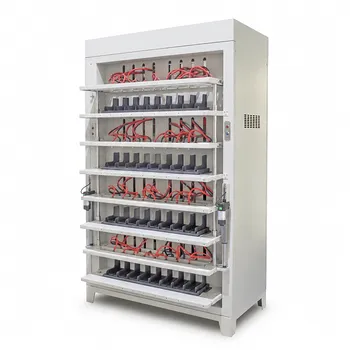
Energy Regenerative Lithium Battery Automatic Formation and Capacity Grading Testing System
Discover high precision energy regenerative lithium battery automatic formation and capacity grading testing systems featuring independent 128 channel architecture four wire measurement grid energy feedback and seamless MES database integration for advanced cell production.
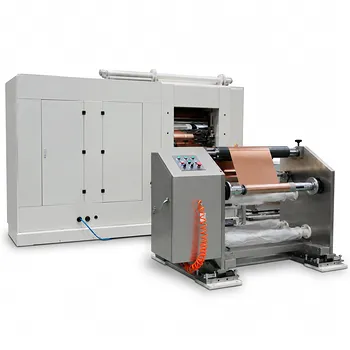
High Precision Lithium Battery Electrode Sheet Calendering Machine
High precision lithium battery electrode sheet calendering machine delivers controlled compaction, adjustable roll gaps, 4000 kN line pressure, accurate tension handling, and consistent electrode density for demanding cell manufacturing lines.
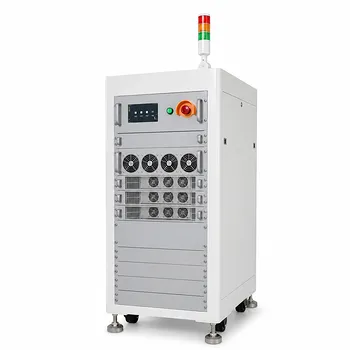
50V 500A Lithium Battery Tester
50V 500A lithium battery tester provides 25kW charge discharge control precision measurement pulse profiles DCIR analysis and networked data management for demanding battery development validation and production workflows with robust protection and configurable auxiliary monitoring options included.
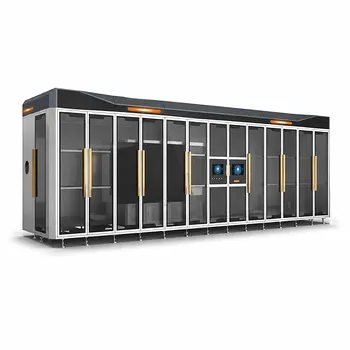
Fully Automatic Lithium Ion Battery Electrode Sheet Die Cutting Machine
Fully automatic lithium ion battery electrode sheet die cutting machine integrates unwinding, alignment, tab forming, CCD inspection, dust removal and rewinding for accurate high speed continuous coated electrode production.